Another perfect meal

1 Comment

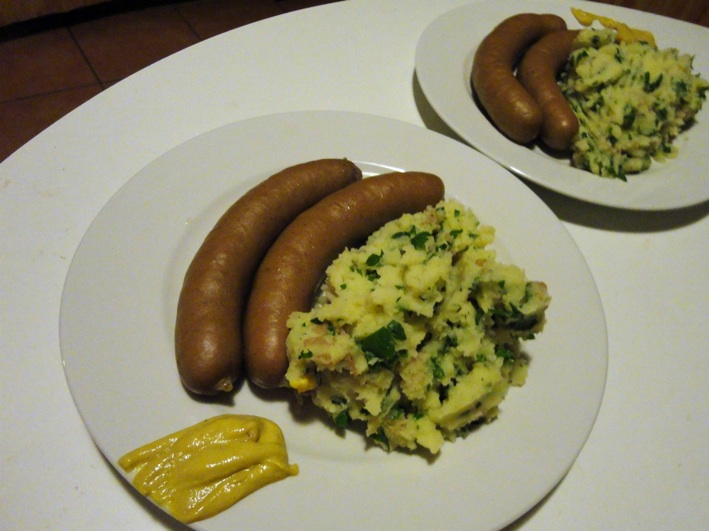
Skin-on red-jacket potatoes really well cooked, then roughly, violently mashed – but not too much.

Salt.

Freshly ground black pepper.

Handful of medium-chopped flat-leaf parsley.

LOTS of virgin olive oil.

Franfkurts from Slavonija Continental Butchers.

Dijon mustard.

These franks, by the way, are very tasty and juicy, but rather loosely structured, making them more like a sausage than the usually tightly bound franks.

That may make them even better when pan-fried, rather than merely boiled.

The perfect meal …

1 Comment

1. Cucumber, tomato, red onion, red capsicum, salt, freshly ground black pepper, oregano, olive oil, red wine vinegar, kalamata olives (stone in), feta cheese.

2. Finely chopped garlic, salt, finely chopped cucumber, yogurt.

3. Pita bread.

Sometime I make far more than enough so there’s plenty left for the next day’s work lunch or dinner.

I’m sure the nutritional value is shot by then and, of course, it’s not fresh.

But you know what?

Often it tastes better.

Same scenario works with a mixed Italian salad.

I’ve been told that white cheeses – feta, mozzarella, ricotta and so on – are less fatty than the yellow ones.

Nevertheless, I usually order low-fat feta.

Sourced usually from Sims or our local IGA, I notice no decrease in flavour.

Sad to say, this one – from Coles in Williamstown – was flavourless.

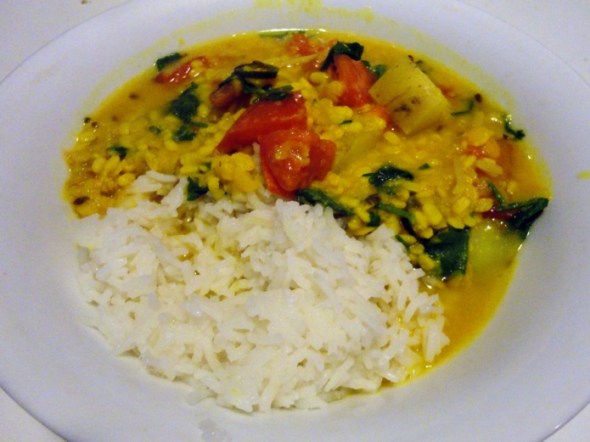
Dal deluxe

6 Comments

I learned this style of dal cooking from Yamua Devi’s book, The Art of Indian Vegetarian Cooking.

Sub-titled Lord Krishna’s Cuisine, this book details spiritually inclined Indian cooking that eschews – marvellous word! – garlic and onions.

Instead, many of the dishes use chillis, ginger, lemon juice and coriander.
Ingredients

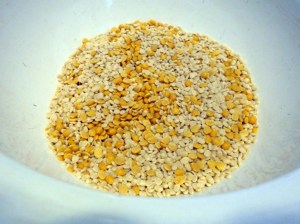
1 1/2 cups pulses

1 tsp turmeric

salt (optional)

good-sized chunk fresh ginger/galangal

1 fresh green chilli

3 ripe or very ripe tomatoes

1 tsp cumin seeds

oil

1 lemon

1 small bunch fresh coriander

Method

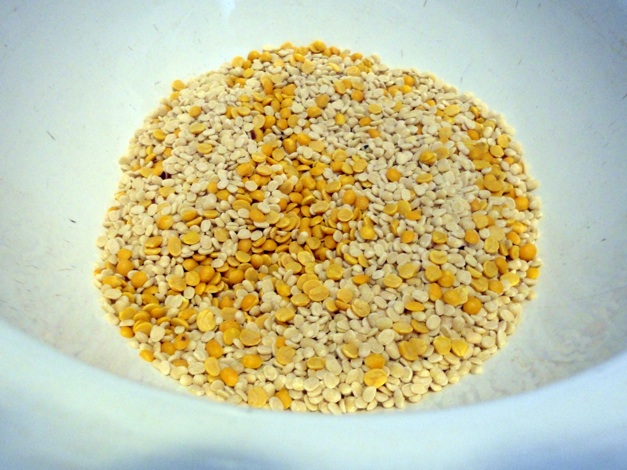
Unless using red lentils or moong dal, soak pulses overnight or at least for the best part of a day. In this case I use channa dal and urad dal because that’s what I have most of on hand.

Drain pulses, place in big pot.

Add turmeric and salt.

I know, I know – salt is Bad.

But I find if I don’t add it to my Indian cooking, it just doesn’t have anything resembling the sort of authentic Indian flavour I seek. Moderation is the key – in this case I use a teaspoon of salt. I suspect an Indian restaurant or household may’ve used 3-4 teaspoons!

Give the salt a miss and you’ll end up with a tasty meal that is of vegetarian nature rather than Indian. And that’s fine, too!
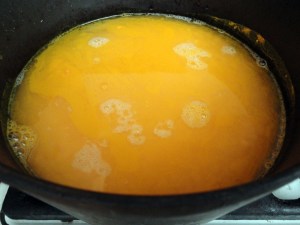
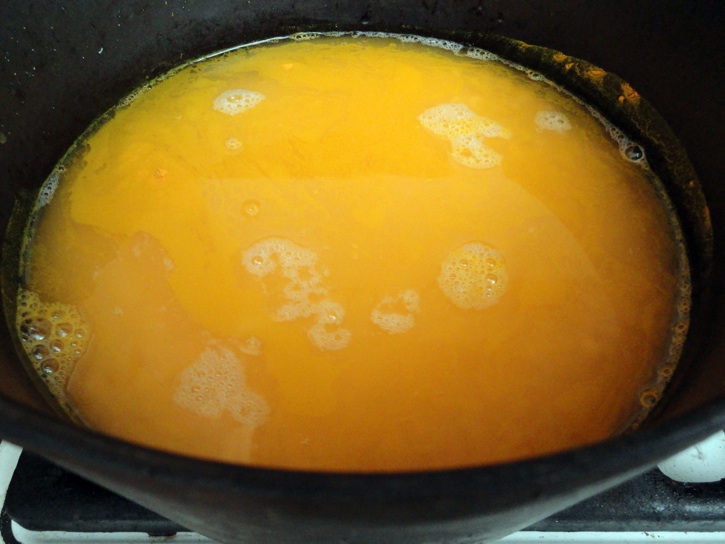
Cover with plenty of water, bring to boil and cook on low heat until pulses collapse into a near-mush.

It’s important at all stages to keep the water content very high – in fact, higher than you may think wise.

When served, dal always coagulates on the plate or in the bowl.

It it’s too thick in the pot, it’ll become an unseemly stodge when served.

So keep it really runny!
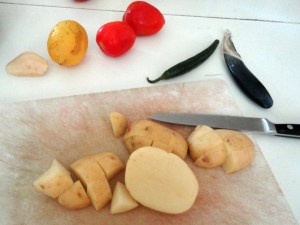
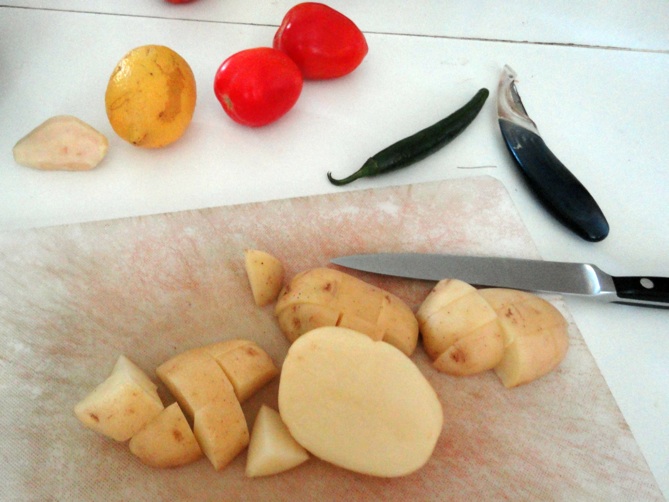
Meanwhile, dice the spuds into smallish bite-sized chunks and add to the dal about halfway through its cooking process.

You can keep the dal as a pristine dish if you’re cooking a proper Indian meal with other dishes.

But often we find adding spuds or carrots makes for an easier, quick-cook all-in-one meal.

Don’t worry about the spuds being overcooked – if they collapse a bit, it just adds to the texture. A bit like the spuds in beef rendang and the like.
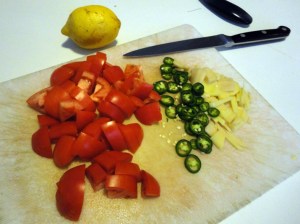
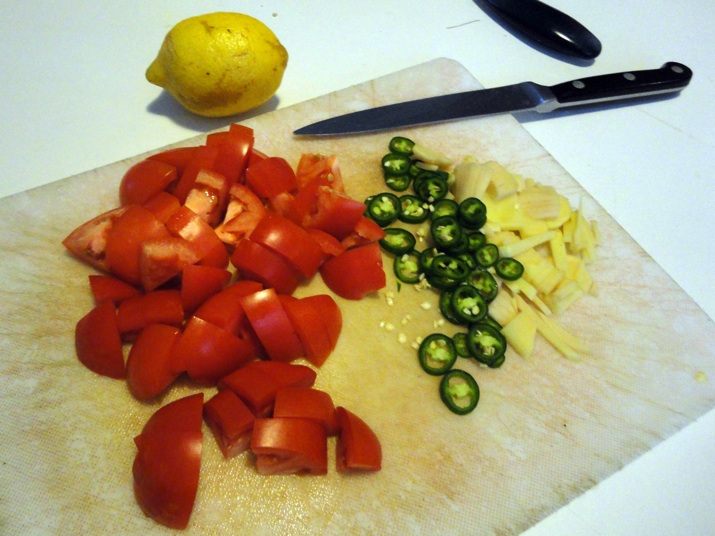
As the dal mix becomes thoroughly cooked, slice the chilli, grate or chop the ginger/galangal and chop the tomatoes.

Sometimes I finely grate the ginger, but more recently I’ve taken to taking the time to slice it into thin strands.

This delivers more of surprising flavour hit and is inspired by the profoundly gingery dal I had at Maurya in Sunshine.

About this time, it’s a good idea to lower the heat under the dal mix even further if possible or take off the heat entirely.

Especially if you’re using gas, it doesn’t take much of a flame to have the pulses sticking to the bottom of the pot.
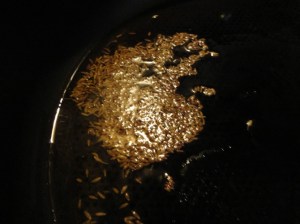
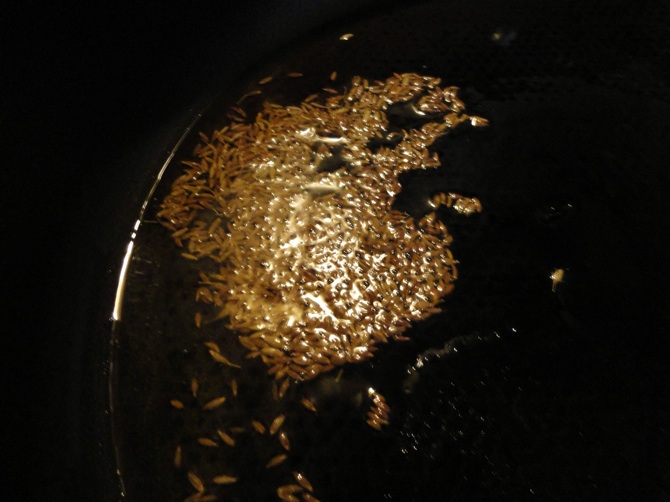
Heat oil until medium hot.

Throw in 1 teaspoon of cumin seeds and fry until fragrant.

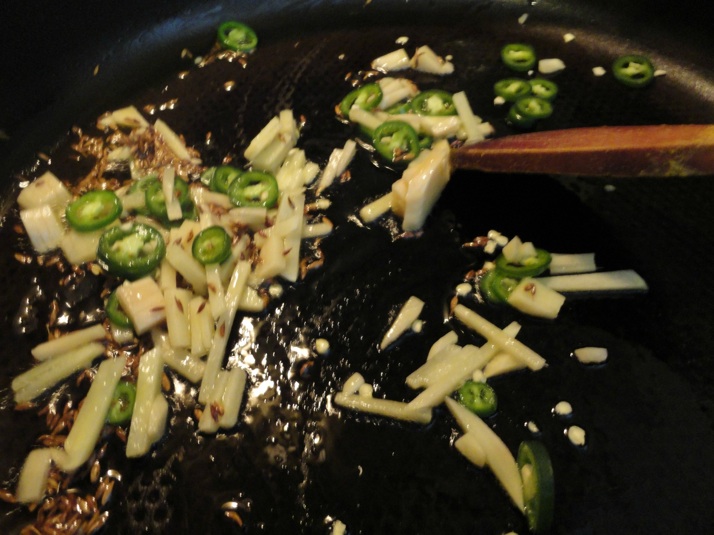
Lower the heat a little and throw in the sliced chilli and ginger.

Stir and fry for 3-4 minutes.
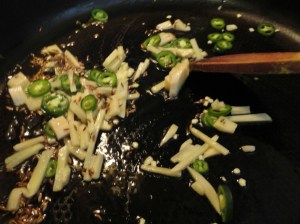
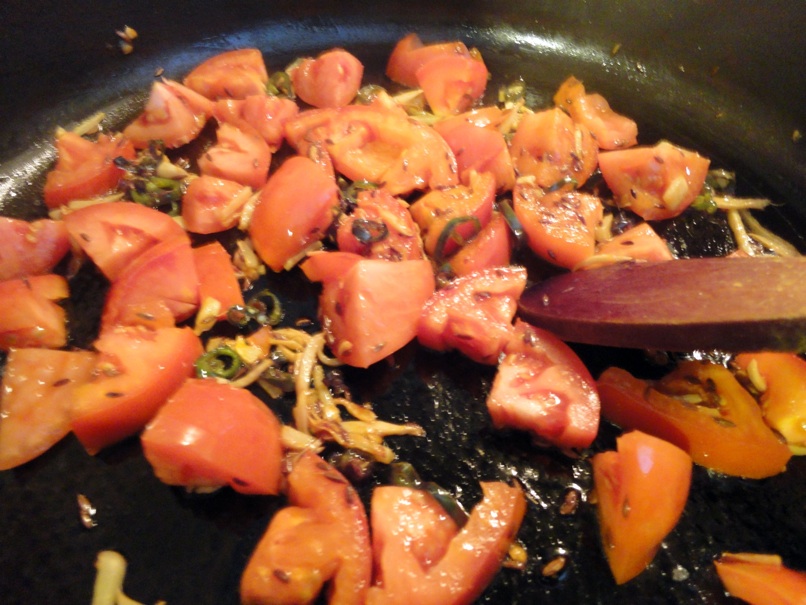
Throw in the chopped tomatoes.

Stir and cook until the tomato pieces are just starting to break down but still holding their shape.
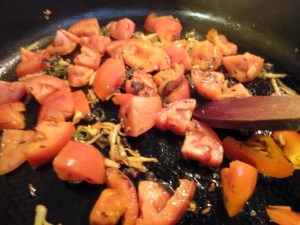
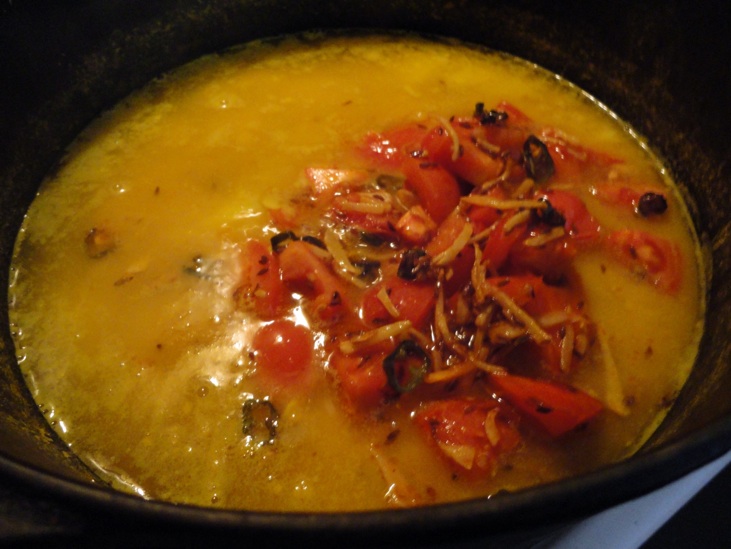
Throw tomato/ginger/chilli/cumin mix into the pot of dal.

Stir and let cook for five minutes or so until the flavours are emancipated.
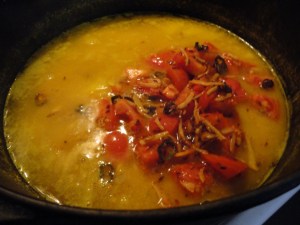
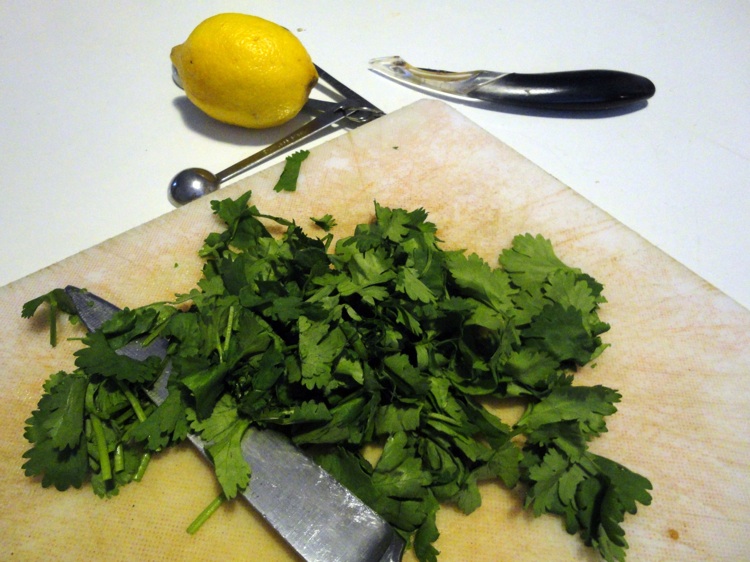
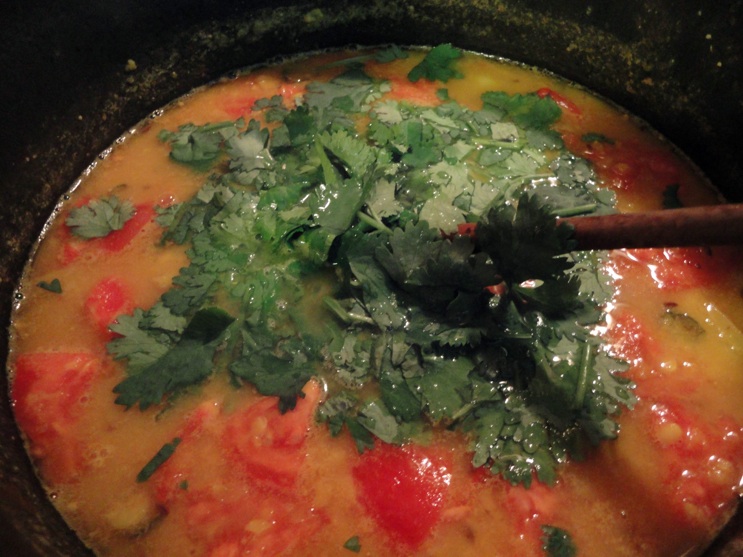
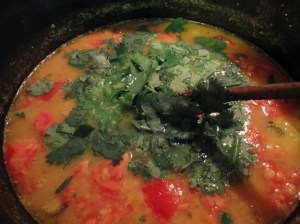
When ready to serve and eat, throw in the coriander and, finally, squeeze in juice of a lemon.

We try to get small bunches of coriander and use the whole lot in one bang – stalks and all. It doesn’t keep very well.
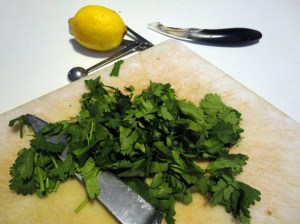
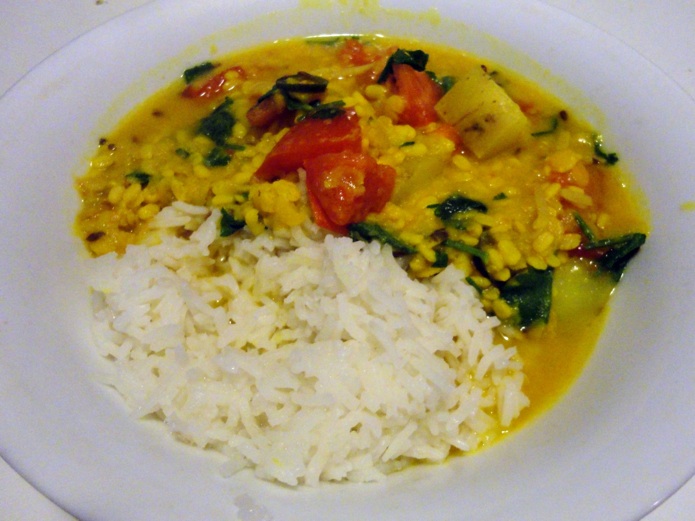
Serve with rice, raita and your choice of breads and side dishes.

A Taste Explosion!
Kenny’s muesli

18 Comments

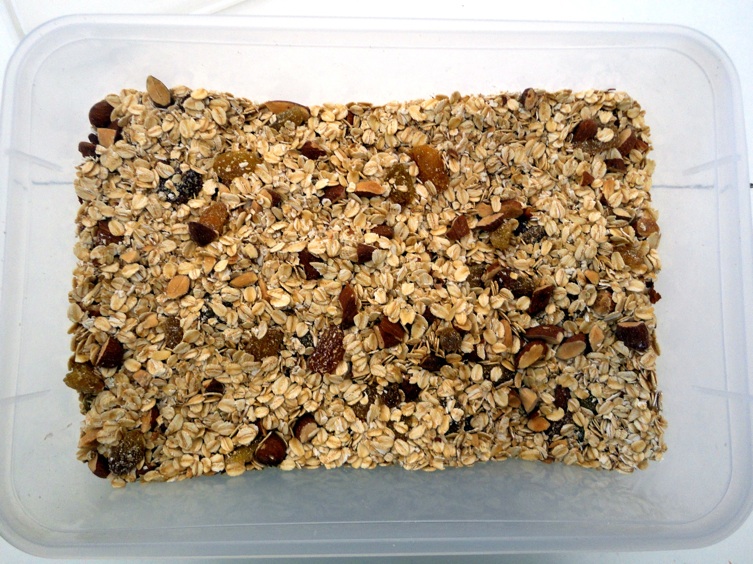
With some variations along the way due to taste, immediate availability and cost, this is the basic mix I have been using for more than three years now.

I haven’t done the sums, but I simply assume it’s a helluva lot cheaper than buying even standard supermarket mixes – never mind the ultra-pricey lines that generally come packaged in cellophane!

Equally important as price is the fact that I get to have breakfast fare that is constructed precisely to my own tastes and is absent sugar and dodgy ingredients.

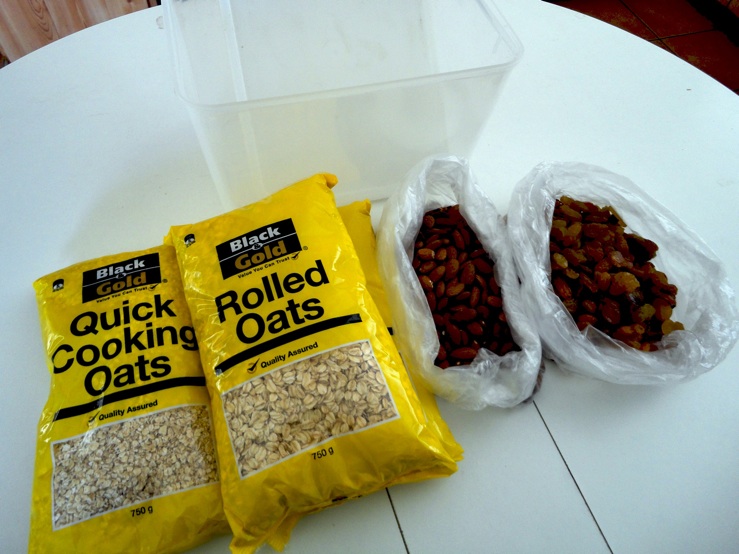
Ingredients

2 x 750 gram bags Black & Gold rolled oats

1 x 750 gram bag Black & Gold crushed oats

500 grams white sultanas

500 grams roasted almonds

(I almost always get my fruit and nuts from self-serve style Sunshine Fresh Food Market, as I can then suit myself as to the exact quantities.)

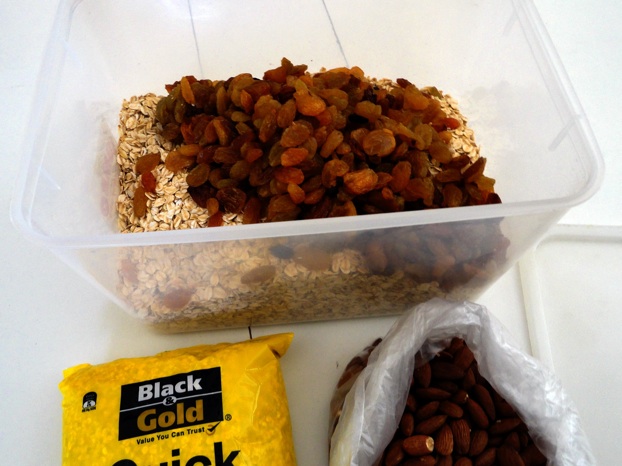
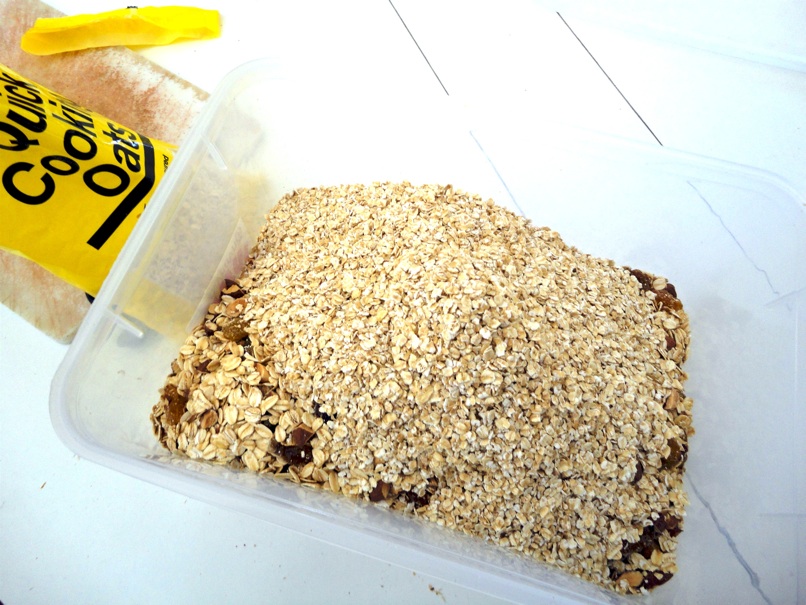
The bigger the container the easier the mixing!

Throw in the rolled oats and then the white sultanas.

Mix.

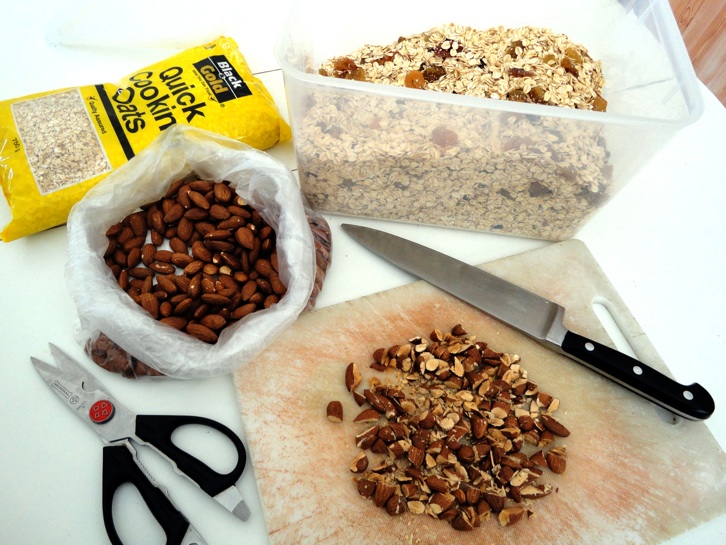
Chop almonds.

Add to container.

Finally, add the crushed oats and mix well – and carefully, especially if your container only just holds the amount of muesli being made!

This is obviously a very personal choice and quite a hardcore mix – those looking to ween their kids of sugary, packaged cereals can try any number of variations.

All and any kind of dried fruit, for instance, though cast around for options beyond sultanas, raisins and currants and you’ll be up for more chopping time.

Also, I can’t imagine eating this mix freshly added to a bowl with milk in the morning.

I soak it overnight in quite a lot milk so it doesn’t end up too claggy and too much like hard work.

And always with fresh fruit – lovely stone fruit at the moment – and yogurt.

I have a friend who doesn’t soak hers, but roasts it, so I guess it’s more like granola. But then, she doesn’t chop her almonds either so she is a little strange on it.

I have another pal who soaks his muesli mix in orange juice – another weirdo!

(Just kidding, Penny, Kurt!)

Soaked or unsoaked, the Kenny Mix makes really good porridge in the winter months!

I could save money by buying unroasted almonds, but I like the crunch.

Depending on taste and budget, you can go a lot further, of course.

Sunflower seeds? Figs? Dates?

When I worked at Neal’s Yard Wholefood Warehouse in Covent Garden in the late ’70s, we made up a huge batch of muesli every week.

Into it went not just oat flakes but also rye, wheat and barley.

Not just almonds, but also brazil and cashew nuts.

Not just sultanas, but also chopped dried pears, apples, apricots and peaches.

And probably a few things I’ve long forgotten!

It was truly the Rolls Royce of mueslis and flew off the shelves.

But I like my mix just the way it is – I especially dig the white sultanas.

So juicy and sweet!

But I’ve probably put Bennie off them for life by once describing them as being like “big, fat white maggots”!

(That’s quite possibly me pouring honey in the attached Neal Yard link!)