
Chilli con carne

7 Comments

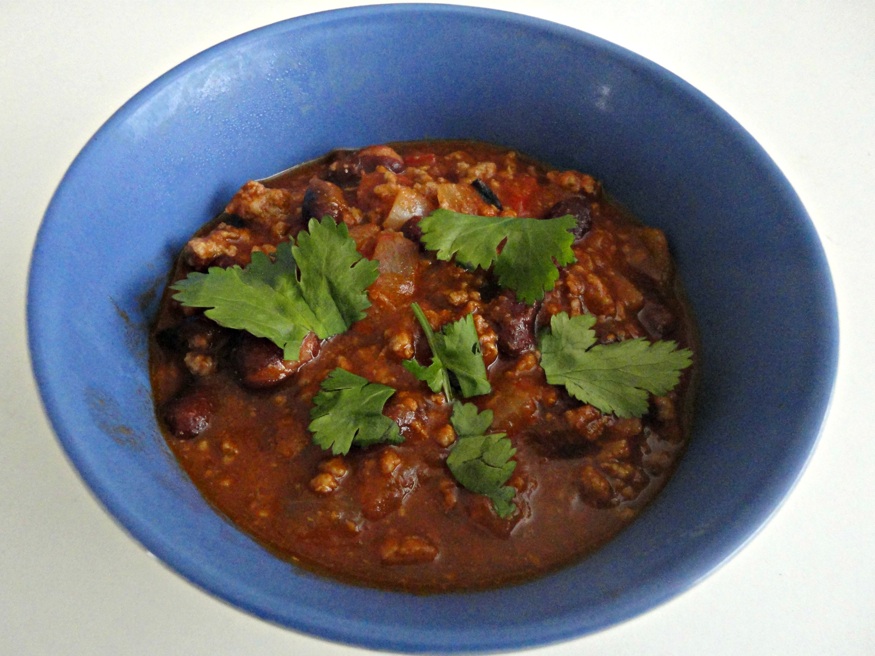
After enjoying a good bowl of chilli con carne at Liquid Yarraville, I resolve to make some myself.

I may have done so some time in the faded past, but if so I cannot recall.

My only Mexican recipe book has no recipe for same, but that’s no surprise as it’s not exactly a top-shelf publication, if you get my drift.

As well, I suspect there’s very little Mexican about chilli con carne in terms of how most of us think of it – it’s more like your south-west US thing.

This recipe is the result of scanning a half-dozen or so versions found in Louisiana community cookbooks River Road Recipes and Talk About Good!

For such an easy, “knock together” recipe, the result is surprisingly, gratifyingly delicious and deep of flavour.

I reckon I can do better, though, in terms of tweaking the seasoning, and I know Bennie’ll love it.

We hardly ever use mince in our joint, but that could change …

Maybe a little less sugar, more chilli and some oregano? Maybe more cumin, roasted and ground?

Smoked paprika?

Any tips?

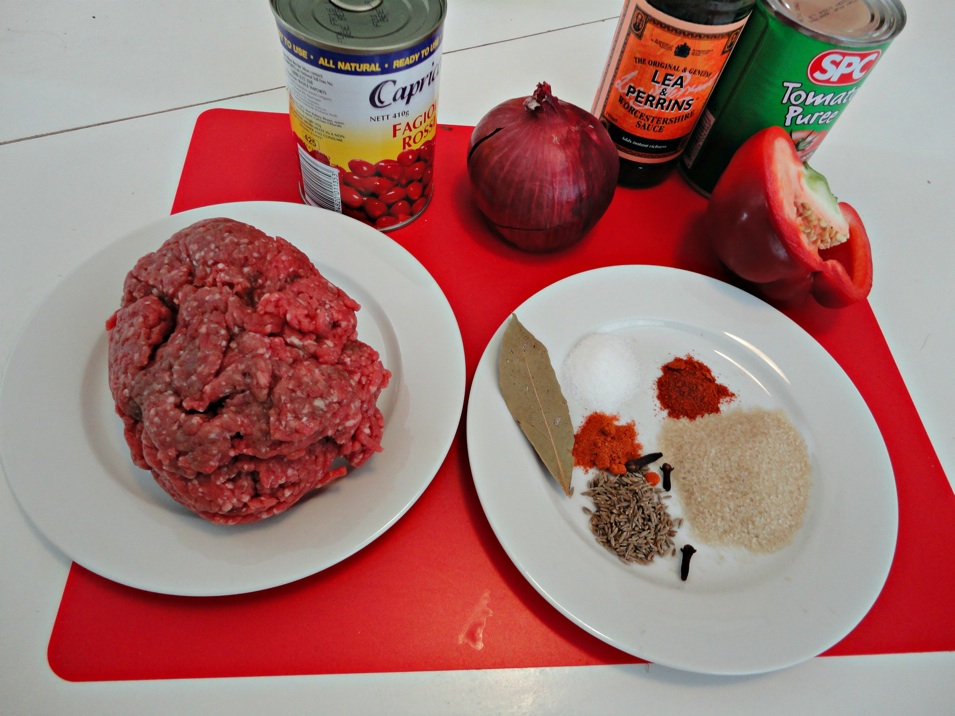
(I used red capsicum instead of green, because I had a good one in the fridge; and I used red onion because of ditto …)

INGREDIENTS

olive or other oil

1 can red beans

1 can tomato puree

1/2 red capsicum, chopped

1 onion, chopped

450g minced beef

1 teaspoon salt

1 teaspoon worcestershire sauce

2 teaspoon brown sugar

1/4 teaspoon paprika

1/4 teaspoon chill powder

3 whole cloves

1 bay leaf

1 teaspoon cumin seeds

1 cup water

METHOD

1. Heat oil over medium-high heat.

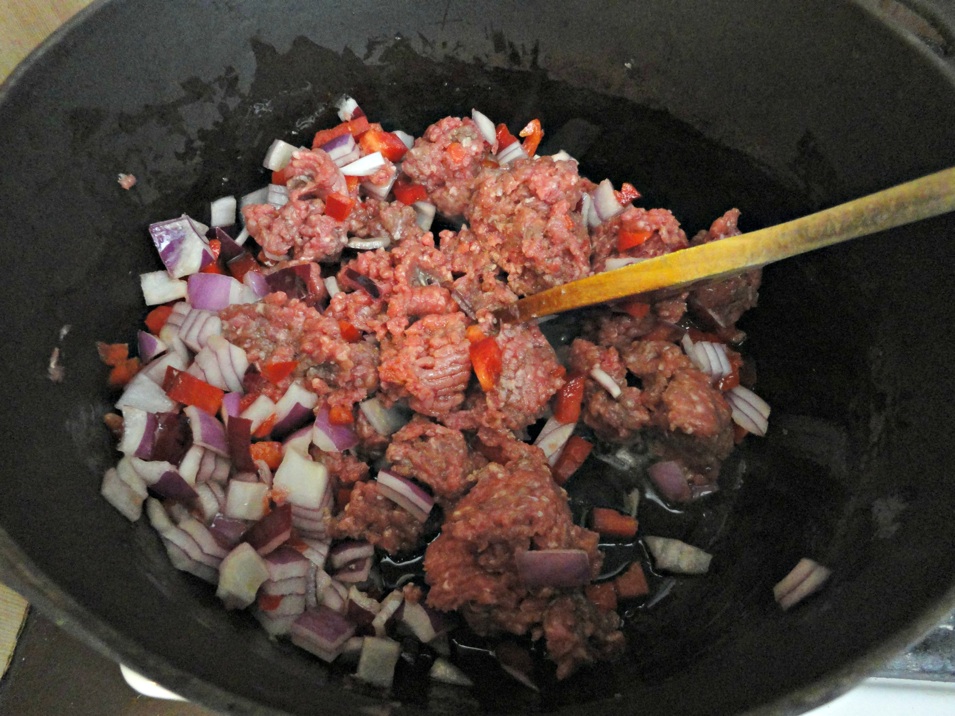
2. When hot, cook meat, capsicum and onion for about 10 minutes, stirring frequently.

3. Add seasonings and tomato puree.

4. Cook over medium heart for about 10 minutes.

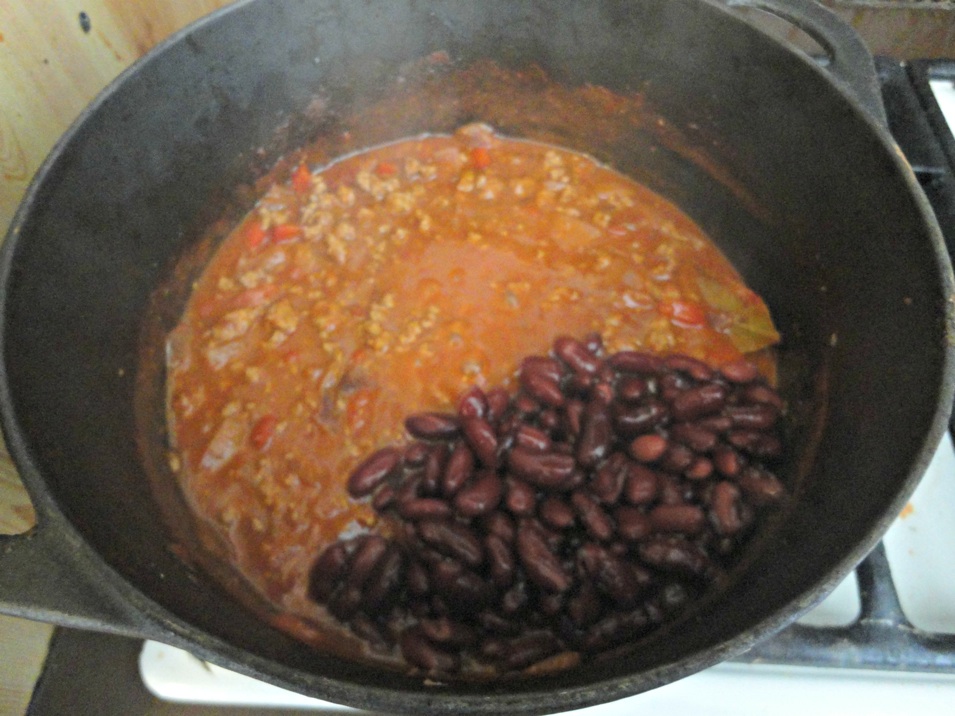
5. Add drained beans and cook on Very Low Heat for at least an hour and a half.

Footscray Club

16 Comments

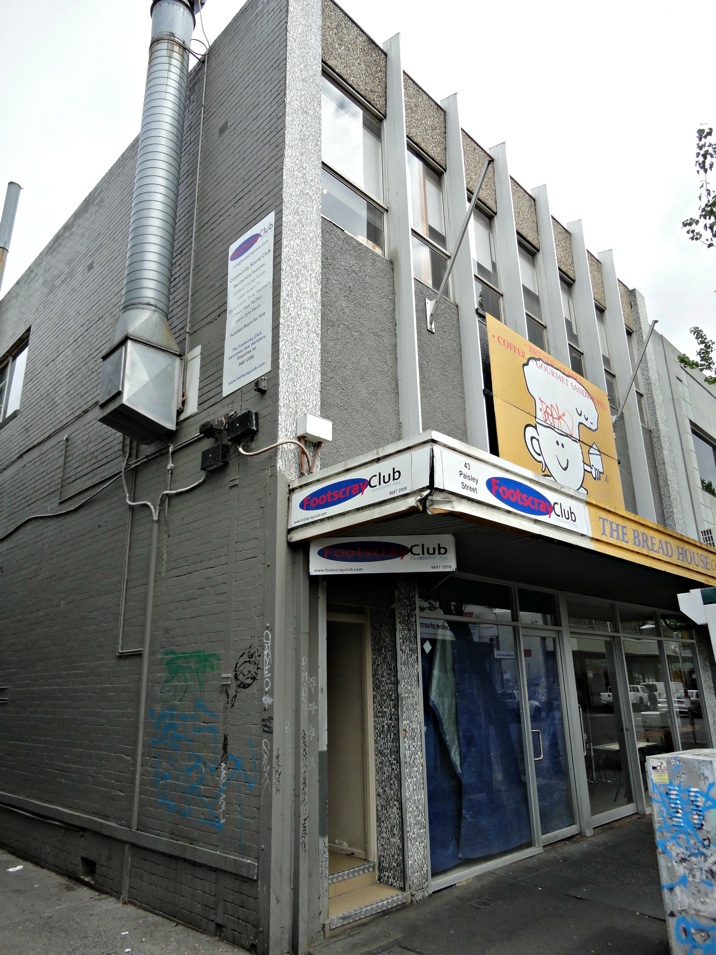
Footscray Club, 43 Paisley St, Footscray. Phone: 9687 2059

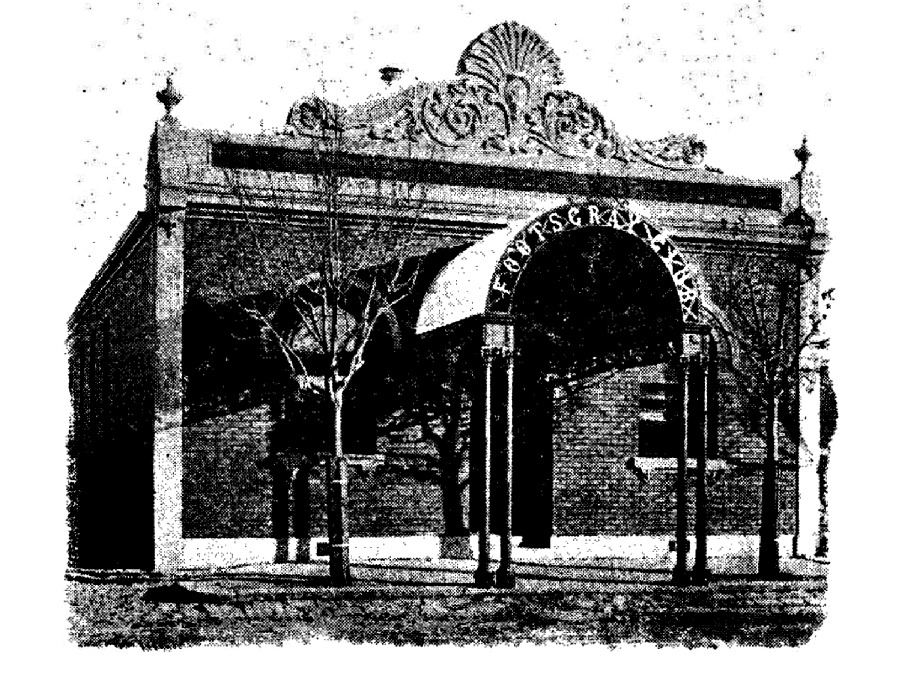
The Footscray Club started life in 1894, dedicated to cycling, making it one of Footscray’s oldest institutions and quite possibly its oldest “business”.

The club’s first 10 years saw it based in Nicholson St, before moving to its current premises in Paisley St. 

A few years ago, the club sold the building … to the bloke who runs the bread shop on the ground floor.

As one member quipped to me: “He used to pay us rent, now we pay him rent!”

I am told the club’s future is assured for many years to come through a lease on favourable terms – and no doubt the Bread Shop Bloke is happy to have the space tenanted by some very nice folk.

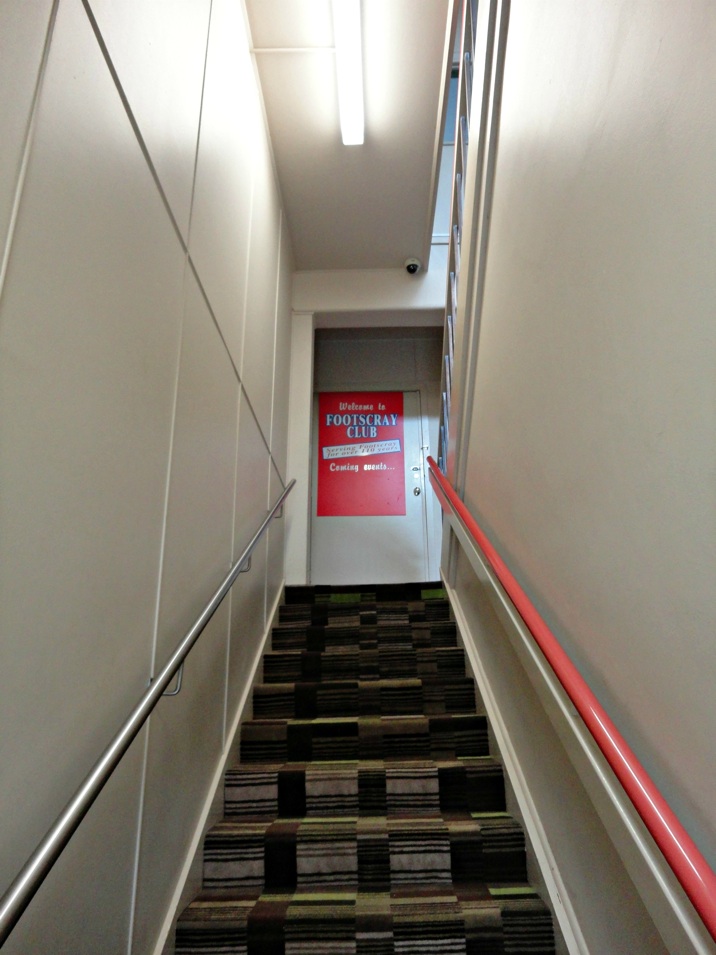
I’d passed the Footcray Club many times, always found the street-level door closed, assumed the club was a private affair and moved on.

A few weeks back, however, I found the door unlocked, so up the stairs I went, eventually to be greeted by the week-day manager, Gary, a man whose moustache is even more preposterous than that of yours truly.

After getting the lowdown on how the club operates, and ascertaining positively that I’m very welcome, I vowed to return on another day.

Sadly, income requirements mean the lunches on Thursday and Fridays will have to wait.

On those days, the club serves a range of up to 10 different meals – $7, or $10 with a pot of beer.

Read about them here.

I am however, able to visit one of the Sunday Sipper sessions, run and catered for by the members themselves, with a more concise choice of fodder.

Finding the door locked, I press the intercom button, hear some muffled words and then a series of clicks as I continue to wiggle and waggle the door handle.

Eventually, I am let in by Lance, the club member who seems to be presiding over this particular Sunday Sipper outing.

Turns out, I should be pulling the door open …

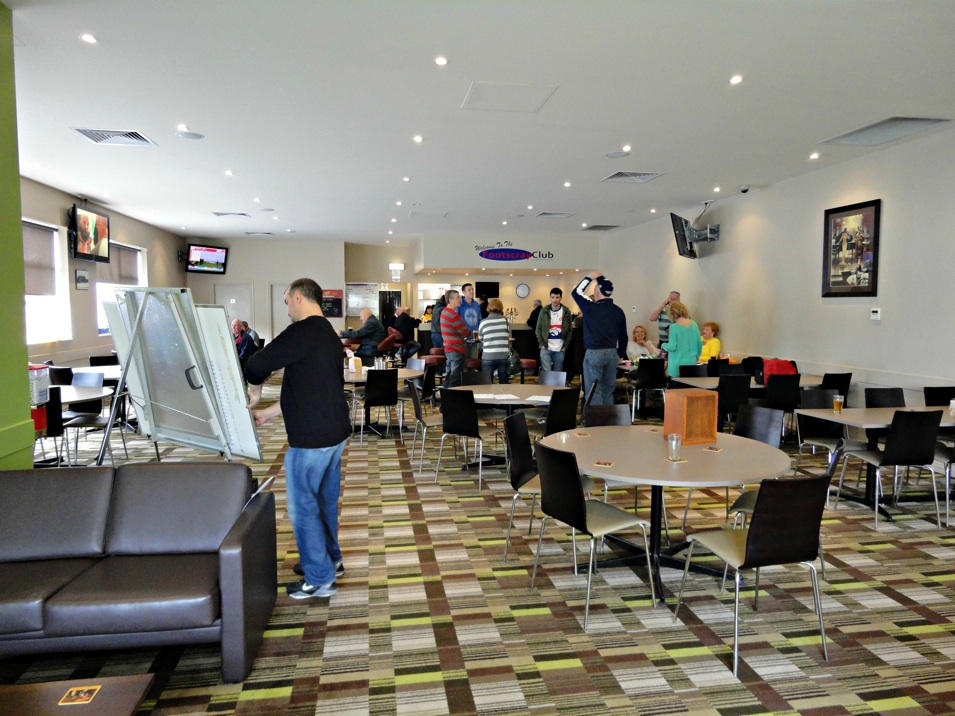
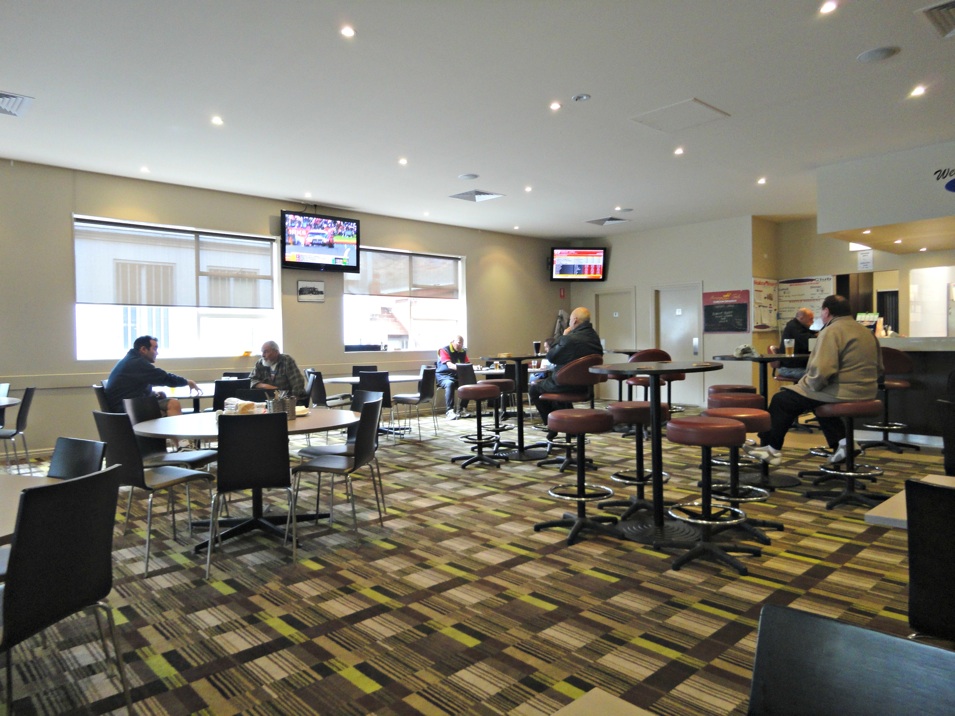
I find a nice room done out in typical club style, with about a dozen members relaxing and enjoying, some of them, the flat-screen horse racing action or the flat-screen Bathurst action.

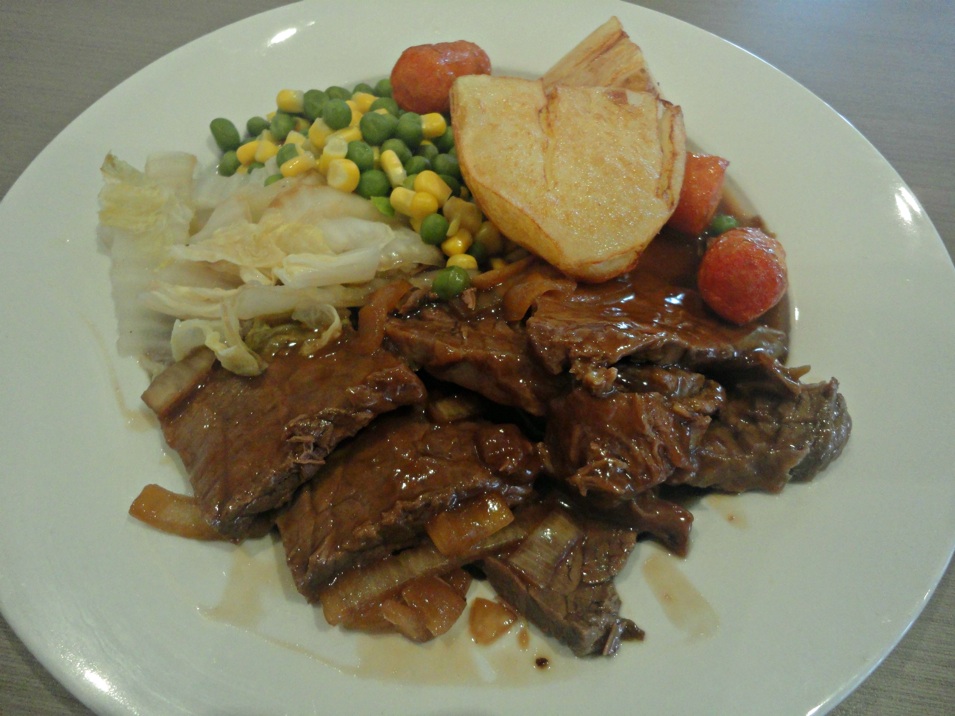
Meal of the day is roast beef with onion gravy and vegies – $5 for members, $7 for non-members but everyone pays the member price. Well, I did!

It’s a fine meal – and a ridiculous bargain for $5.

The spuds, carrots and gravy are tops, the beef is nicely chewy and flavoursome.

The club’s standard price for a pot is a remarkable-for-these-days $3 – $2.20 on Sundays!

The club also runs a Christmas in July bash for $15.

And a Christmas at Christmas bash – also for $15.

Club membership costs $22 a year – bargain!

As I depart a happy man, a bunch of recently arrived members are merrily setting up for that afternoon’s presentation function to wrap up another year of footy tipping.

You won’t get a bowl of pho or a cafe latte at the Footscray, but you will get a heaping serve of Footscray soul.

Check out the club’s website or Facebook page.

Liquid Yarraville

1 Comment

Liquid Yarraville, 58 Anderson St, Yarraville. Phone: 9325 1600

The “other” end of retail Anderson St has never been of much practical use to us, but that is changing.

It’s now where the nice people from the Post Office do their thing.

It’s where some equally nice chaps ease our IT issues.

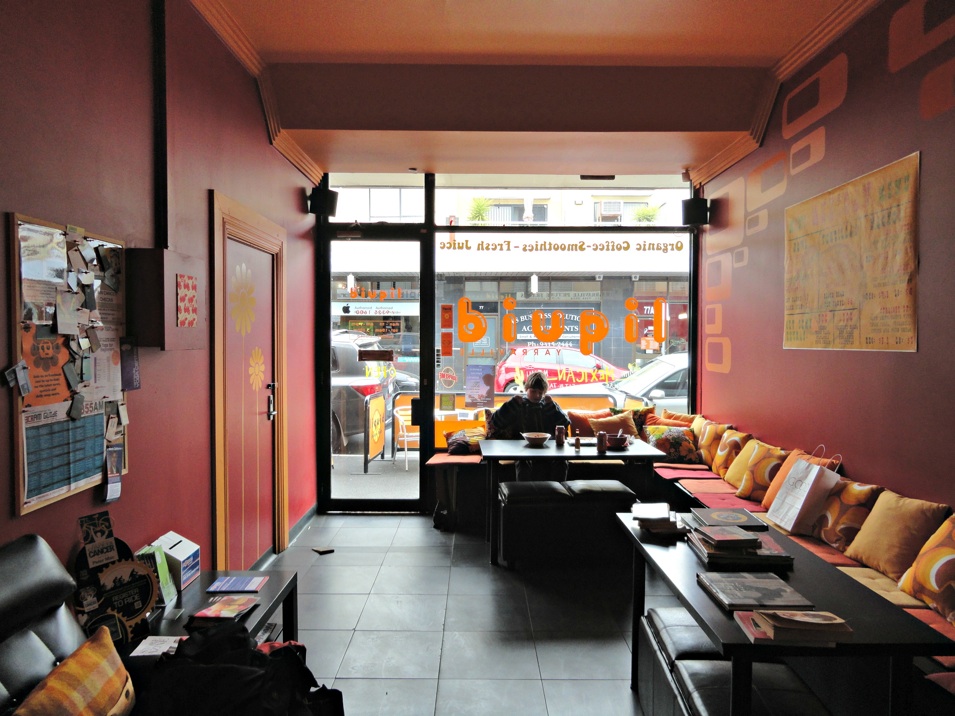
And now there’s Liquid Yarraville.

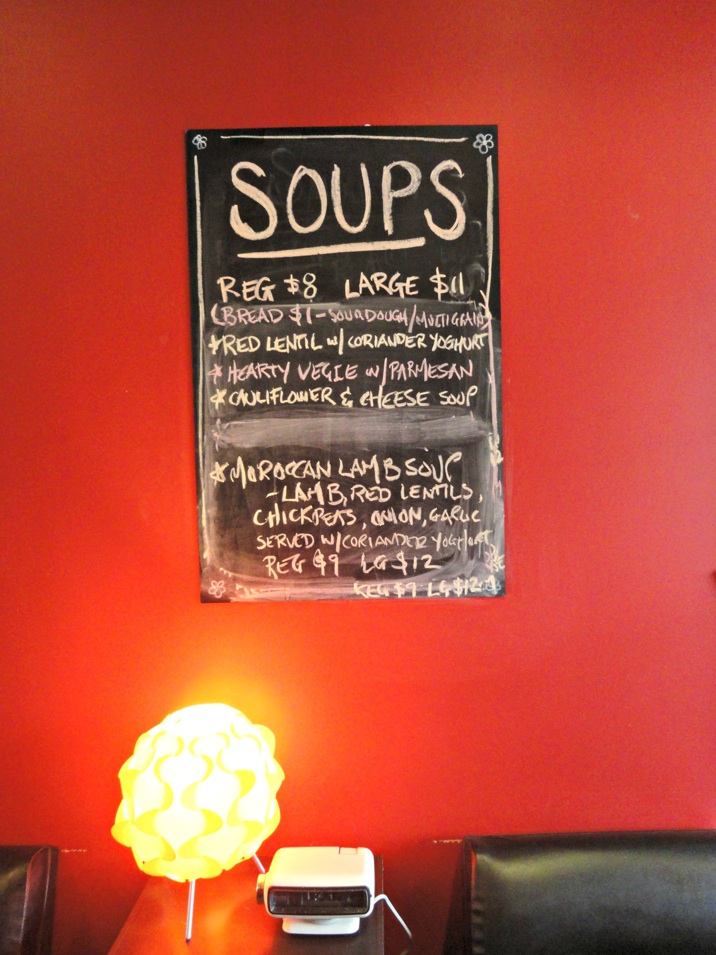
Actually, it’s been there and open for a while, but we’ve only previously visited once – for some OK soup that nevertheless didn’t linger in the memory.

But we’re back, and liable to be so again quite soon, because the place has introduced a line of Mexican stuff.

As Liquid Yarraville basically operates – or has done so until now – as a funky soup-juice-smoothie place, we have no great expectations about authenticity or swishness to match the many Mexican-themed places that have spread like weeds across Melbourne, or even anything as impressive as the franchise joint at Highpoint.

In that regard, we get a nice surprise.

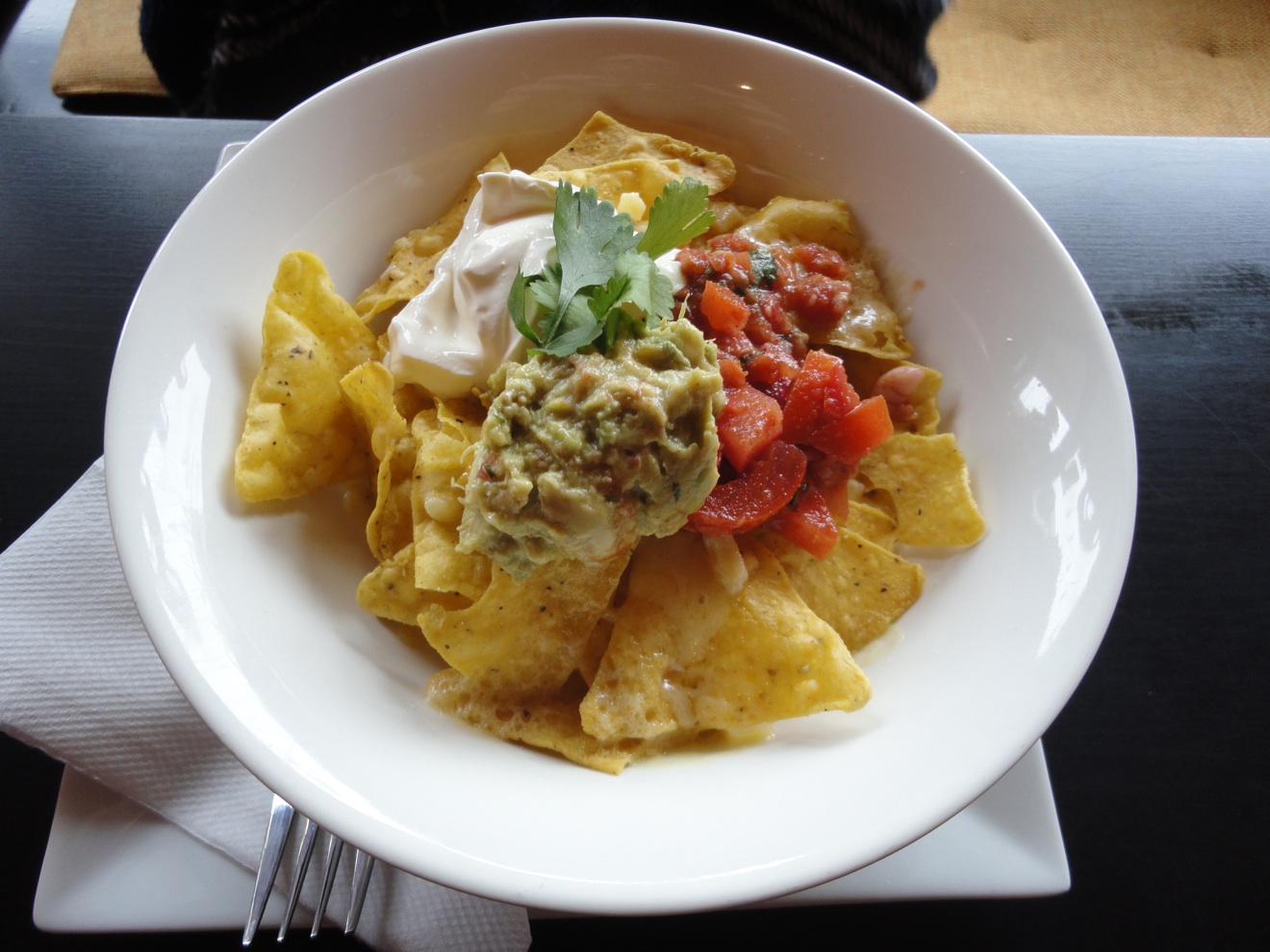
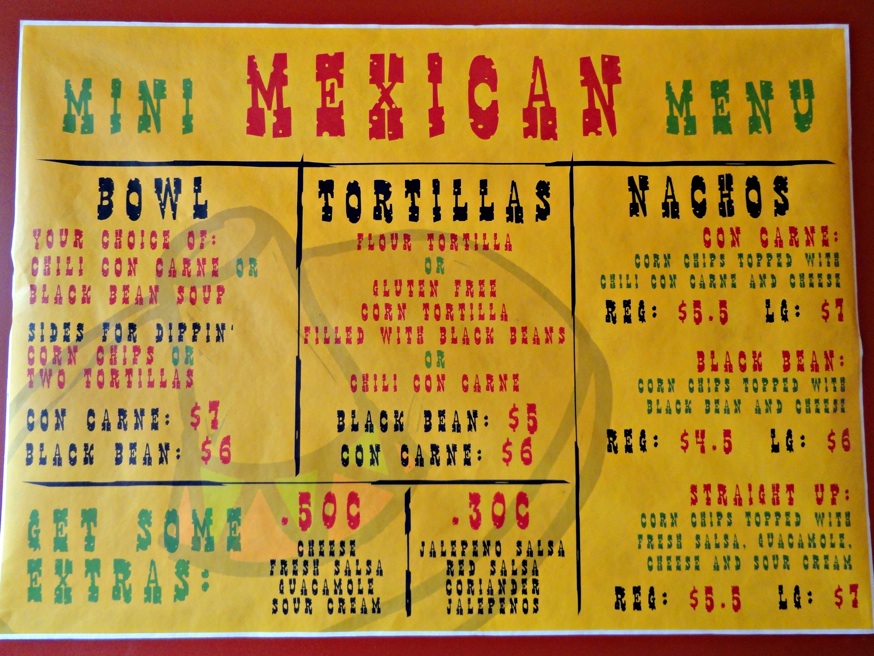
The Liquid lineup comes in three configurations – bowl, tortilla and nachos – that come in black bean and con carne flavours, and there’s a “straight-up” version of the nachos, too.

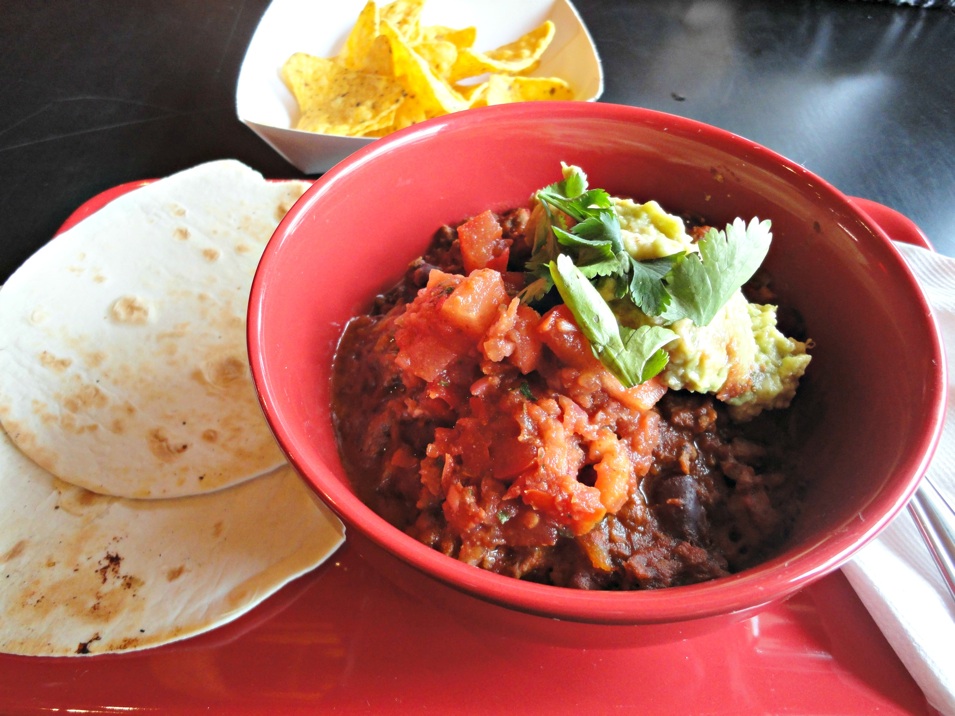
I take the tortilla option with my con carne ($7). And thinking the salsa and guacamole will be served on the side rather than on my stew, I order a small serve of corn chips for a small extra fee.

Bennie orders a large straight-up nachos ($7).

There’s no in-house fizzy drinks available, but we’re told it’s perfectly fine if we step out to the shop across the road for some. So Bennie does.

The corn chips vaguely look like a distant relative of the dreaded Dorito’s.

Happily, that proves not to be the case – they’re good, crunchy, low-salted and uncontaminated by horrid chemical-tainted flavours.

I would prefer the salsa and guacamole to be separate, but enjoy them both a lot with the corn chips before attending to the con carne.

It’s really fine – the equal mix of beans, tomato and beef mince is beautifully seasoned, though I anoint it with a few drops of the Tabasco we’ve been provided on request anyway.

With the slightly cardboardish but OK tortillas, this is very good and tasty meal for $7.

Bennie enjoys his nachos but is a tad jealous of his dad’s con carne, not realising he had been free to go that route with his meal. So he gets a big dollop of it anyway.

Good work by Liquid Yarraville to introduce simple Mexican-style choices while staying true to itself and not trying too hard.

It’s a cool place with a nice range of funky books to browse while you wait or dine.

And the very low prices are tops! 

Liquid Yarraville on Urbanspoon

A New Zealand Adventure

15 Comments

Our school holiday jaunt to New Zealand involved food and eating, but it was much more about another kind of soul food – family.

It was an overdue time for Bennie and his grandma, Pauline Ethel Weir, to spend some time together and for father and son to wallow in some family time of a more extended kind.

While only encompassing a smallish quotient of the family spread across both islands of New Zealand and in Australia, it was without doubt a ripping fine time and a true delight.

It was also a chance for us to explore – albeit briefly – a part of New Zealand we’d never before visited, grandma having moved to New Plymouth, in the province of Taranaki, midway on the west coast of the North Island.

It’s a lovely city of about 70,000. It’s also a surf city, with a small port and surrounded by rolling hills of what appeared to us to be incredibly rich farm land.

For this return to the land of my birth, it struck me for the first time how few are the differences these days between Australia and New Zealand.

New Zealand’s nationwide collection of ancient vehicles and a variety of quaint ways once set it apart – whatever the commonalities between the two countries – but today the differences are increasingly hard to spot.

There were precious few pre-1970s cars to be seen.

And while some of the smaller towns we visited had heaps of charm, New Plymouth itself sported plenty of industrial-size retail precincts with vast spaces dedicated to Hardly Normal, Rebel Sport and more.

We had some beaut eating-out experiences; we had some mediocre ones, too.

But that was fine, because that wasn’t what it was about.

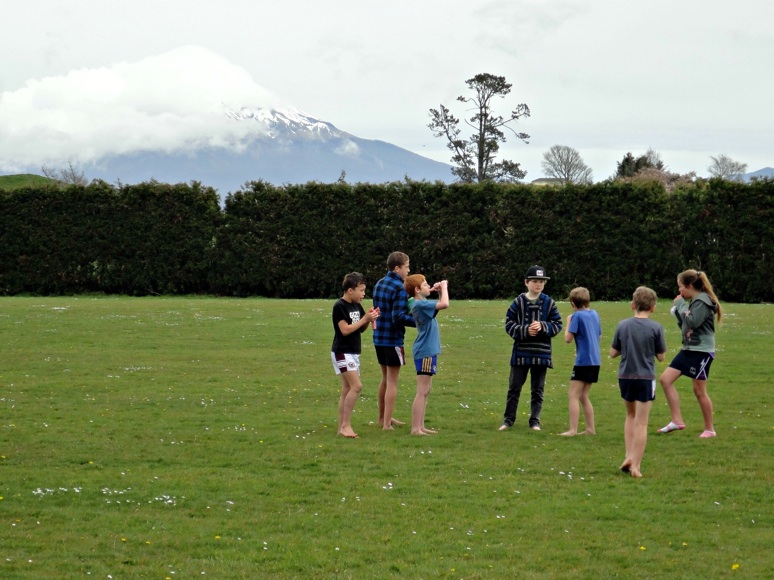
New Plymouth and Taranaki are looked over by the sublime and striking beauty of Mt Egmont – the awesome volcano spends much of its time shrouded in its own cloudy climate, but when it’s clearly visible it’s amazing!

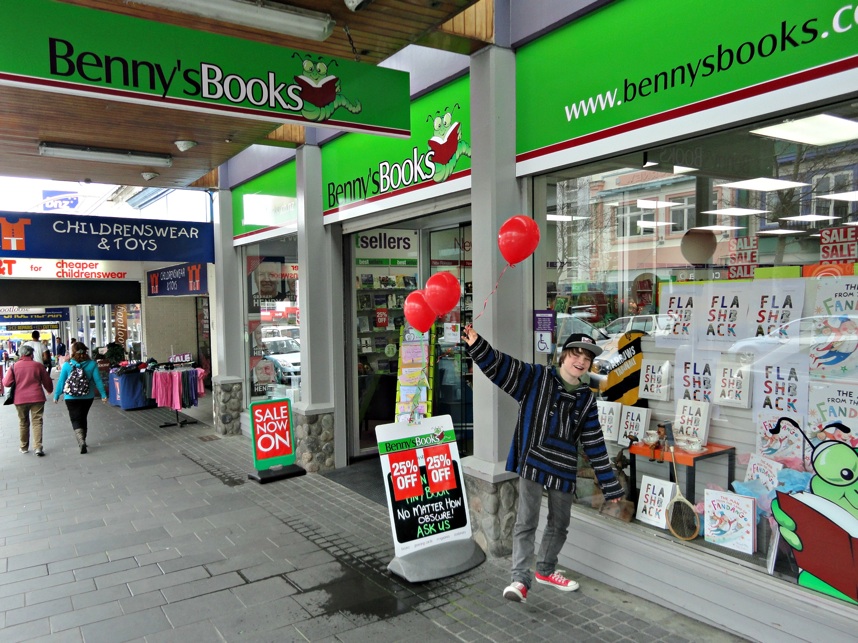
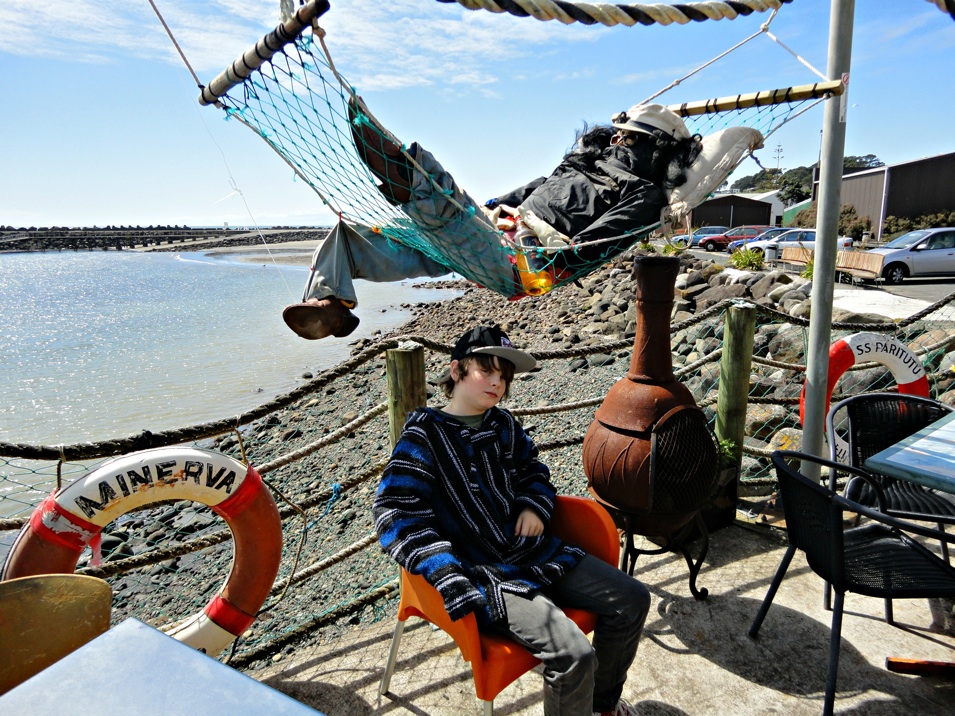
Bennie gets to know the locals as Mt Egmont looks on.

We visited Ratapiko School, where Kay, Kenny’s cousin and Bennie’s second cousin, teaches.

The 100-year-old school deep in the midst of Taranaki farm land has just 20 pupils, ranging from prep up to the Kiwi equivalent of grade 6. Coming from Victoria, where school closures and amalgamations, and their ramifications, remain a sensitive subject, this struck me as quite wonderful.

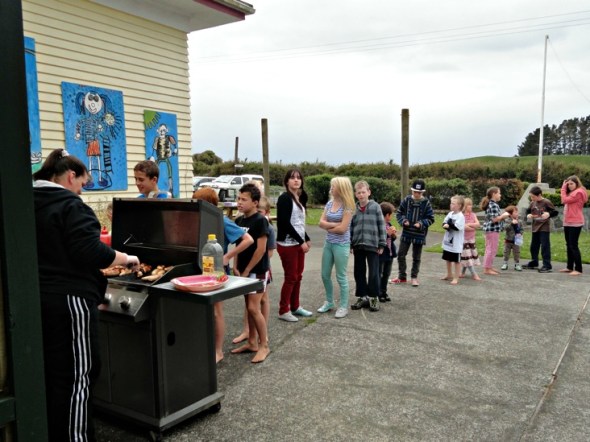
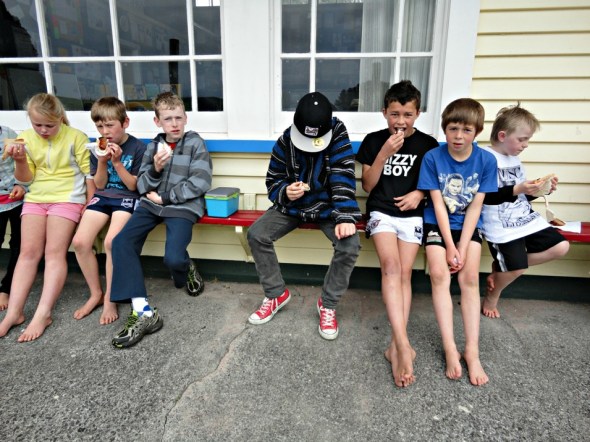
It was the last day of school for them, so we happily joined in the break-up sausage sizzle.

Having spent the week to that point in the company of two adults, Bennie loved hanging a while with the Ratapiko kids and even kicked a football around, and was astounded to learn that some of the pupils regularly rode their horses to school.
After the school visit, we headed for the farm run by Kay, her husband Lawson and daughter Amy.

We were given The Tour by Lawson.

City Boy Bennie had never been around so many animals … outside of the Collingwood Children’s Farm or, in earlier years, petting zoos.

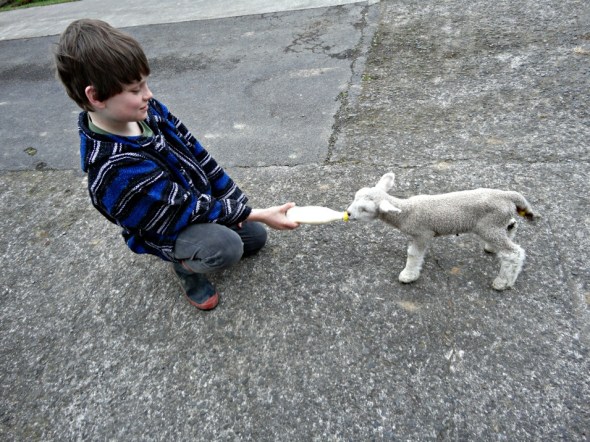
He fed a hungry spring lamb that had earlier demonstrated its eagerness by sucking urgently on a digit, and played with Misty the cat and Basil the house dog.

Basil, who makes up with personality what he lacks in good looks, apparently lords it over the nine or so working dogs on the farm and generally reckons he runs the joint.

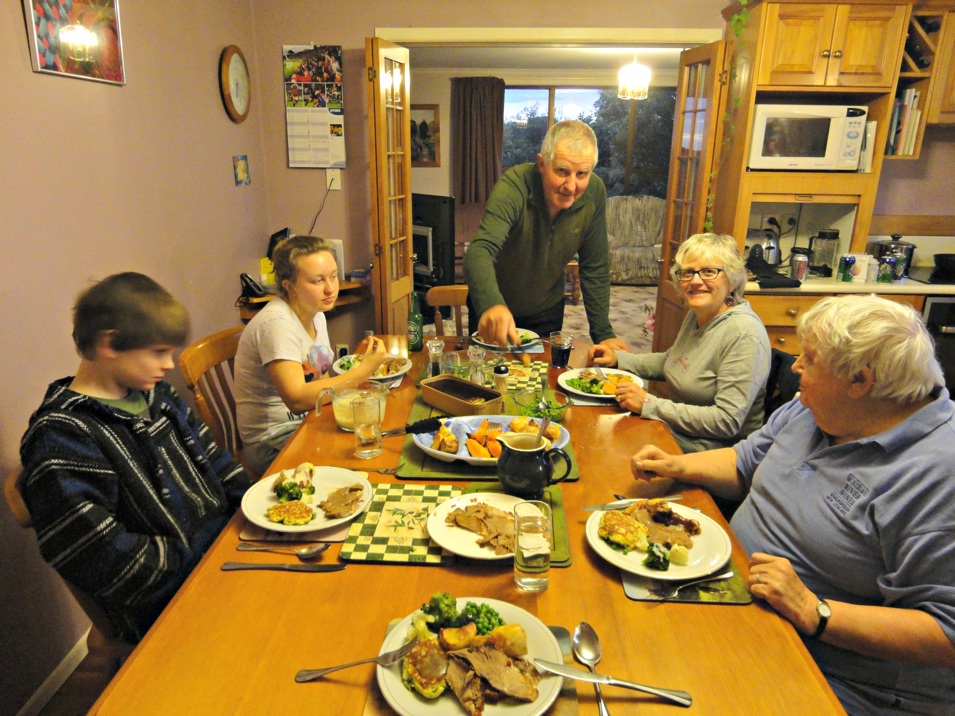
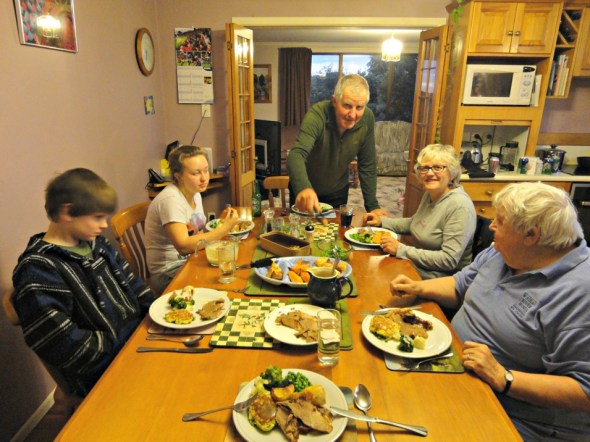
That night we enjoyed a farm-style roast dinner with all the trimmings – a routine meal for Kay, Lawson and Amy, but a pretty darn cool treat for us!
The next day, Kay and family took us to the footy – rugby union, that is.

Everyone in Australia knows New Zealand is obsessed with rugby, but you’ve got to be there to understand just how deep it goes.

Heck, even the premier school teams – “first XVs” – are featured on television. Not live, and not full games, but still …

But while the All Blacks rule and the Super 15 competition grabs the rest of the international action, it is the provincial teams that are the heart and soul of the nation’s game.

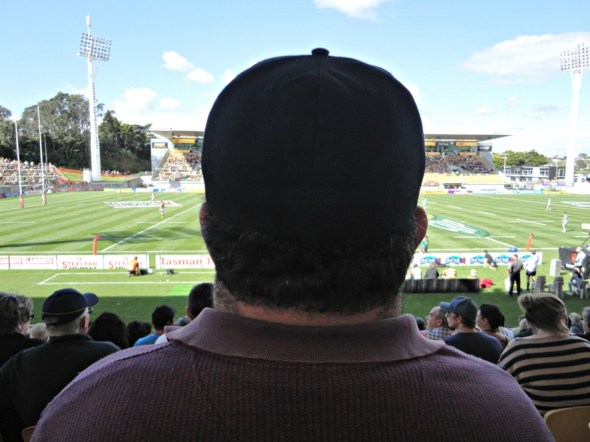
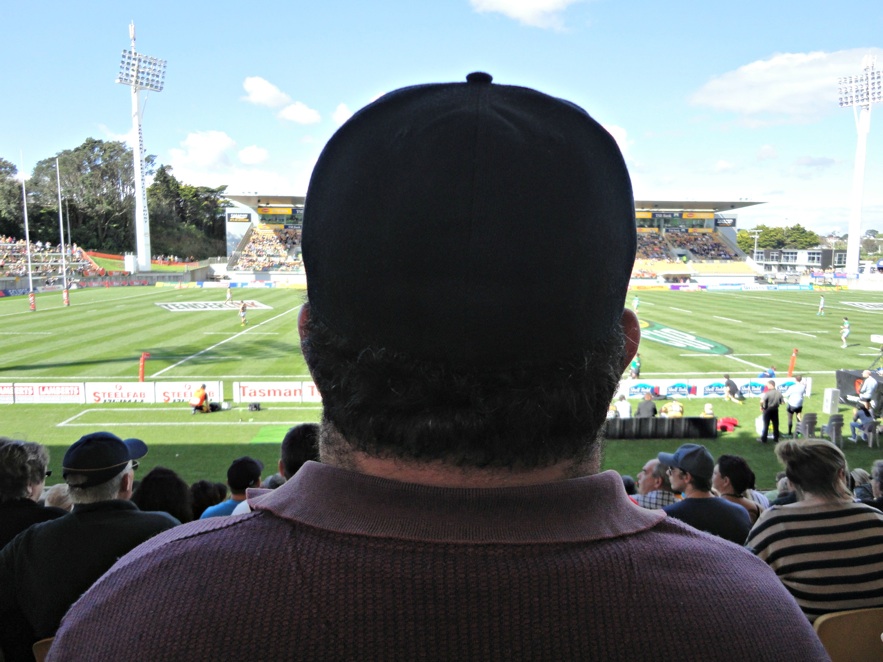
So it was a real treat, for me anyway, to attend a home Taranaki match against neighbouring province Manawatu.

The Ranfurly Shield was at stake.

Like most provincial games these days, it was part of the ITM Cup season, but the shield is a lot older and highly venerated.

Taranaki is the shield holder, and so faces a set number of home-game challenges every season until it eventually loses the shield.

Taranaki was favourite.

The Manawatu supporters – Bucketheads – were in full voice but to no avail.

Their team spent quite a lot of the game on attack, but Taranaki was devastating on the counter. As they say in the biz … in the end, it was a blow-out scoreline.

Food-wise, Bennie and I decided to go for whatever was different from the stuff available at footy matches in Melbourne.

Which was why we ended up with a pie, chips and a Coke …

Why Bennie insisted on swapping seats with his dad.

The Manawatu supporters – the Bucketheads – make a noise and fail to get their team over the line. Or even close to it.

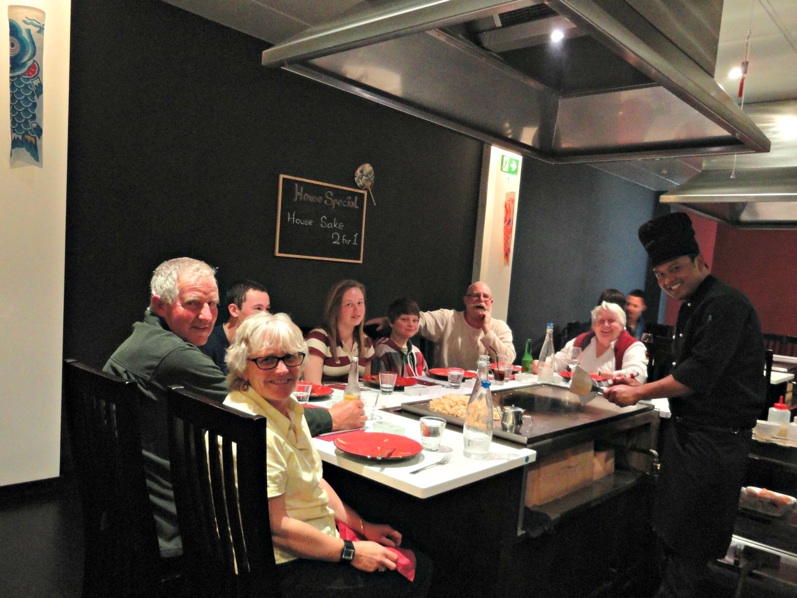
That night, the whole gang – including Grandma Pauline – hit a teppanyaki joint on Devon St, the main drag of New Plymouth.

Otaku was a fine teppanyaki experience – the first for most of our party, and the first Japanese food of any kind for my mum – with all the usual bells and whistles.

With our Japanese chef, Julius from the Philippines, presiding, much fun was had.

Some omelette went into mouths, and some did not; most bowls of fried rice were caught, but some not cleanly; and Pauline slurped miso soup with seaweed and tofu in it.

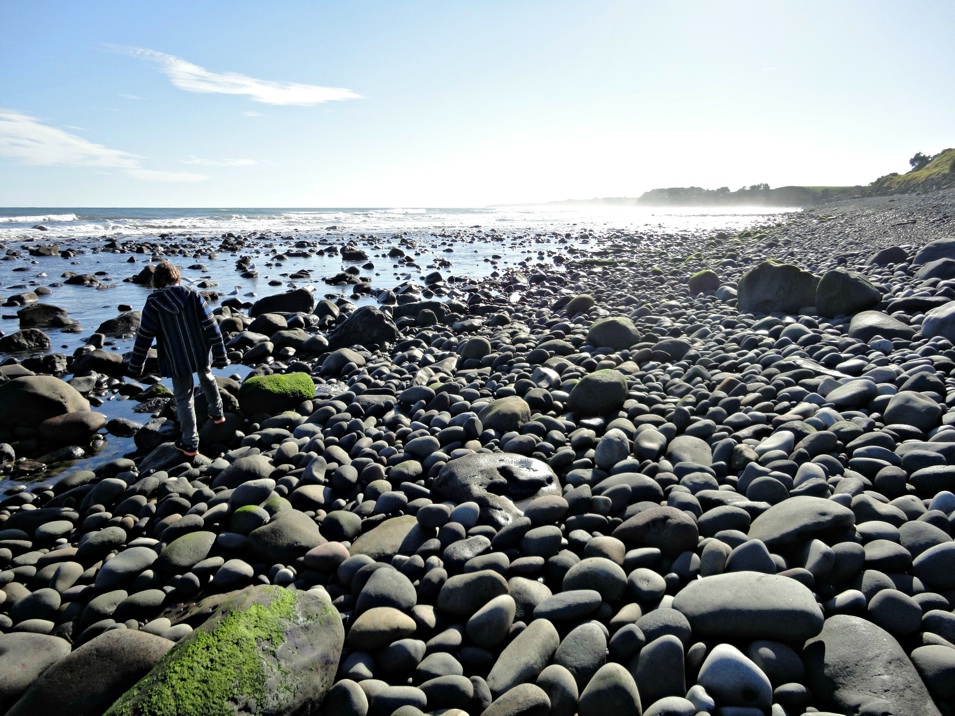
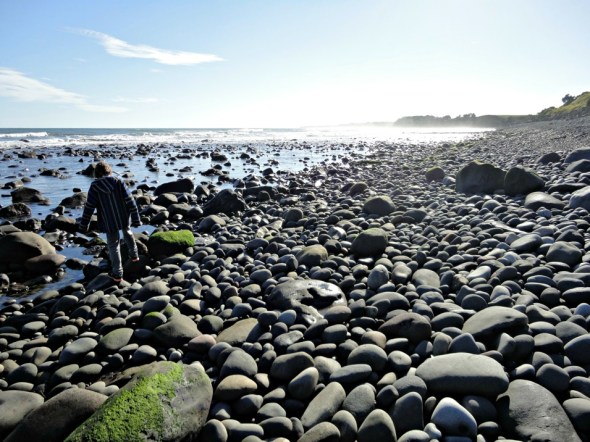
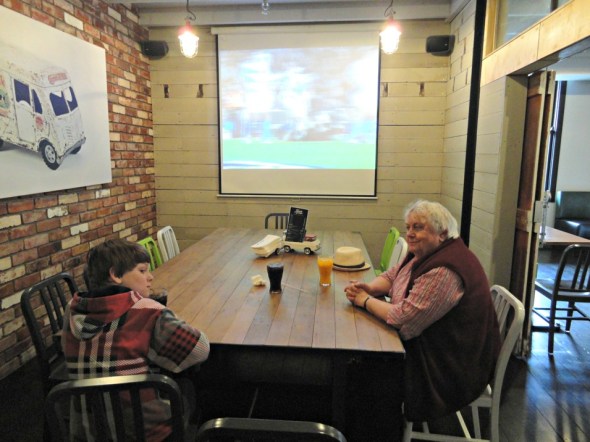
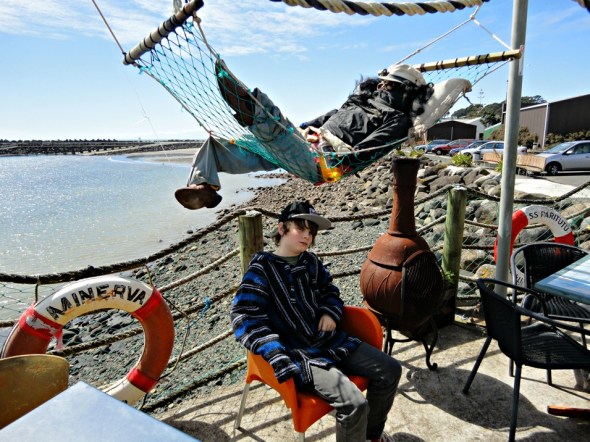
On our final day, we spent a few hours frolicking – well actually, Bennie frolicked, dad and grandma watched – on the glorious black-sanded beach at the small township of Oakura, just south of New Plymouth.

The cool spring day had a fabulous silvery sheen about it.

Before heading to the airport, we enjoyed lunch in another Devon St joint, a newish place called Joe’s Garage.

It was sort of blokey, but we had a room to ourselves with a big screen, so we could watch the All Blacks make short work of the Pumas in Argentina.

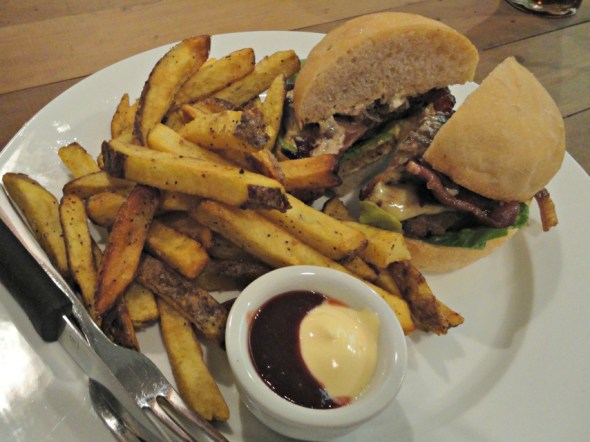
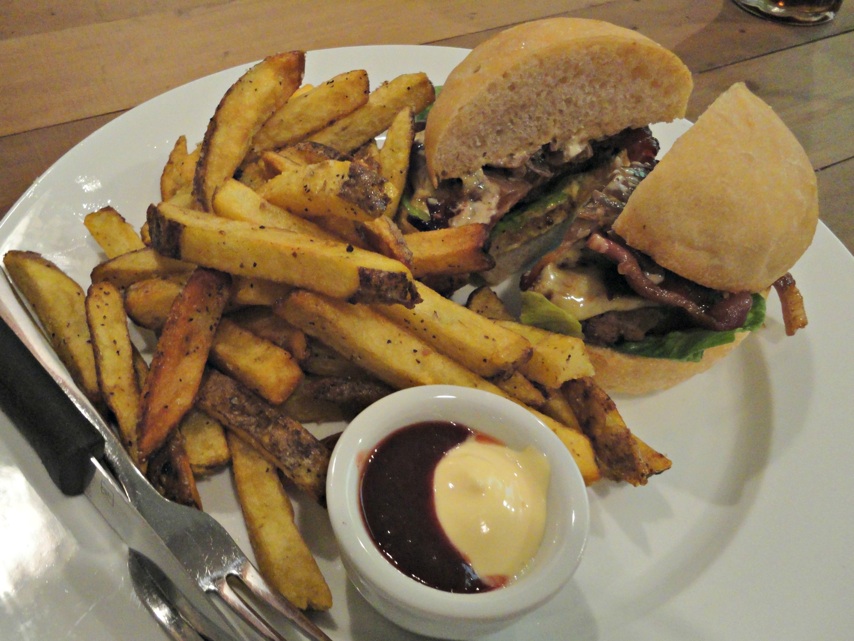
Grandma had the whitebait omelette in a roll, while Bennie and his dad had burgers, which were of the looks small/eats big variety.

The chips were ace.

Why don’t more places do their chips with the spud skins still on?
A pity about the spelling …
Random notes …

2 Comments

One of the pleasures of 2012 for us has been checking out the Thai-centric blog Krapow.

So passionate are these folks about their tucker that one of them, Andy, has constructed a street stall truck, from which he will be dispensing his tried and tested version of Boat Noodle Soup at the North Melbourne Spring Fling in Errol St on Sunday, October 21.

We hear there’ll be Thai-style Doryaki, too.

****

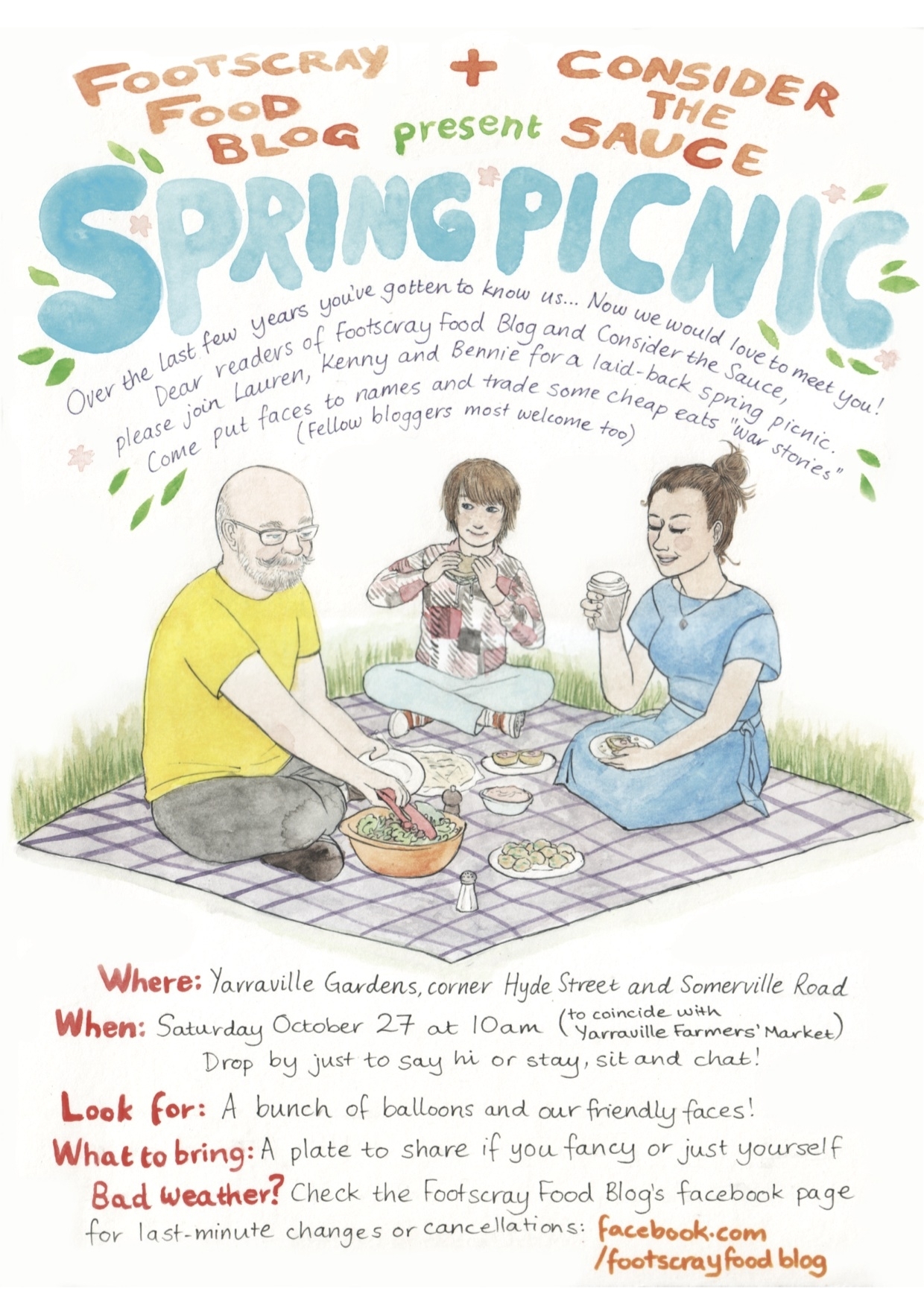
And don’t forget the combined Footscray Food Blog/Consider The Sauce Spring Picnic the following Saturday.

The wonderful poster was created by Ms Baklover’s sister, whose work you can check out here.

****

Coming very soon: The New Zealand Adventures of Gumboman and Gumbolad.

Famous Blue Raincoat

9 Comments

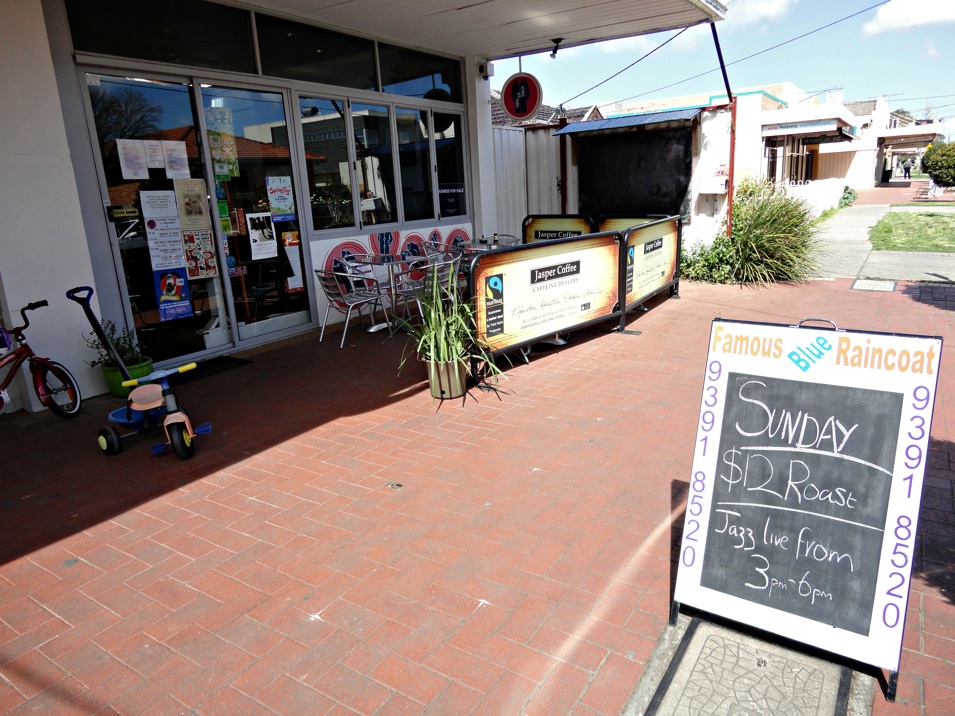
Famous Blue Raincoat, 25 Vernon St, Yarraville. Phone:9391 8520

The Famous Blue Raincoat, which shares the Vernon St strip with Tandoori Flames and Motorino, was one of our semi-regular haunts in our early, pre-CTS days in the west.

I’m not sure why it ceased being so, although preferring to get our grub gratification in non-cafe settings has prolonged that status.

A recent visit for a terrific coffee after an afternoon exploring the west made me think: “Why don’t we come here more often?”

After a momentously fine Sunday lunch, I reckon we may soon be doing just that.

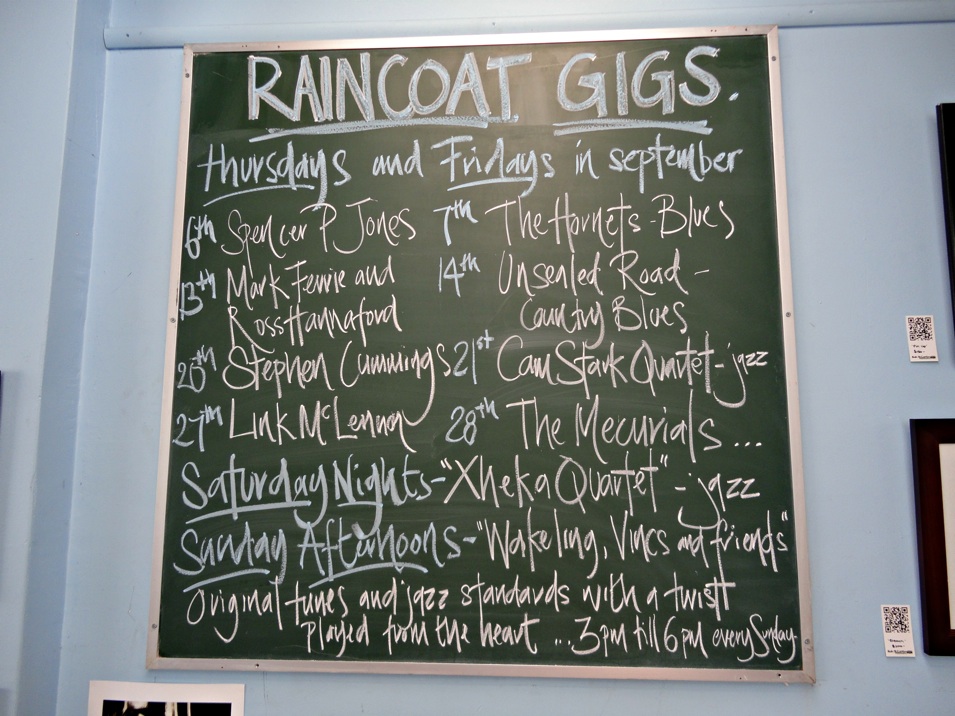
They’re big on music here, with a gig list that features some Very Famous Names.

No live music this lunchtime, but there’s some serious sounds on hand anyway … the classic John Coltrane Quartet seems a bit passionately overbearing for so early in the day, thankfully giving way to Tom Waits, Bonnie Raitt and more rootsy, bluesy stuff.

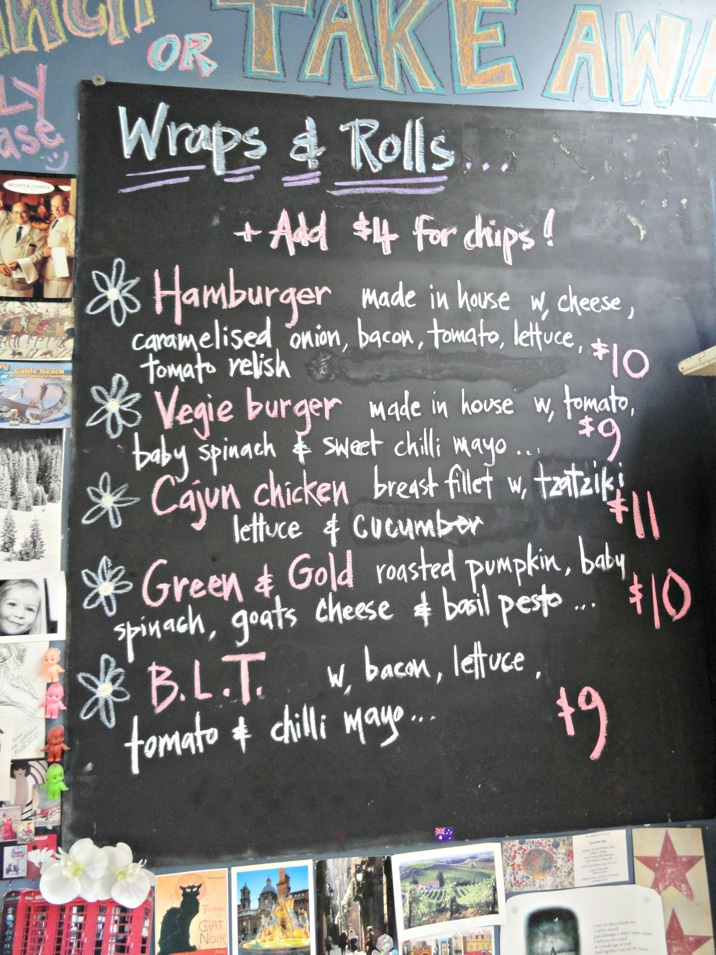
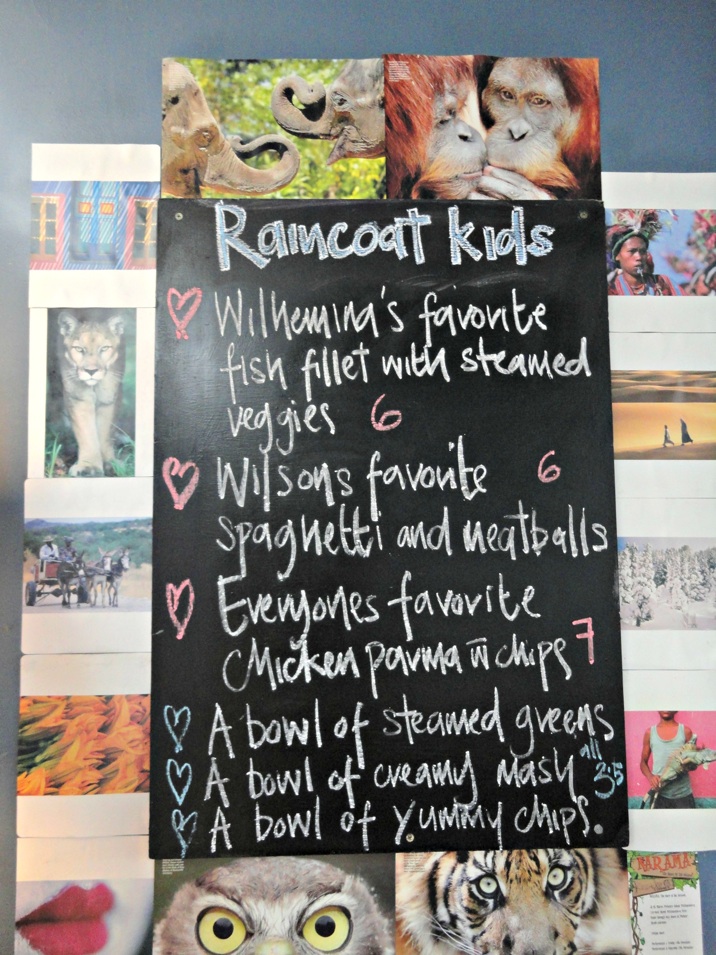
The Coat does a range of food ranging from breakfasts to wraps, tapas, more substantial fare and a neat kids’ list.

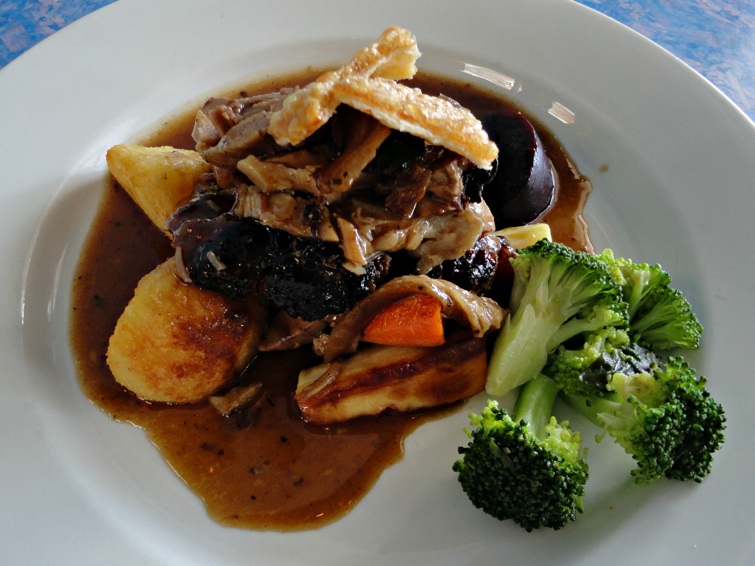
But I’m here specifically to try the regular Sunday roast special – a $12 roast lunch sounds like a very fine thing indeed.

Today it’s pork:

It’s a lot bigger serve than first appears to be the case.

The accompaniments are as expected – three potato segments, parsnip, carrot, broccoli.

And the unexpected – two lovely bits of beetroot.

All are beautifully cooked.

The meat ranges from crusty to lovely and tender, and there’s quite a lot of it. There’s some fat, but it’s easily discarded.

The two pieces of crackling aren’t so much crackly as rock hard – but come good with a good soaking in the flavoursome gravy.

This a sublime lunch at any price, and as good a roast meal as I’ve had.

At $12, it is surely one of Melbourne’s finest dishes.

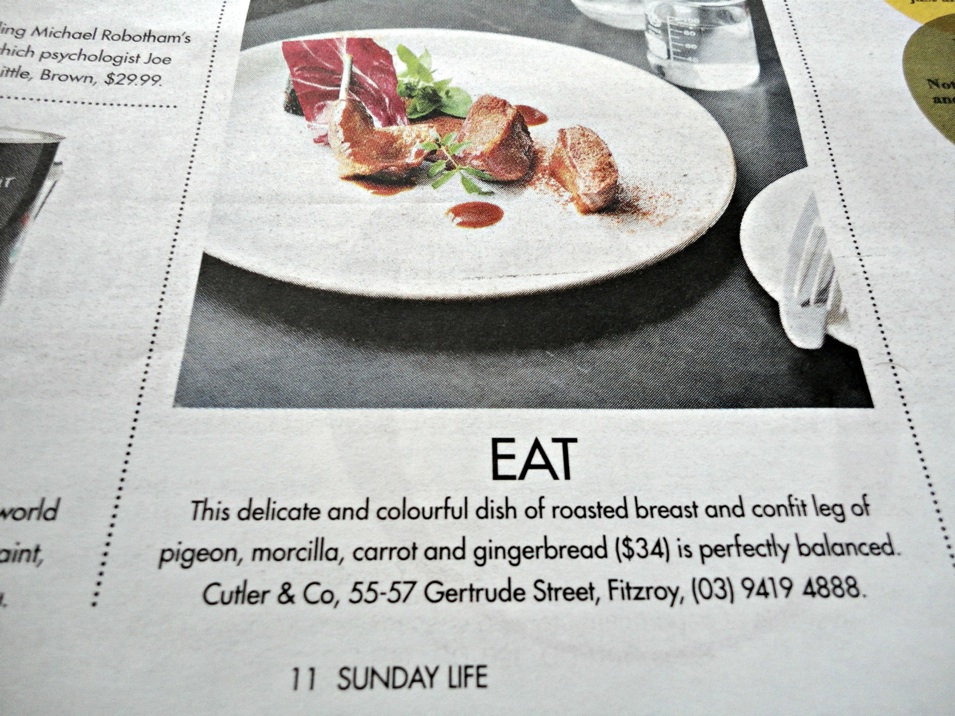
And I can’t help but compare it with a dish I spotted in the $unday Age while awaiting my fodder …

Is that a parallel universe or what?

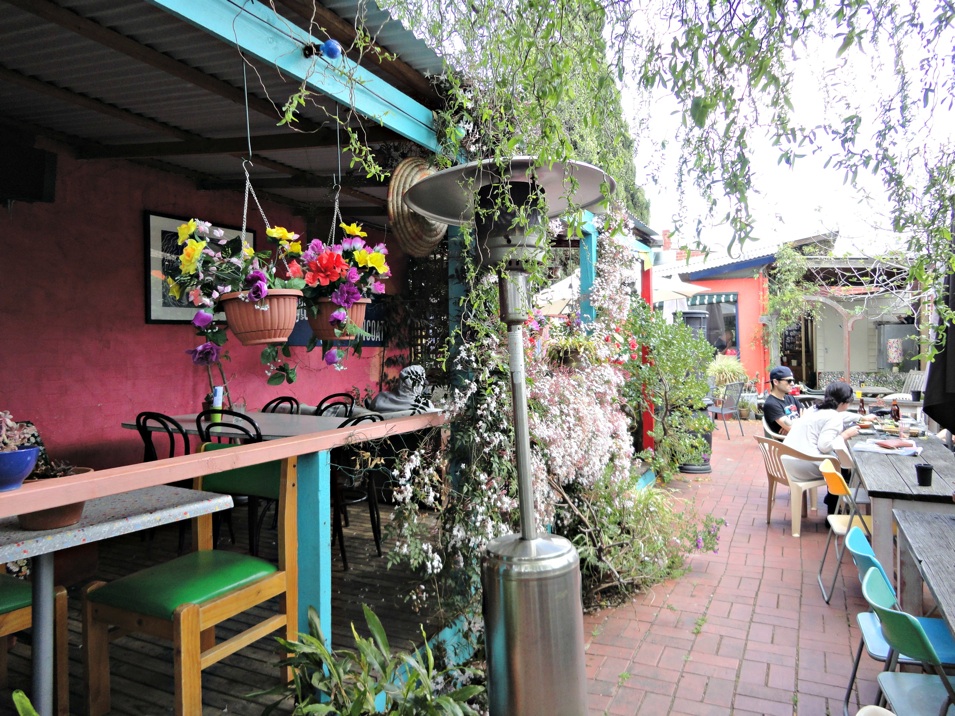
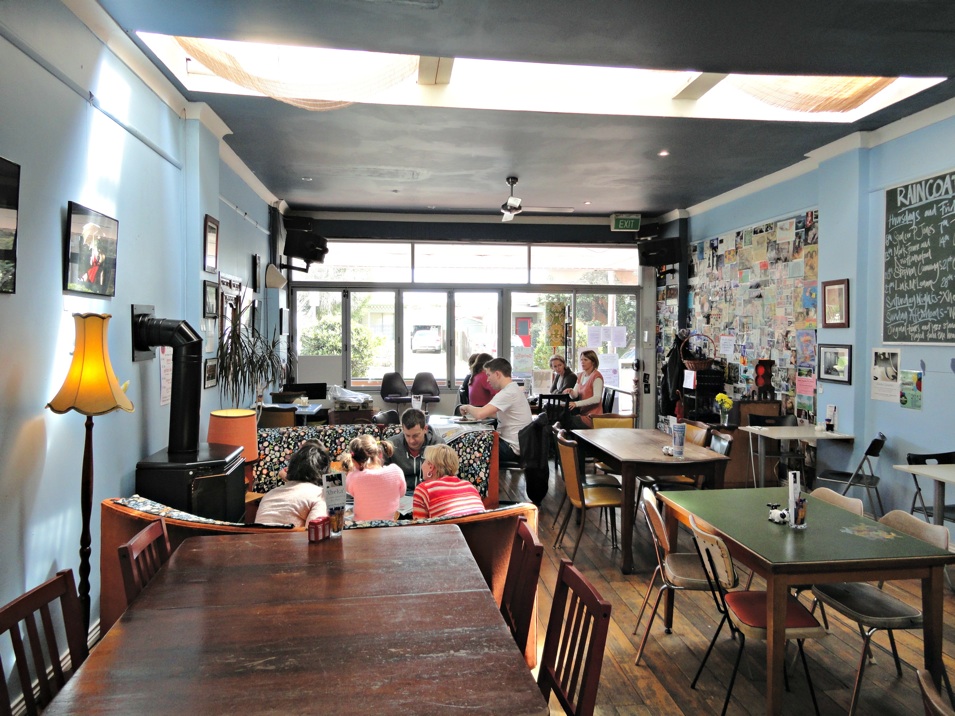
Food aside, this place has a warmly welcoming vibe, the back courtyard is as cool and funky as one could wish, and the cakes look to-die-for.

There’s more magic before I depart smiling … just as my perfect cafe latte arrives, the sounds switch to classic late ’30s Duke Ellington, with singer Ivie Anderson and trombonist Lawrence Brown wailing on Rose Of The Rio Grande.

Perfect!

The regular Sunday roast is matched by a more wide-ranging $12 “locals’ night” on Wednesday.

The Famous Blue Raincoat website is here.

Famous Blue Rain Coat on Urbanspoon

Hong Kong Noodle Bar

Leave a comment

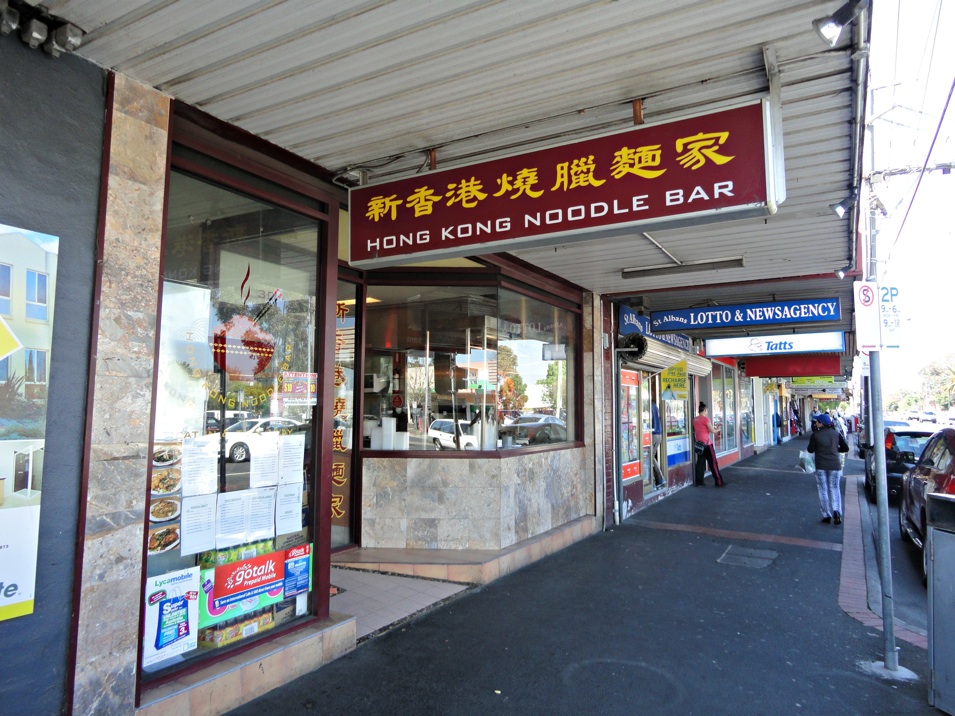
Hong Kong Noodle Bar, 306 Main Rd E, St Albans. Phone: 9367 2525

Hong Kong Noodle Bar has a very similar name and look to a very similar establishment in Footscray – could be they’re even related in some way.

We’ve generally found the Footscray version to be of such haphazard service levels that we stay away.

But that’s not the reason we’ve taken so long to check out the one in St Albans.

That has had more to do with more alluring options around the corner in Alfrieda St.

For this lunchtime, though, none of them appeal … and even the banh mi places are all a-jostle.

So in I go … and end up very happy that I have done so.

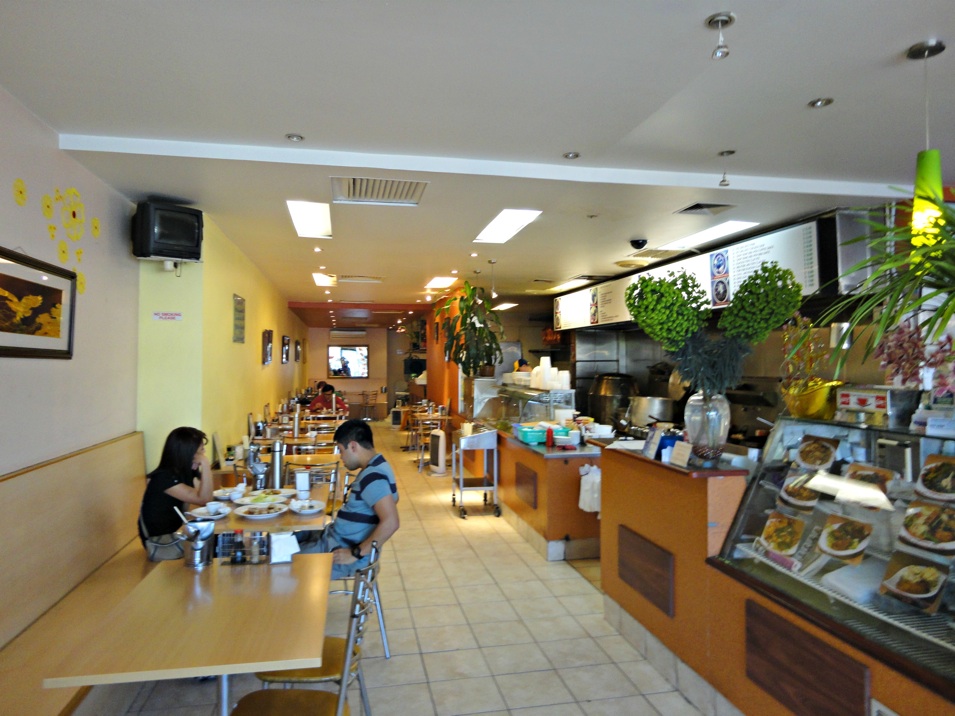
For this seems like an everyday eats joint of quite some excellence.

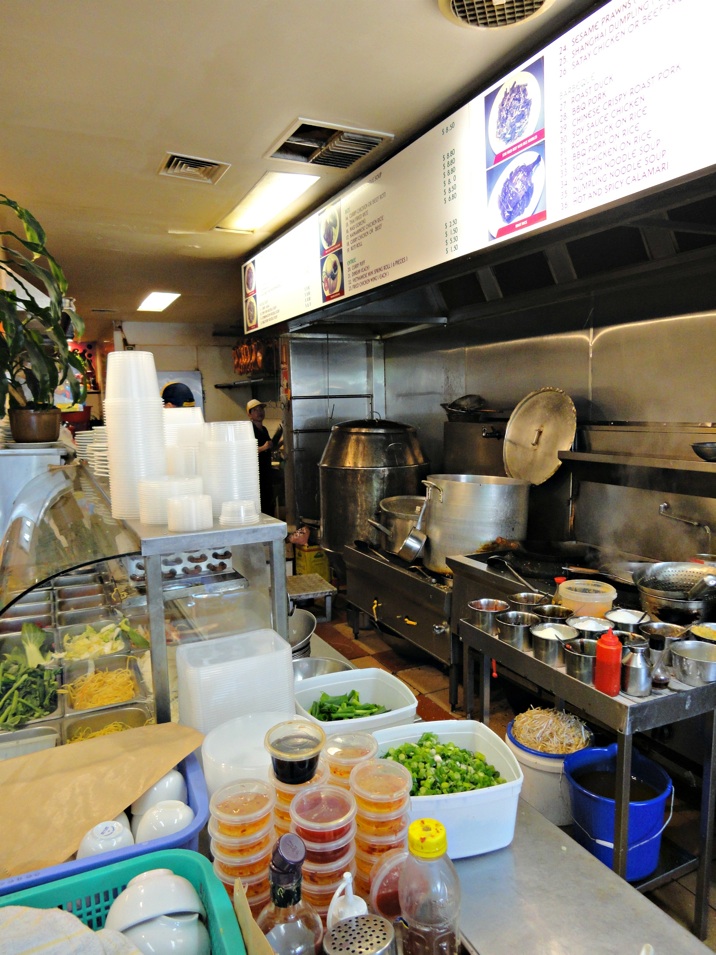
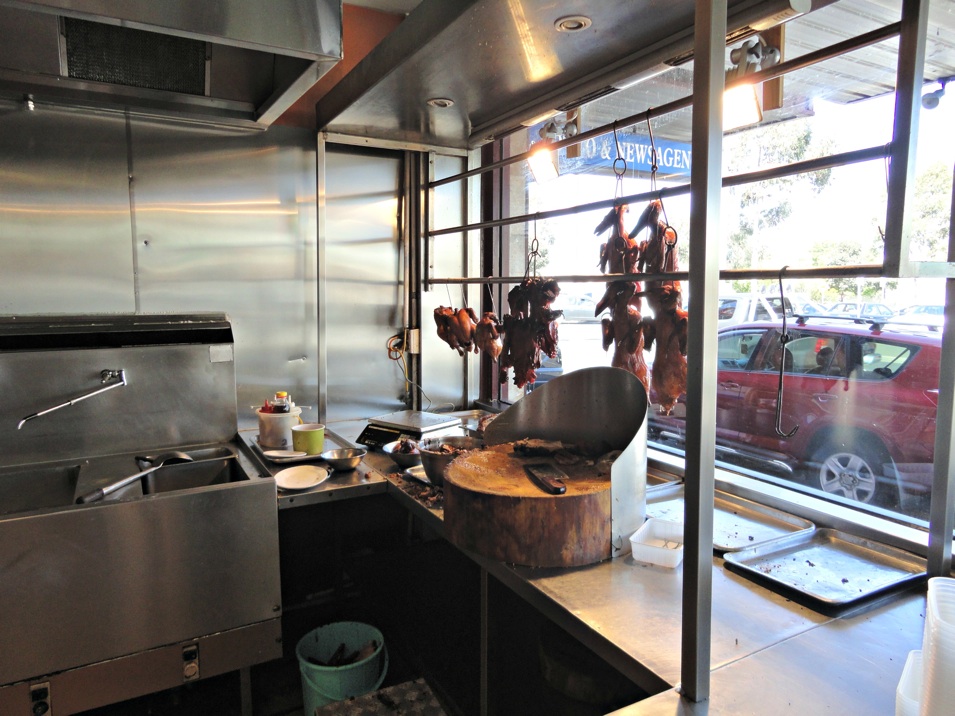
The basic vibe is Chinese-style BBQ meats, with the roast beasties hanging in the window, the comforting chopping sound that can elicit pavlovian drool and – at one end of the kitchen – a handsome, large and rotund oven that indicates the roasting is done in-house.

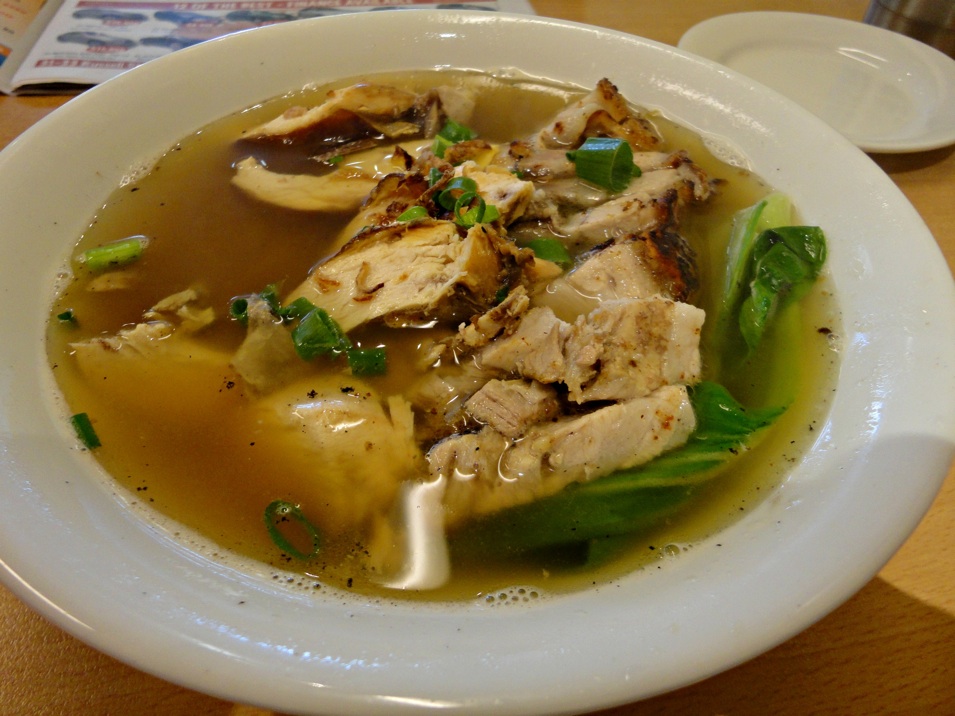
Although double-banger rice or soup noodle plates are not on the menu, I have little trouble in arranging a soup bowl with both soya chicken and BBQ pork.

I love the way the sediments from the roast meats flavours the broth.

I don’t ever remember having this sort of soup bowl with anything other than squiggly, commercial egg noodles. I’m not sure I’d like it if I did.

Same goes with the MSG. Fine by me … for eating out. Does anyone use MSG at home?

There’s a good supply of bok choy.

As for the meats …

The chicken seems to be almost all breast meat, and thus a little on the dry side but blessedly free of bones.

The pork is sinfully rich, fatty and delicious.

It’s a cracking lunch for $8.

Honk Kong Noodle Bar flirts with a few dishes of Thai or Malaysian derivation, but I reckon tried and true is the go here.

Indeed, some of the rice plates I see around me look both fine and big, with bells and whistles – small bowls of soup and fresh chilli slices – that are not always the norm.

I wish we had one in our immediate neighbourhood.

Hong Kong Noodle Bar on Urbanspoon

Makhlama bil poteita (Iraqi omelette with potatoes and herbs)

Leave a comment

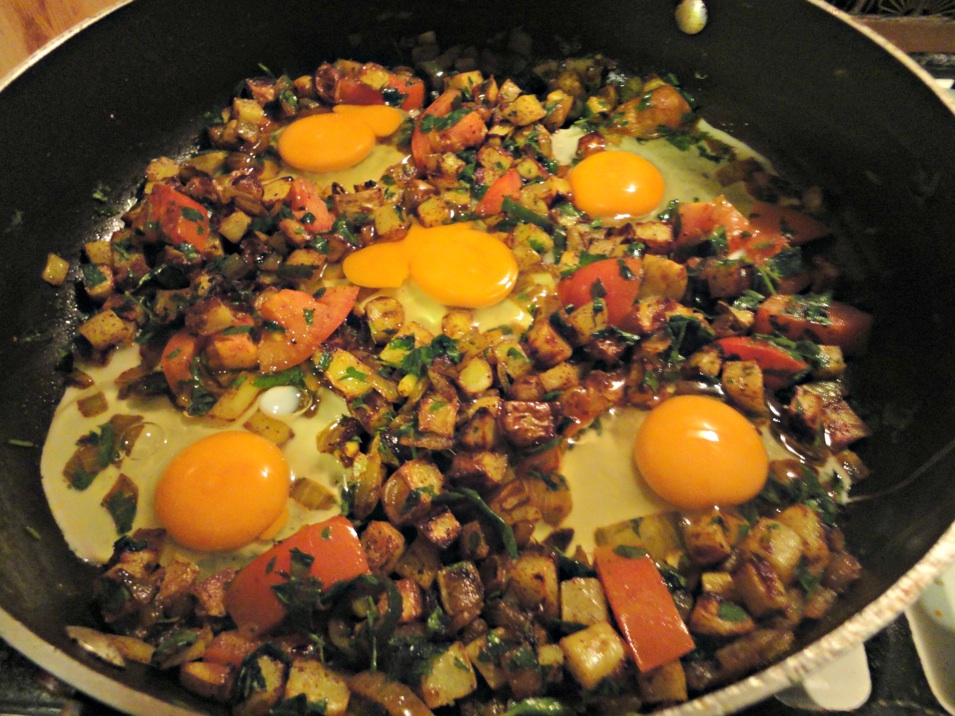
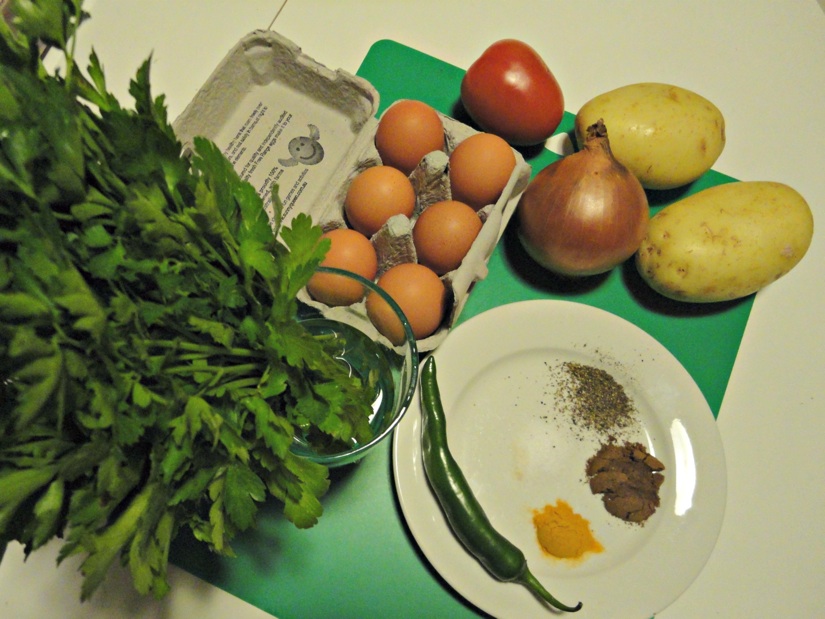
Yes, here’s another one from Delights From The Garden Of Eden by Nawal Nasrallah, although I’m guessing my version only approximated what the author was intending.

That’s because I made some changes.

Used five eggs instead of the full half dozen.

Had no dill or mint, so went gangbusters with the parsley.

Used two diced spuds instead of the slightly greater quantities of two cups of diced spuds.

And used most of a large green chilli.

So maybe my pan was too wide for the lesser amount of total ingredients.

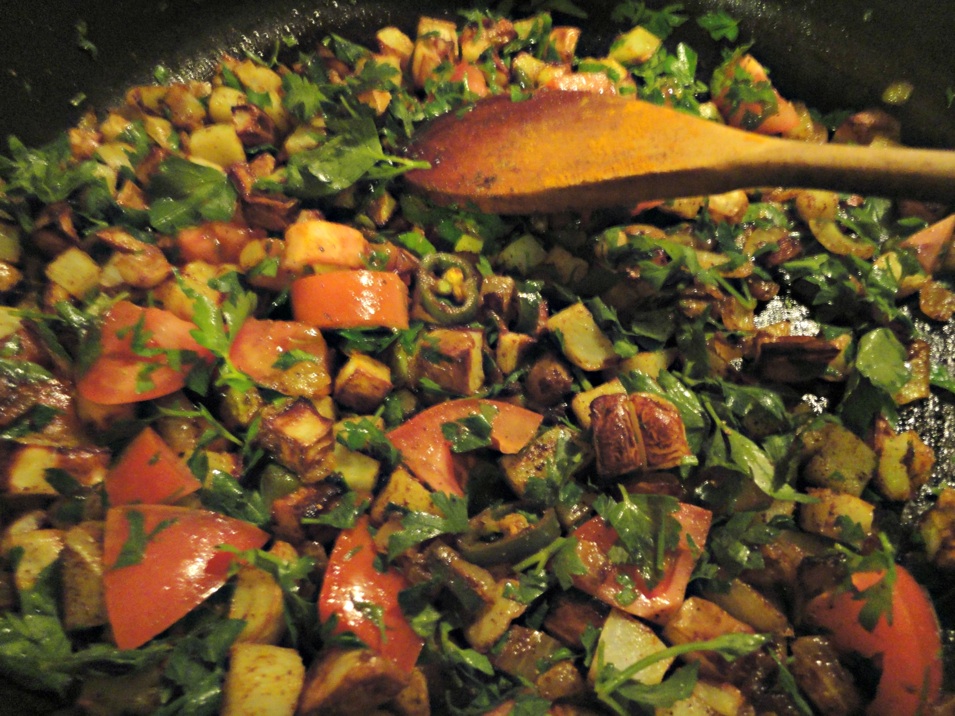
Only about half of it lifted from the pan in the form of a coherent omelette; but that was OK, too.

It was a messy, delicious jumble – I ate it with pita bread, which I used like or injera, or the pita when eating scrambled eggs at Al-Alamy.

And the leftovers were cool eaten the same way cold the next day at work, and would be good in sandwiches, too.

INGREDIENTS

2 spuds

2 tablespoons oil

1 medium onion, chopped

1/2 teaspoon curry powder

1/4 teaspoon turmeric

1/2 teaspoon salt

1/4 teaspoon black pepper

1 medium tomato, chopped

3/4 cup parsley, chopped

5 eggs

METHOD

1. Pre-heat oven to about 220C.

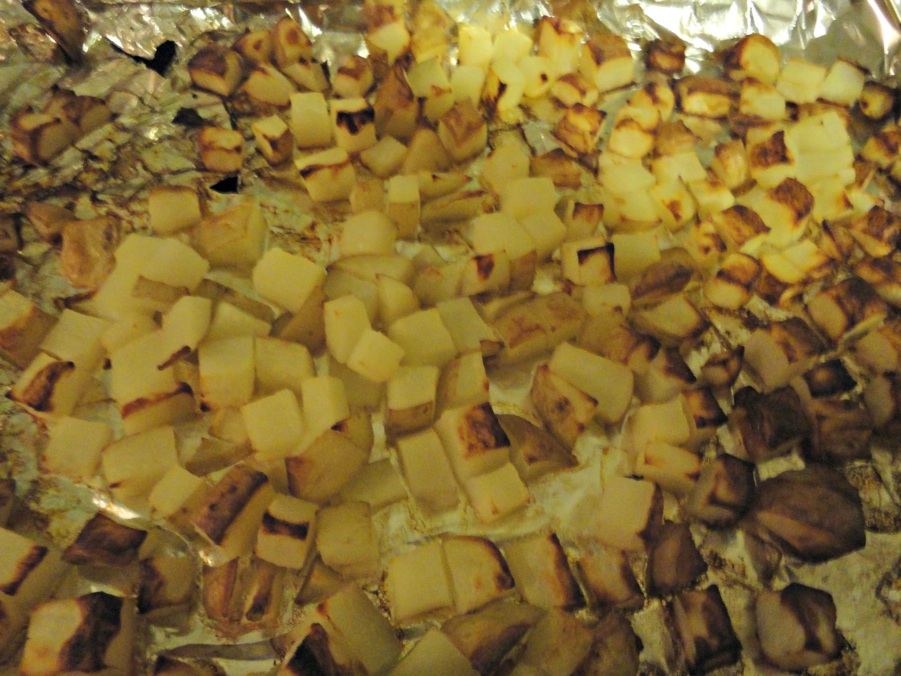
2. Chop spuds into small dice, place on a foil-lined tray, spray with oil and place in hot oven. Should take about 15-20 minutes to cook. Turn potato bits over halfway through cooking.

3. While they’re getting nice and brown, fry onion over medium heat with turmeric and curry powder.

4. After about seven minutes, add the potato, tomato, parsley, pepper and salt. Mix well and cook for a few minutes more.

5. Flatten vegetable mix with wooden spoon then create spaces four the eggs.

6. Lower heat to medium low.

7. Break eggs into the holes made for them. Fry gently until cooked as is, or run a knife through the eggs to disperse the yolks through the vegetables.

8. Serve with sides, condiments and accessories as you desire.


Salaam Namaste Dosa Hut

6 Comments

Salaam Namaste Dosa Hut, 604 Barkly St, West Footscray. Phone: 9687 0171

Does a restaurant have any sort of obligation to tell customers what is in their food?

The food for which they are paying and which they are eating?

My persistent inquiries about the seasoning specifics of my rice meal at Dosa Hut are met with smiles, giggles, shrugs and vague mutterings.

It’s all good fun and I’m not even close to chagrined that I fail in my quest.

Bemused, maybe.

But maybe, too, some things are meant to remain unknown.

Dosa Hut should be celebrated widely in the west for being the first eatery to bring dosas and associated goodies into our part of the world.

That seems a long time ago now.

That first incarnation had a dingy shack aspect with a service vibe to match.

A second incarnation – detailed here – took a significant step towards a more formal and professional approach.

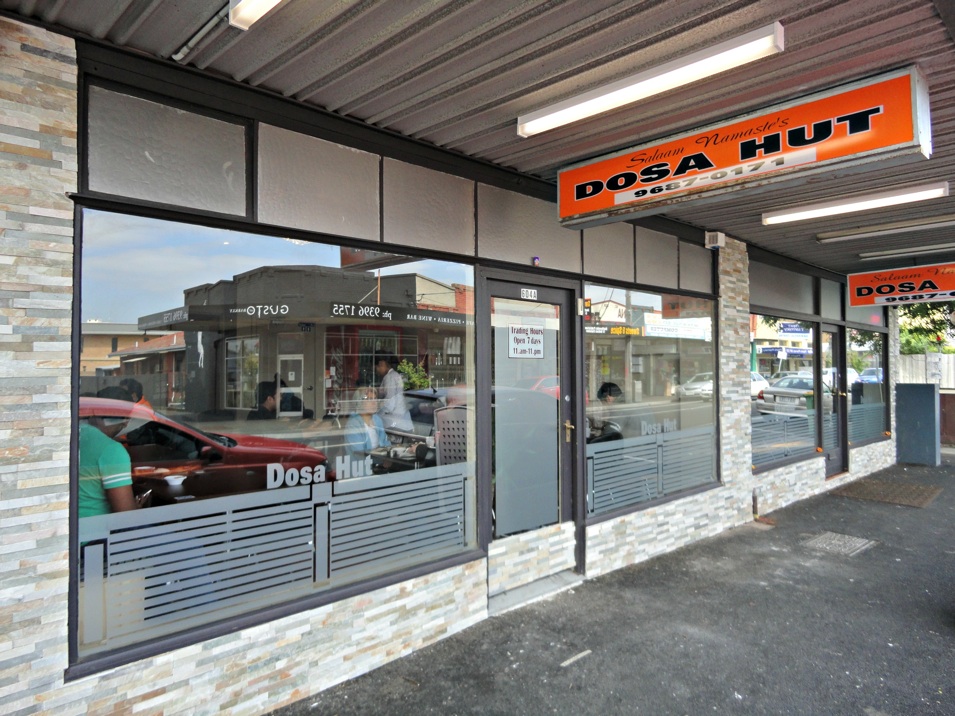
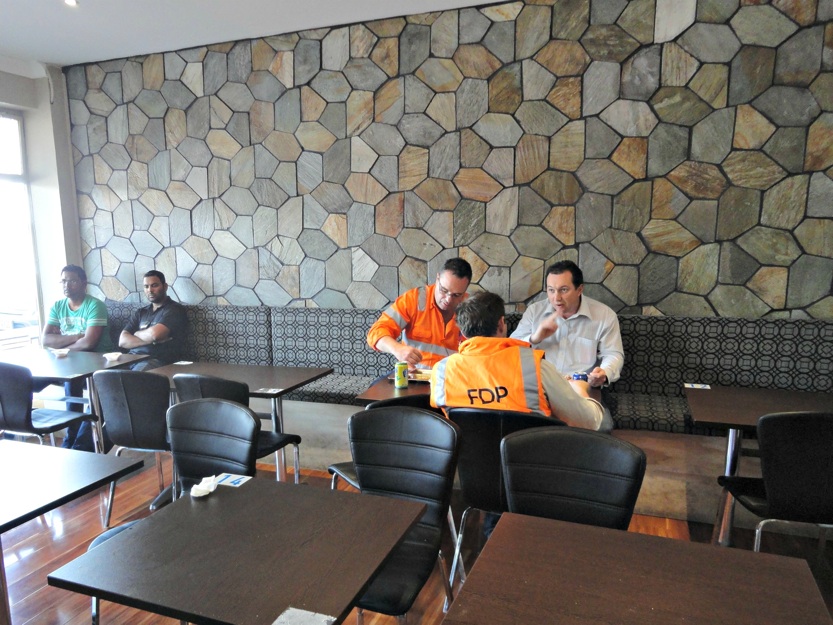
Now Dosa Hut has its third incarnation – and it’s another cool step upwards.

There’s branded windows, chic interior decor, a lot more room.

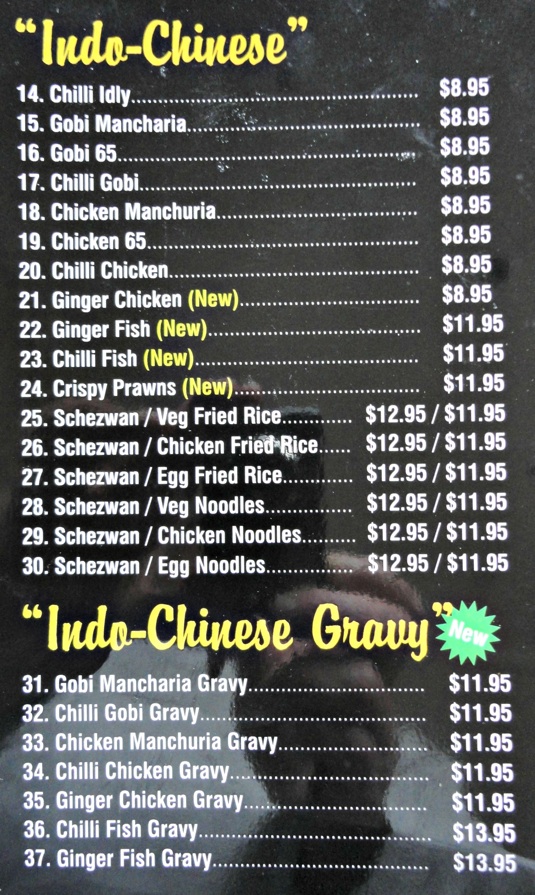
As far as I can tell, the menu remains much the same – though I suspect the range of dishes available of the Indo-Chinese variety has grown.

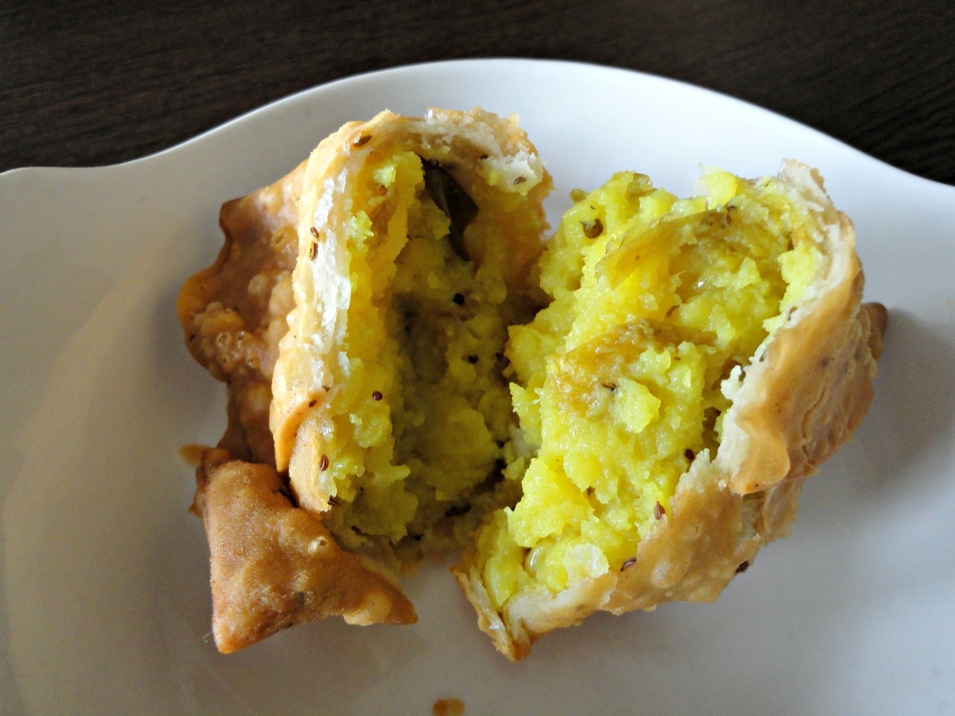
My simple, plain samosa ($1.95)  is beaut – mildly seasoned, beautifully tender potato, ungreasy pastry exterior.

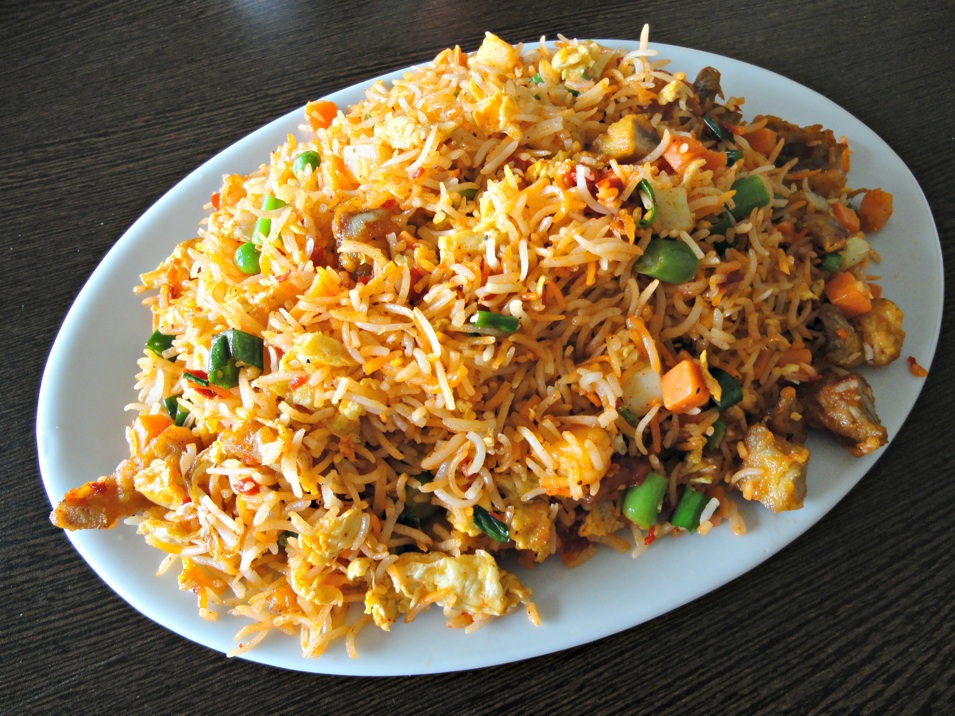
From the Indo-Chinese list I choose “Schezwan Chicken Fried Rice” ($12.95). 

You might be thinking that’s quite a hefty amount to pay for a glorified Indian take on a familiar Chinese staple in a cheap eats diner.

You would be wrong.

This is a killer dish; a sensation.

Heaps of fluffy rice is riddled with chewy fried chicken chunks, omelette, peas and finely diced green onion and carrot.

It’s all quite dry and very un-oily, though like just about everything in the Indo-Chinese recipe book, it’ll never pass for health food.

The first few mouthfuls indicate spice levels of a benign nature.

That, too, is misleading. This dish has a magnificent slow-burn spiciness that glows yet never really reaches high-intensity levels.

Given the staff’s reluctance to clarify my seasoning queries, I’m only guessing. 

The orange colouring from a mix of turmeric and chilli powder?

The magnificent slow-burn heat from a LOT of white pepper?

It matters not – I love every mouthful.

It’s a big serve, one that should really be shared.

But I go closer to finishing it than I thought I would.

Salaam Namaste Dosa Hut on Urbanspoon

Filming Love To Share

3 Comments

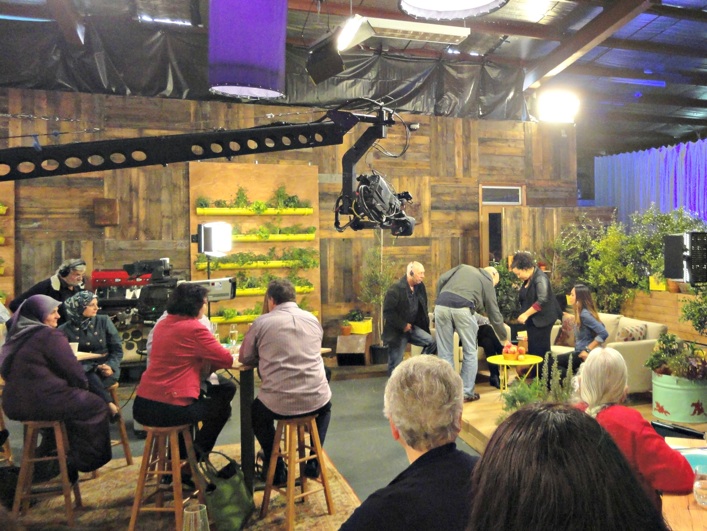
On the way to Raw Materials in Cowper St, Footscray, to be part of the audience for TV food show Love To Share, a thought strikes.

As someone who recently signed up for a talent agency with a view to broadening my income portfolio through work as an extra, it is this: Has not the television industry – and commercial television, in particular – perpetrated one of the great con jobs?

Instead of happily volunteering their time for the glimpses of glam it provides, shouldn’t audience members for television shows be paid for their time?

During the filming, I put this idea to an experienced TV industry type on the set.

She laughs – and immediately, if anonymously, concedes the point.

After all, myself and all my fellow audience members for this filming are required to sign a release form – just the same as any extra or actor.

Just kidding, really – after all, that horse has well and truly bolted.

Love To Share is a weekly program being screened by the Ten Network. The first episode went to air a few days before the episode of which CTS is to be part is put together.

The show is hosted by 2010 MasterChef competitor Aaron Harvie, who is joined by in-house show chef Darren Robertson, various other presenters and guests.

I’m no fan of so-called free-to-air TV or MasterChef – I reckon that particular show isn’t actually about food. Like so many of its ilk, what it’s about is TV.

So what am I doing here?

Well, it has foodiness elements, it’s being produced in Footscray, it’ll take up an otherwise free morning and I hope to generate a blog story out of the experience.

I’m a little wary, though. I’ve known people from the film and TV industry, and have been in recording studios when albums are being recorded, so I know full well tedium and down time can be and often are part of the deal.

So I’m interested in discovering if being present at the filming is better than enduring the tedium of endless promos and adverts that go with watching such shows at home.

I’m also curious and a little nervous about how the presence of a blogger/journalist brandishing a camera and with lots of pesky questions is going to go down.

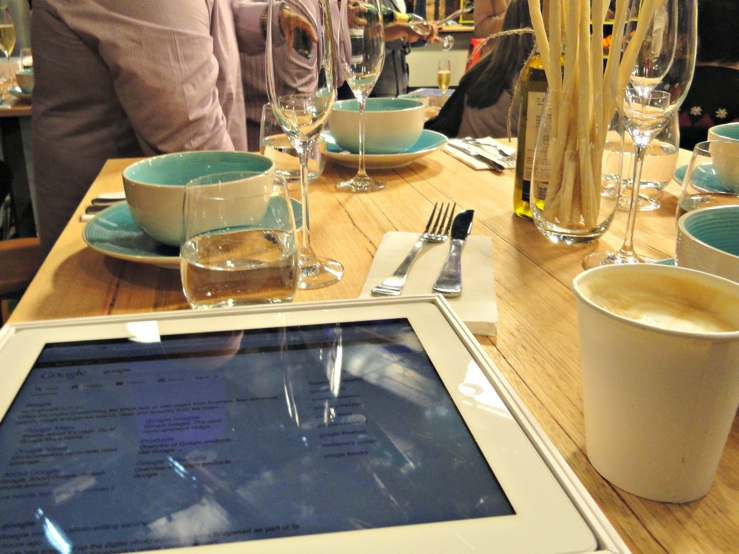
Upon being seated at one of the dozen or so tables, audience members are asked to sign their release forms and sign up for the show’s website using the iPads provided.

There is nervous laughter from some of us as it dawns that we are not allowed to take the cool gizmos home.

My table companions are Amber and Jess.

We are also invited to partake of coffee, real champagne or both.

I settle for a nice cafe latte in a cardboard cup.

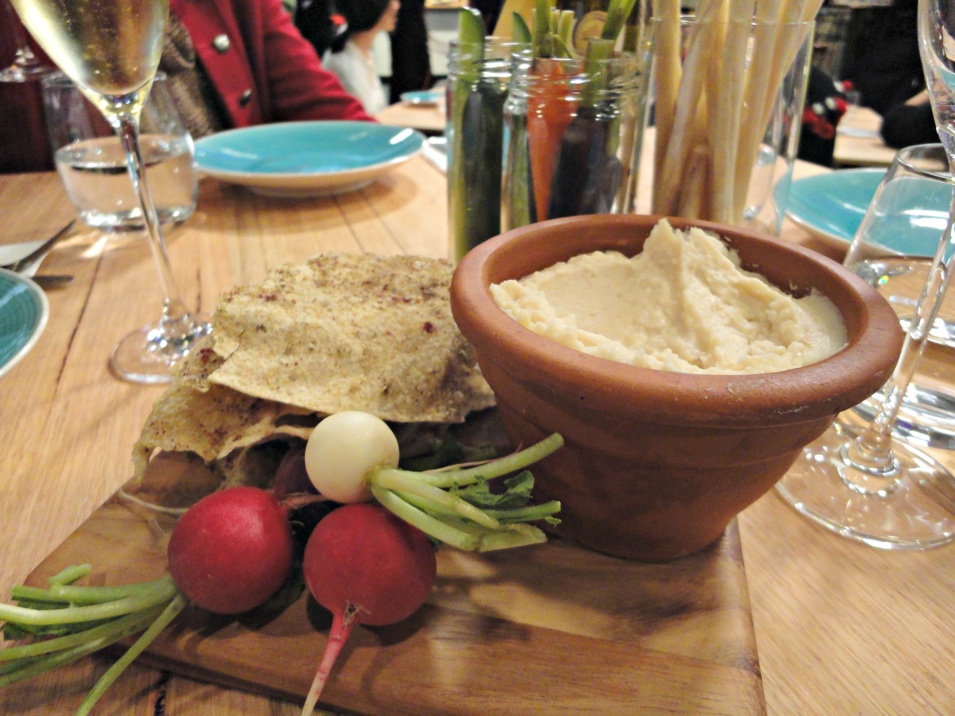
Before the filming process starts and as we are given ground rules by one of the producers, we are also delivered a bowl of dip, dipping vegetables and herbed and toasted pita bread.

Looking like a very pale apricot taramsalata, it is actually a very fine, tasty and lemon-y white bean dip.

It’s at this point, that I cave … and request a tall glass of bubbles.

The show sees Harvie hosting segments of the show interspersed with three more segments already recorded out and about by others – in the case of this episode, they cover Yarra Valley fish, hill country pork and beetroot.

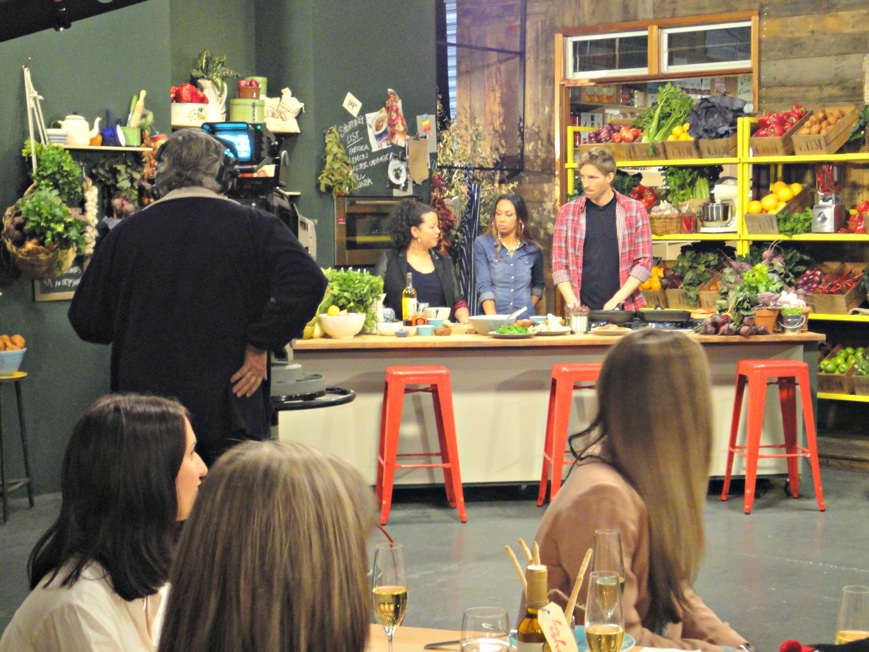
The set is bright and cheerful “rustic foodiness”, with a cooking area to one side, sofas for interviewing purposes on the other.

I am impressed by Harvie’s ability to sound upbeat and spontaneous, even when has to re-start his opening preamble three times.

The rest of the crew are admirably professional, too.

Between producers of various types, cameramen, catering company staff and many others who may or may not have technical TV biz names, there are a lot of them.

Making a commercial TV show is obviously a very expensive proposition in a high-stakes game.

After the opening comments, the show’s first food comes courtesy of chef Darren, who quickly serves up  a simple meal of steak, some sort of butter sauce and chargrilled cos lettuce.

Sadly, only a single audience members gets to sample it.

Then it’s time for Harvie to interview the guests – today that means singers Mahalia Barnes and Prinnie Stevens.

I’m struggling to hear what’s being discussed, the frequent delays are finding my hands desirous of getting hold of the book in my bag and part of me wishes I was elsewhere. 

I prick up my ears, though, when Barnes tells stories about the cooking prowess of her famous father, who sounds every bit the dab hand in the kitchen that her Thai mother is.

The two singers and Harvie then move across to the kitchen area where, after more delays, they join chef Darren in cooking a soba noodle salad.

By this time, I’ve realised my fears about taking photos are unfounded – I’m far from the only audience member merrily snapping away.

In the end, I’m pretty much going wherever I please – except in front of the many cameras – and talking to whoever I wish, including joining a trio of producer types monitoring the filming on a TV off to the side. 

A crew member who has worked on other, similar shows tells me this is quite unusual – the absence of the usual hard-and-fast rules about phones and cameras and do’s and don’t’s apparently part of the show’s gameplan of being fully integrated in a social media sense and making audience members part of it all.

Makes sense, really, mobile devices, for better or worse, being part of every performance and every part of life these days.

As the soba dish is completed in front of the cameras – huzzah! – each audience member is presented with their own bowl of said salad.

It’s very good – fresh salmon, two kinds of mushroom, two kinds of greens, sesame oil and seeds, seaweed and more, including a hefty whack of ginger.

It’s a treat with my second glass of bubbles.

As we eat, the show’s stars and guests join audience members for a bit more banter.

It’s been an entertaining and enlightening experience.

If you’re interested in being part of the Love To Share audience, email audience@lovetoshare.com.au

The show featuring CTS is scheduled to go to air on Channel 10 on Saturday, October 6, from 4pm.

But as they say in the biz, check your guides.

Bonus: The filming took a tad over three hours and I didn’t incur a ticket for overstaying at my two-hour parking space in Cowper St!

The Plough

12 Comments

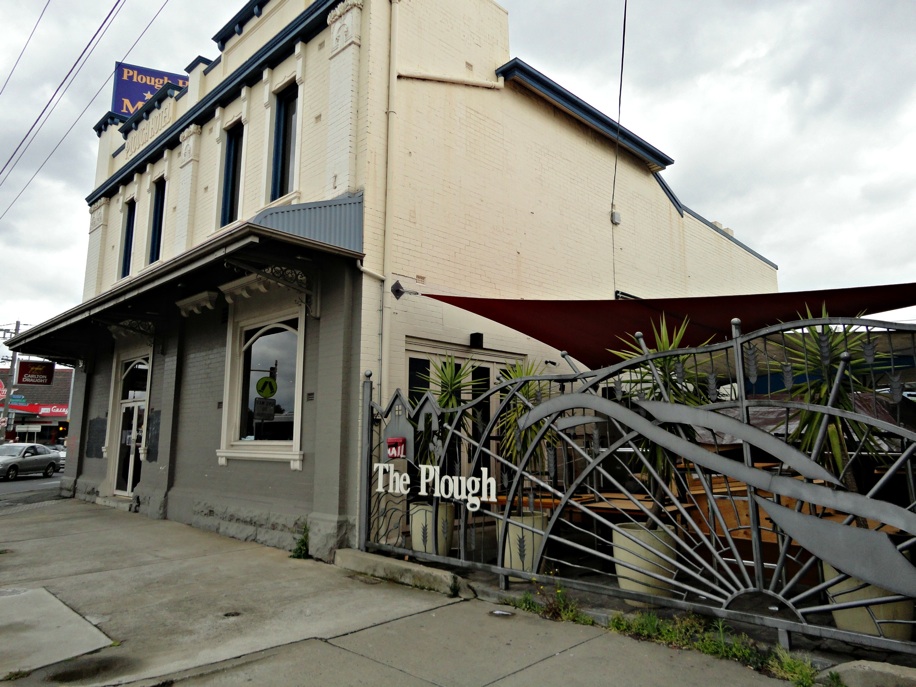
The Plough, 333 Barkly Street, Footscray

There are big changes afoot at this prominently positioned Footscray landmark.

The new operators plan to continue running both the food side of the business and its motel aspect.

My informant was unable to provide me with much by way of details – likely to be pitched somewhere in modern Australian/gastro pub in terms of food; likely to be open for business early-ish 2013.

Extensive refurbishment of the premises appears to be at its starting stages.

Footscray foot institution to close its doors

3 Comments

Anyone with one or more children knows how hard – and expensive – it is keeping them shod in good footwear.

Actually, that applies to anyone of any age in this era of cheap and nasty “runners” that require replacing about four times a year.

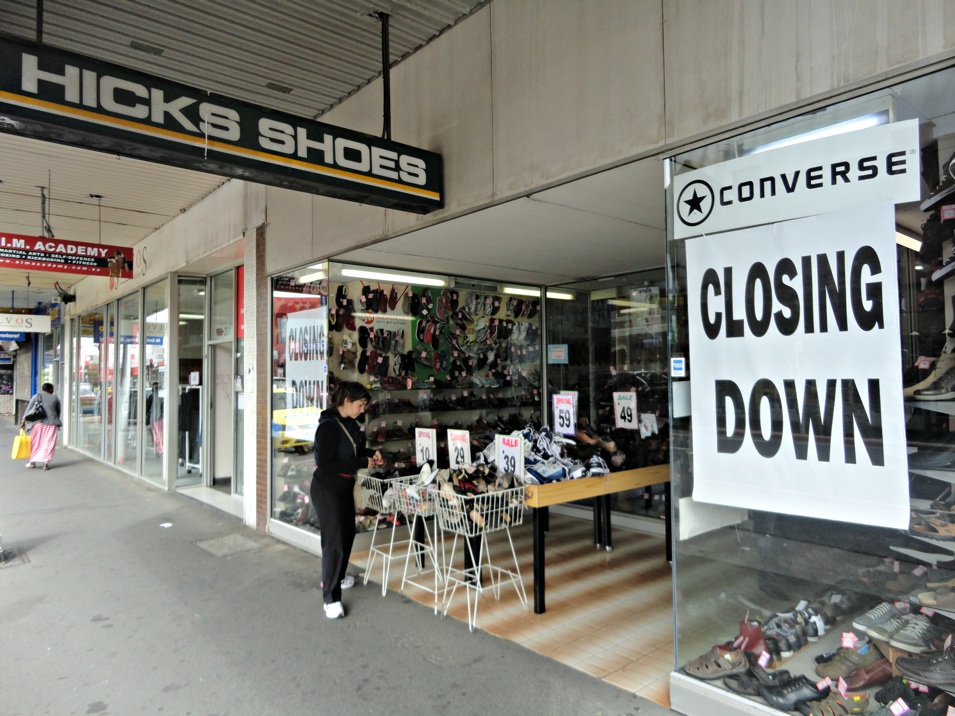
So it’ll be a sad day when Hicks Shoes in Barkly St closes its doors – it’s long been a provider of good-quality and affordable shoes of many kinds for all ages.

Sure, they stock budget-priced lines from various parts of Asia, but they also stock shoes, sandals, boots and more from Europe and elsewhere. 

Happily, the family store in Altona (72 Pier St, 9398 2939) will remain open.

The business was started 64 years ago by Eric Hicks, who is 94 these days, at 209 Barkly St and has been at the current premises, 203 Barkly St, for just under three decades.

The business is run by Eric’s son and daughter, Julie and Murray.

Julie tells me the closure has more to do family reasons than with escalating rents or the current economic climate.

Indeed, the family owns the building, plans to retain ownership and has already fielded several inquiries from potential tenants, including possible eating houses.

The closure is still several months away, as the decision to close was made only about eight weeks ago and after the summer stock had been ordered.

I dig my new Converse sneakers!

The Real Greek Souvlaki

3 Comments

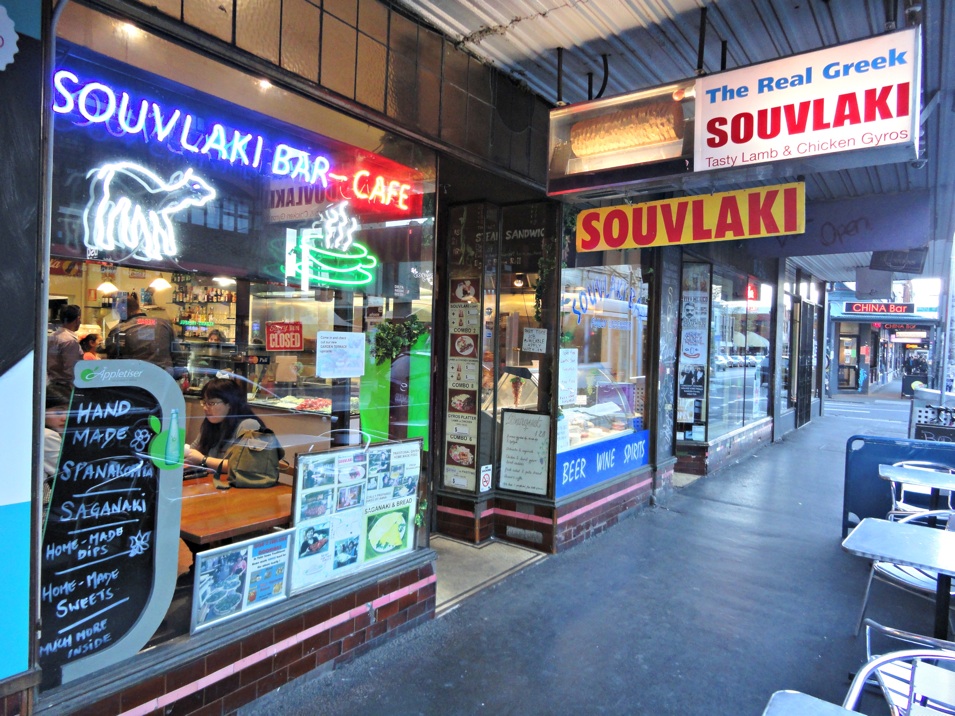
The Real Greek Souvlaki, 315 Brunswick St. Phone: 9417 1414

More than two years, way more than 300 posts … and no Greek eateries on Consider The Sauce?

There’s a few reasons for that, I reckon.

One is that they’re not thick on the ground in our immediate neighbourhood and only slightly more common in the greater west.

Another is cost.

Not that Greek restaurant in Melbourne are necessarily out of our budget reach – though a couple in the west certainly fall into the “special occasion” category.

It’s more that we mostly feel we can get pretty much the same flavour hits from very similar food that is of the Middle Eastern derivation at significantly lower prices.

As previously noted, that sort of much-loved thing is not ubiquitous in the west, either; hence our regular journeys to Coburg!

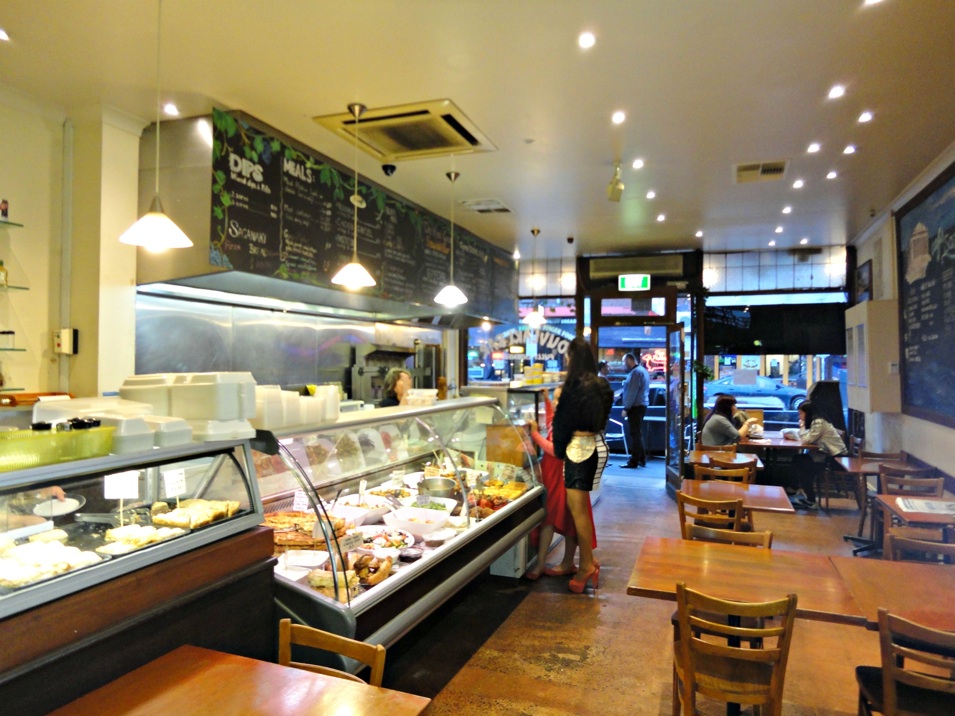
So it’s lovely to visit The Real Greek Souvlaki in Brunswick St.

We reckon it is right up there with the best Greek restaurants in Melbourne, with perhaps only the absence of seafood counting against in terms of comparison with its more formal counterparts.

That’s an assessment that may surprise its regulars.

Because this place, I’m certain, finds a really, really big share of its turnover coming from the souvlakis that are also known these days as wraps.

Most of these would be sold, I’m equally certain, at hours when we’re sure to be tucked up in bed and are no doubt especially brisk sellers around closing time … if Brunswick St actually has a closing time.

But you can get sit down plate meals at the Real Greek Souvlaki – and at prices much lower that at more famous Greek places, including one just a few blocks away.

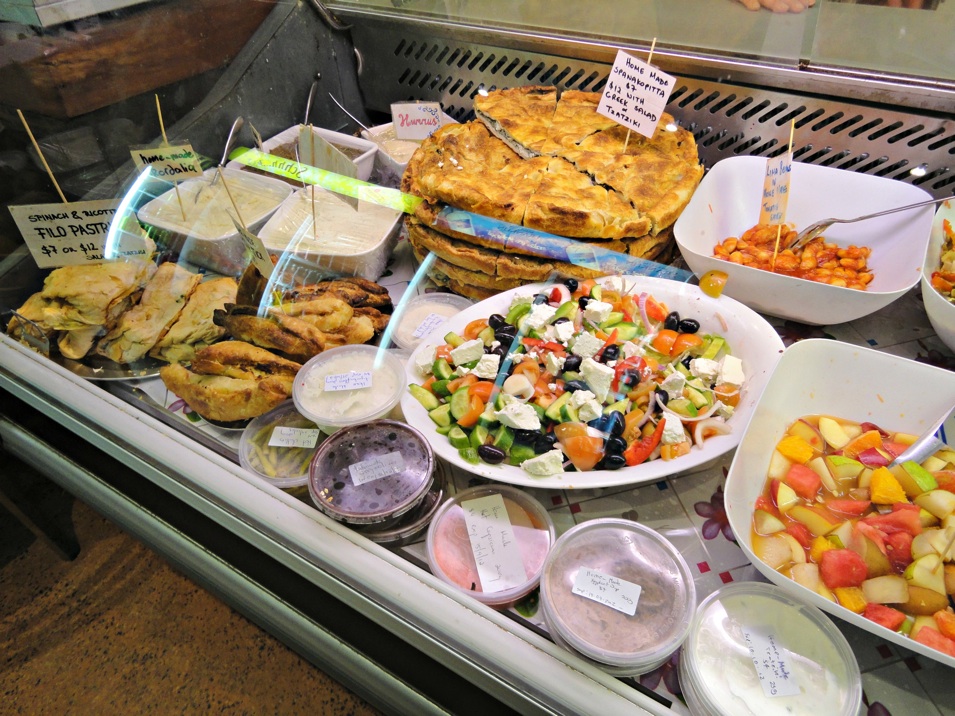
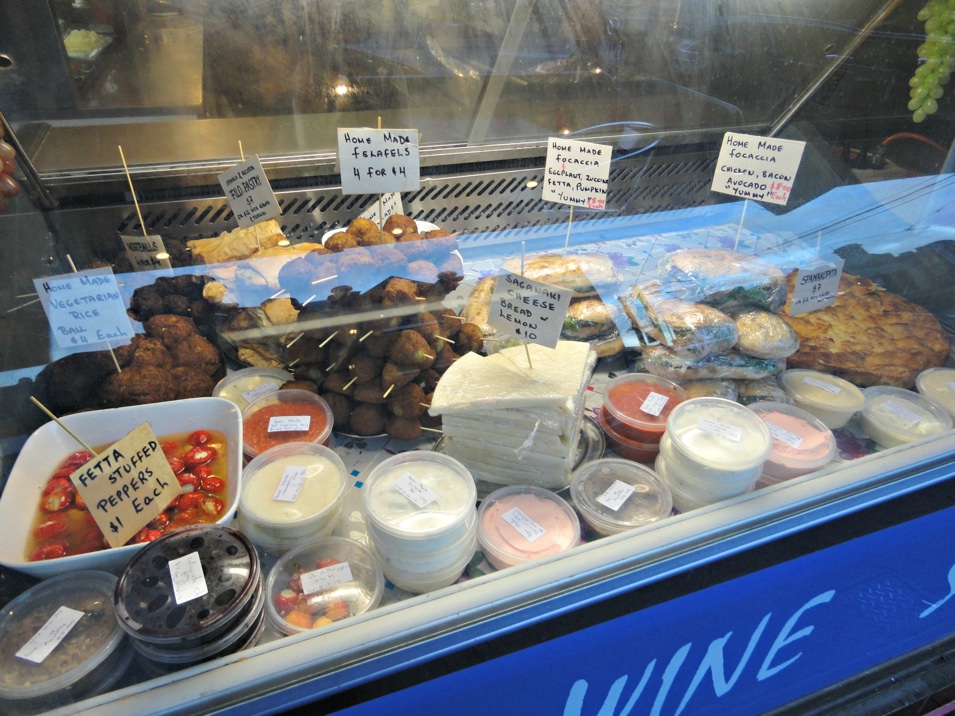
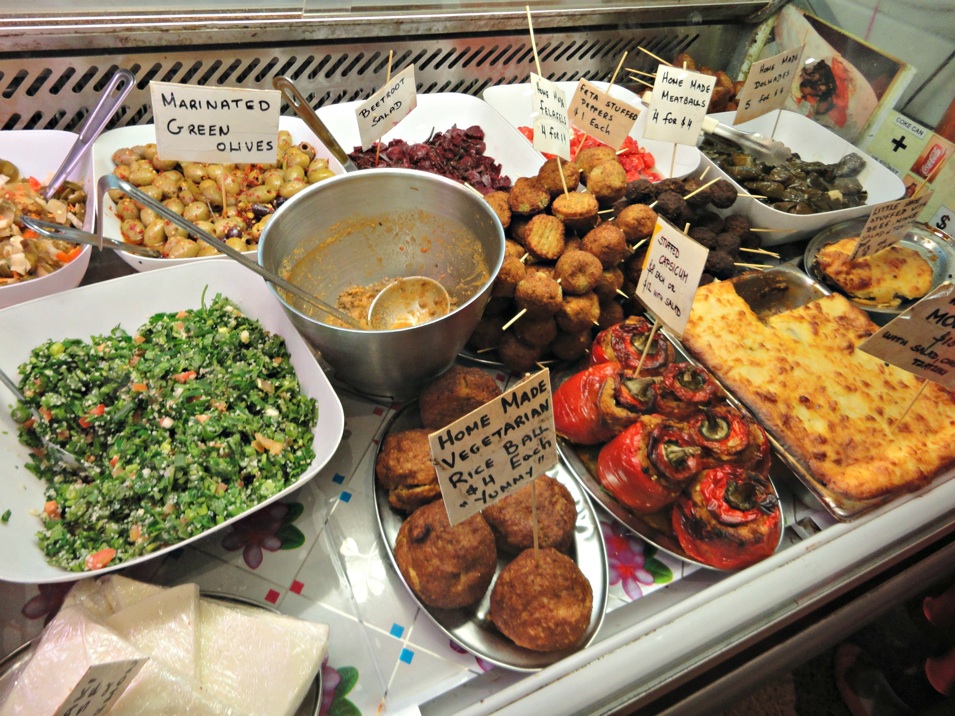
Moreover, just on the basis of its wonderous displays of mouthwatering Greek meze, this establishment deserves to be regarded far more highly than as a mere souvlaki joint, regardless of its informality and basic stock in trade.

This extensive range of pies, pasties, dips, stuffed vegetable, pickles, balls, salads and more starts in the exterior window display …

… and continues inside …

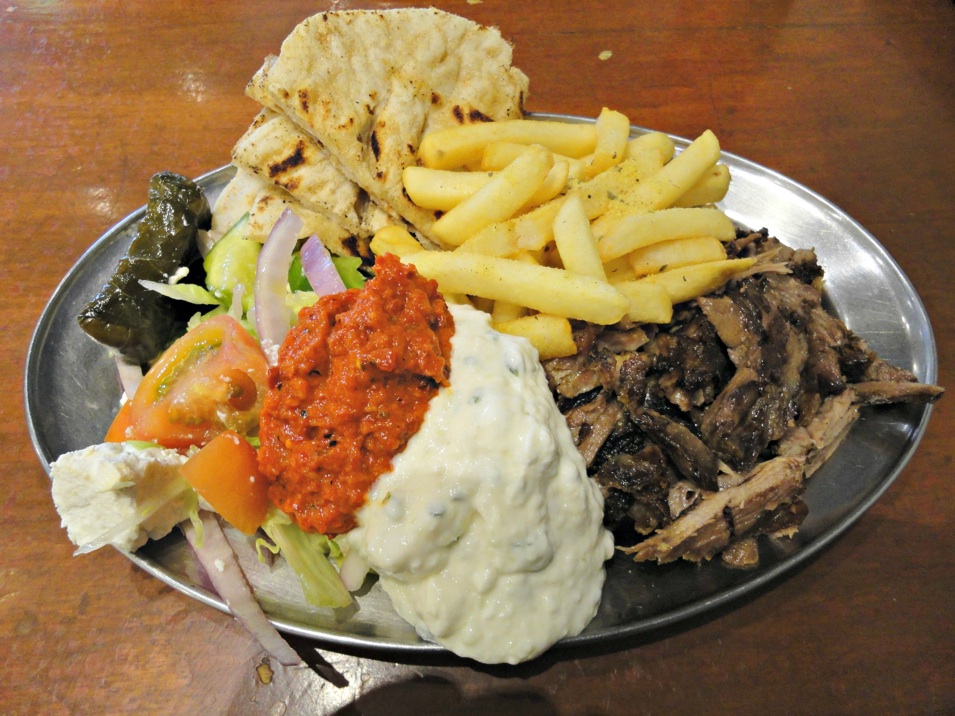
Perversely, today I feel like a Greek meal of far more basic type – lamb from the spit, salad and chips.

It’s terrific.

The chips are just OK – a little flaccid and heavily chicken-salted, but hot and very edible.

The salad is fine and includes enough olives and sharpish fetta cheese to satisfy.

The lamb is superb – crunchy, top-of-the-line delicious and cuddling up to your basic garlic/yogurt sauce.

I get all this for $17 – including an extra dollop of chilli dip and a small dolmade.

The chilli dip is more like hot pepper dip, so has only a mild spice kick but is very piquant and just plain great with the meat.

I wish there was a whole lot more of it.

Zalatat shuwander (beet salad)

Leave a comment

This lovely salad is another recipe from my latest toy, the marvellous Iraqi cookbook-and-more, Delights from the Garden of Eden, by Nawal Nasrallah.

But really, it could just as easily come from any of my Italian cookbooks.

The simplicity of the seasonings lets the earthy flavour of the beets be the hero.

Nawal lists yogurt or sour cream as a garnish, but I reckon if you want to use either of them it’d be better done at table – that way leftovers will retain their dark colouring and not become a compromised pink!

INGREDIENTS

3 mediums beets

extra virgin olive oil

juice of one lemon

salt

pepper

parsley

METHOD

1. Pre-heat over to 225C.

2. Wash beets but don’t trim.

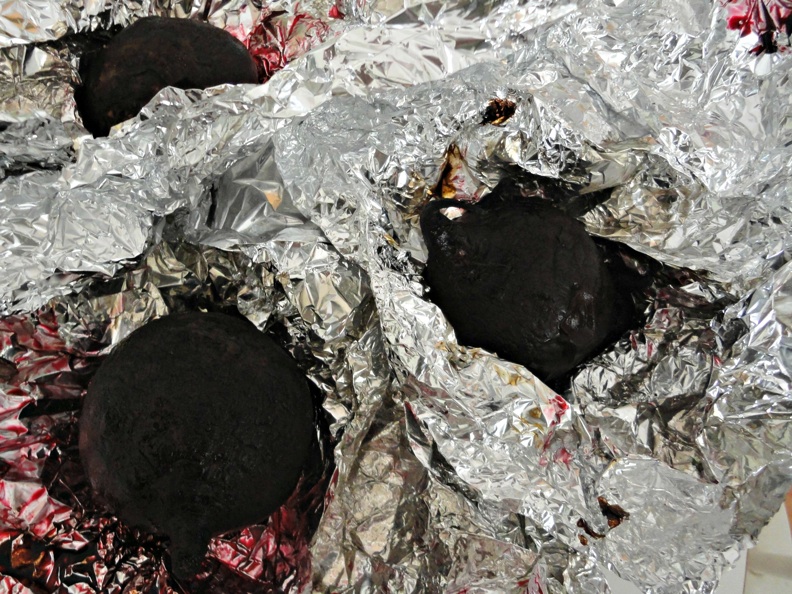
3. Wrap beets well in foil and put in oven for an hour.

4. Let cool.

5. Peel beets by hand or using a peeler or knife. If you’re a little fussy about getting your hands dyed, use rubber gloves.

6. Dice beets into small cubes.

7. Toss with remaining ingredients.

8. Refrigerate for at least half an hour before eating.

Zaalouk (mashed eggplant and tomato salad)

1 Comment

This zingy salad from Morocco is, of course, a close relative of baba ghanouj.

Instead of tahini and/or yogurt, the recipe uses roughly cooked-to-a-pulp tomatoes.

This is a slightly tweaked version of the dish found in Claudia Roden’s Arabesque – I throttled back some on the cumin and garlic, didn’t feel like leaving the house just to get a bunch of coriander, and didn’t think a garnish of black olives sounded that hot.

And I never peel tomatoes.

INGREDIENTS

2 medium eggplants

juice 1/2 fleshy lemon

2 medium large tomatoes

2 large cloves garlic, finely chopped.

extra virgin olive oil

1/2 teaspoon paprika

chilli powder to taste

1/2 teaspoon ground cumin

1/4 cup approximately chopped flat-leaf parsley

METHOD

1. Prick eggplants several times to stop ’em exploding and place in a very hot (225C) pre-heated over for about 45 minutes until wrinkly all over.

3. When they’re done, let cool.

4. When cool enough to handle comfortably, scoop pulp into a bowl and discard skins.

5. Roughly chop the tomatoes and cook in olive oil with some salt until pulpy and not quite a sauce.

6. While the tomatoes are cooking, smash up the eggplant into a rough mash. Don’t get too carried away – a rough texture is what is desired for the finished salad.

7. Into the eggplant pulp put the cumin, paprika, chilli powder, garlic and parsley.

8. Into this mix add the tomatoes and some more lemon juice and a dash more olive oil.

9. Set salad aside for at least an hour or so before  eating.

Keeps well!

Good in sandwiches!

La Delicatezza

4 Comments

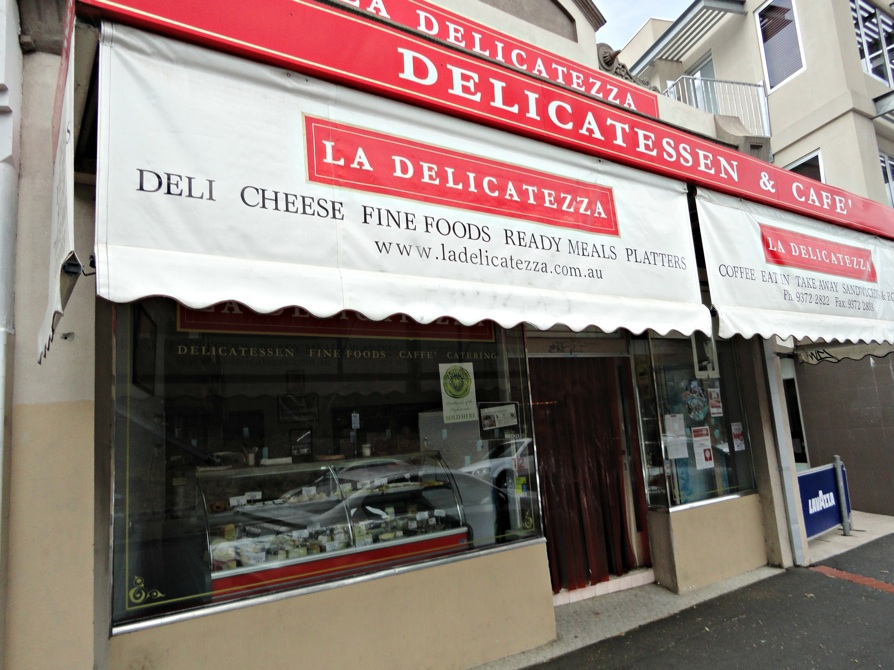
La Delicatezza, Shop 1 & 2, 32 Pin Oak Crescent, Flemington. Phone: 9372 2822

Who killed the Ploughman’s Lunch?

Once upon a time they were everywhere – and not just in pubs, either.

It may be unfair, but I reckon it’s reasonable to apportion some of the blame on the French and Italians, and maybe even the Spaniards, what with their charcuterie and antipasto platters and tapas.

Those naughty Continental types!

But sometimes I don’t feel like cornichons; I feel like pickled onions.

And sometimes I don’t feel like bocconcini; I feel like a nice, sharp cheddar.

La Delicatezza has an Italian name, an Italian vibe and even an Italian boss, Nick, so seems like an unlikely place to find a ploughman’s lunch.

But there it is – on a long list of breakfasts, paninis, salads and other “platters”.

La Delicatezza is an appealing deli, just up the road from Chef Lagenda and Laksa King.

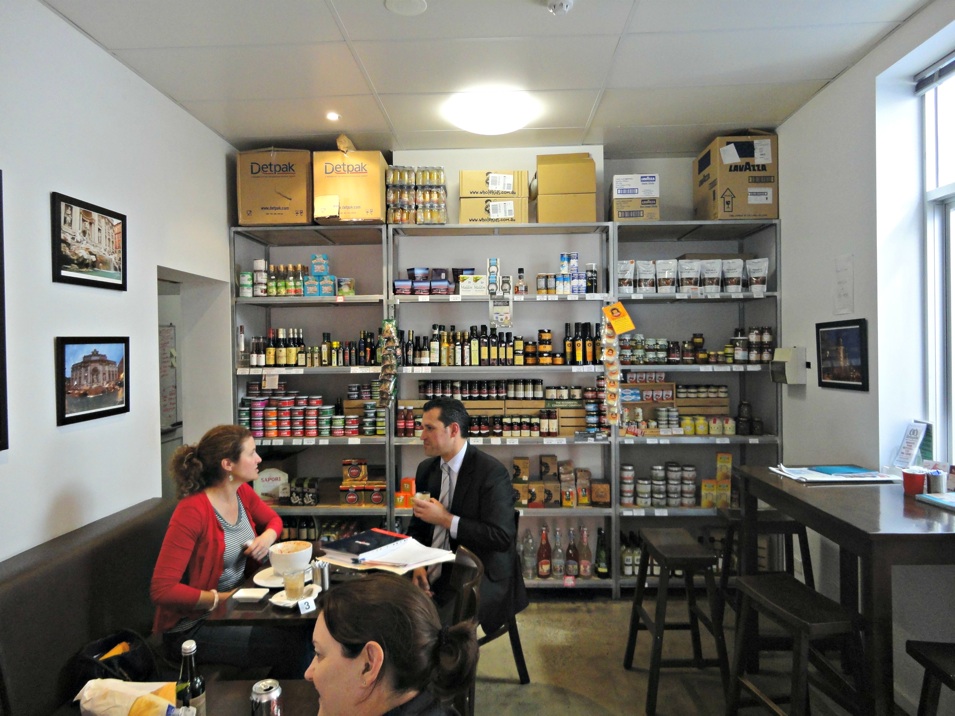
In the front room there’s a serving counter and display, groceries and a couple of tables.

In a back room there’s more groceries, two more tables and a window bench with stools.

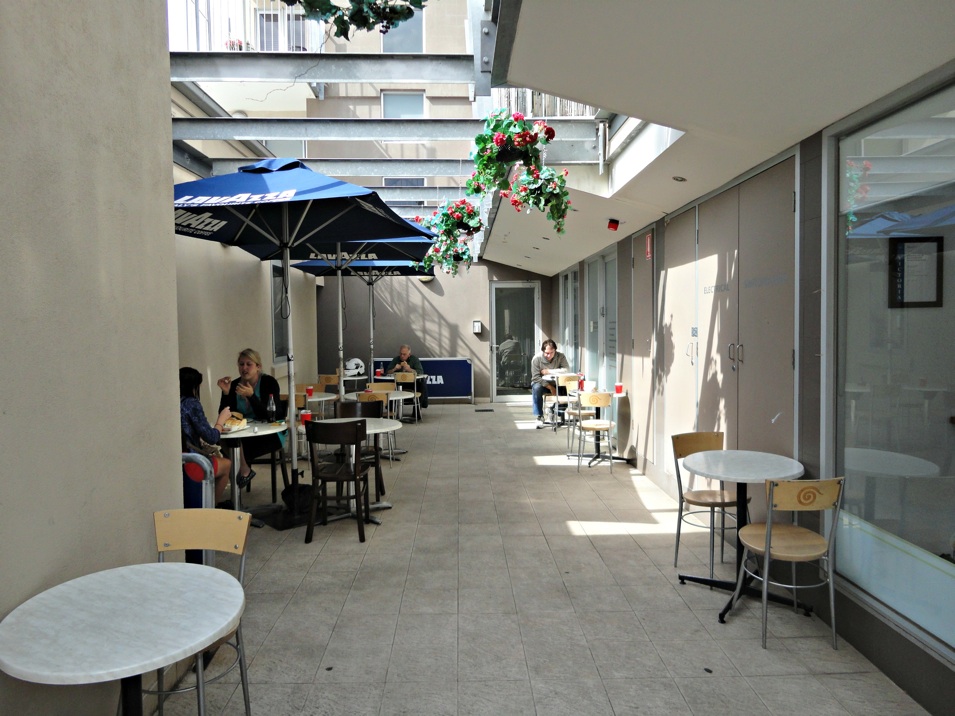
Outside, a courtyard area with more tables is shared with some apartments.

My ploughman’s lunch ($15) does the job.

The bread is superb and in just the right quantity – warm, crusty, not too heavy.

Two slices of good ham.

A slab of OK cheddar. I would’ve preferred something a little sharper and older.

Some tomato segments.

And I get pickled onions AND cornichons!

The pickled onions are a little sweeter than I prefer, but they’re crunchy – nothing worse than soggy pickled onions.

Moreover, the seasoning is beguiling – maybe a mix of cinnamon and coriander among other things?

Nick grabs the bottle of onions from the kitchen so we can read the ingredients list together.

The onions are produced by Emelia’s The Saucy Australian in Kyneton, with the ingredients on this particular product being listed as “onions, white vinegar, sugar, chillies and spices”.

It’s a mystery!

I buy a bottle of Emelia’s chilli pickled onions from Nick anyway, and when I get home I call the company and have my call answered by Emelia herself.

She tells me the wording is deliberately vague – it’s not just a mystery, it’s A Secret!

She refuses to divulge more but tells me her onions are guaranteed to stay crunchy for the life of the bottle. And that the white – and often soggy – ones found in fish and chip shops are bleached.

Pushing a little harder, I go fishing: “Cinnamon and coriander?”

“Definitely not,” she says with a smile.

Emelia has a fine range of products.

La Delicatezza on Urbanspoon

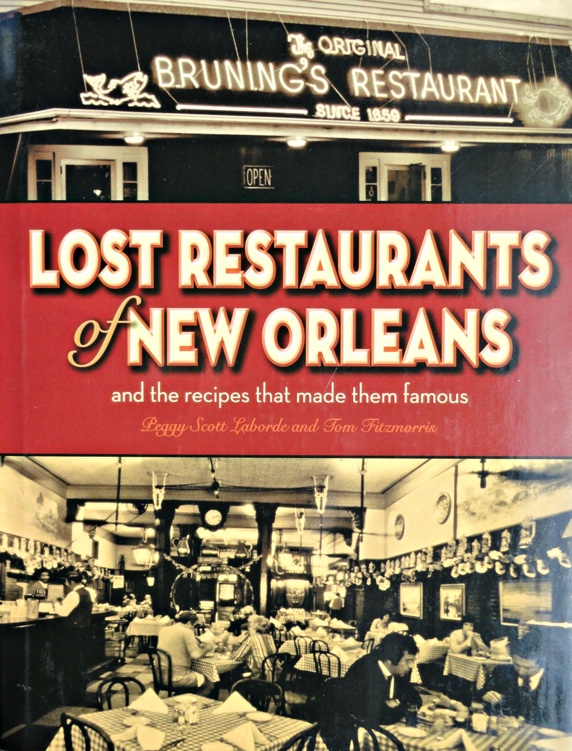
Book review: Lost Restaurants of New Orleans and the recipes that made them famous

3 Comments

Lost Restaurants of New Orleans and the recipes that made them famous – by Peggy Scott Laborde and Tom Fitzmorris (Pelican)

Tom Fitzmorris remains very active on the New Orleans food scene, but I am unsure about just what form – if any – his Crescent City food guide takes these days.

The books listed on his website are, one, a history of New Orleans food culture, and two, a recipe book.

For many of my visits to New Orleans, his restaurant guide was toted all over the city and I found it indispensable, although in the end so frequent did my visits become that I was able to move beyond it as I discovered gems – through friends and familiarity with the city – that were not included in the book.

Nevertheless, I was excited about getting my hands on this book on “lost” New Orleans restaurants.

It’s not quite as comprehensive as the title suggest.

As Fitzmorris points out in his introduction, to be comprehensive the book would have to unfeasibly weighty. Besides which, as with any other locale, many restaurants have closed because they don’t deserve to be remembered.

Instead, the book focuses on 100 eateries of many different kinds that are remembered by “a fair number of New Orleanians still living as of 2011, when we composed it” and are worthy of being celebrated.

Given that sort of timeframe and timing of my own visits to that city, I was unsurprised to find restaurants I was familiar with – in some cases very familiar with – featured in the book.

I spotted three right off.

Looking a little closer, I noticed another half-dozen or so.

A profound sense of deja vu leads me to think there’s maybe another 20 or so that I set foot in at one time or another.

(I’d have to dust off and unearth the detailed diaries I maintained of those trips to be sure. A former partner once stumbled upon this trove, and was excited because she thought she was going to get the inside story of my sordid behaviour while in New Orleans. She was thus very disappointed to find every meal eaten, every record bought and every gig attended described in minute detail … but very little else!)

The hardcover book is beautifully presented, and is stuffed with fantastic vintage photos, menus, matchbooks and other memorabilia.

The individual restaurant entries are likewise full of stories not just about food and recipes and dishes, but also the colourful characters and history and stories that made these places legends.

Lost Restaurants of New Orleans is very highly recommended to anyone even remotely interested New Orleans, its history and/or its food and cooking.

Here’s some of the places included the book that I remember most fondly, with appropriate quotes from the book:

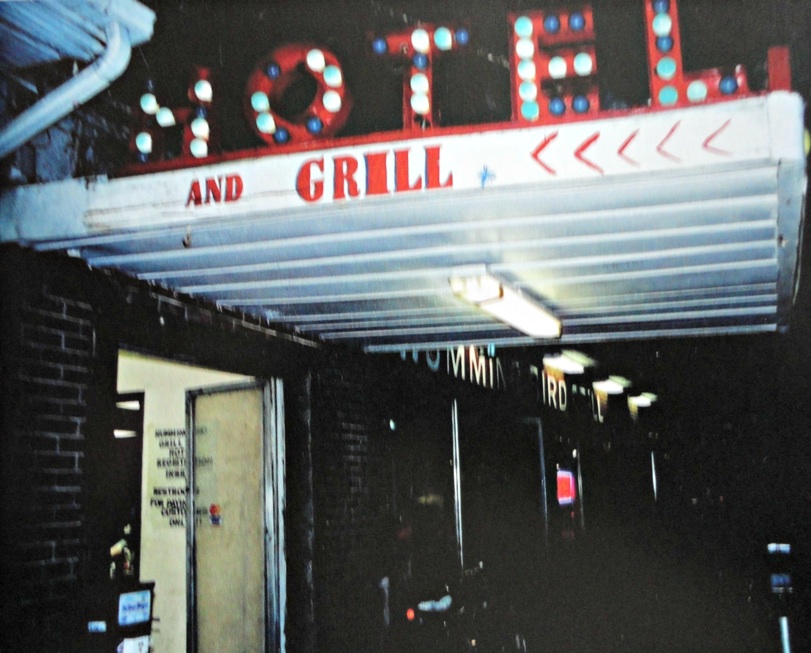
Hummingbird Grill, St Charles Ave (1946-2001)

A fabulous 24-hour diner-style place run as an adjunct of an equally seedy hotel.

Good for very good – and ridiculously cheap – burgers, breakfasts and red beans-and-rice.

“People who would spend their last dollar, then had to find a place to sleep that night, were at the Hummer’s counter. But so were men and women in formal wear, en route home from an underfed, oversloshed high-society party … Those who could not be dragged into the Hummingbird Grill had problems with the neighborhood. Those who did like the place pointed out that the lunch counter was always full of uniformed New Orleans policemen on their meal breaks. Only an idiot would try to start a rumble there.”

Barrow’s Shady Inn, Hollygrove (1943-2005)

You could get anything you wanted at Barrow’s – as long as it was catfish!

“When the fish came to the table, it was the definitive golden brown and so hot you shouldn’t have eaten straight away. But there was no way to keep from diving in. It was so good and light, with that background glow of red pepper, that you wanted to inhale it.”

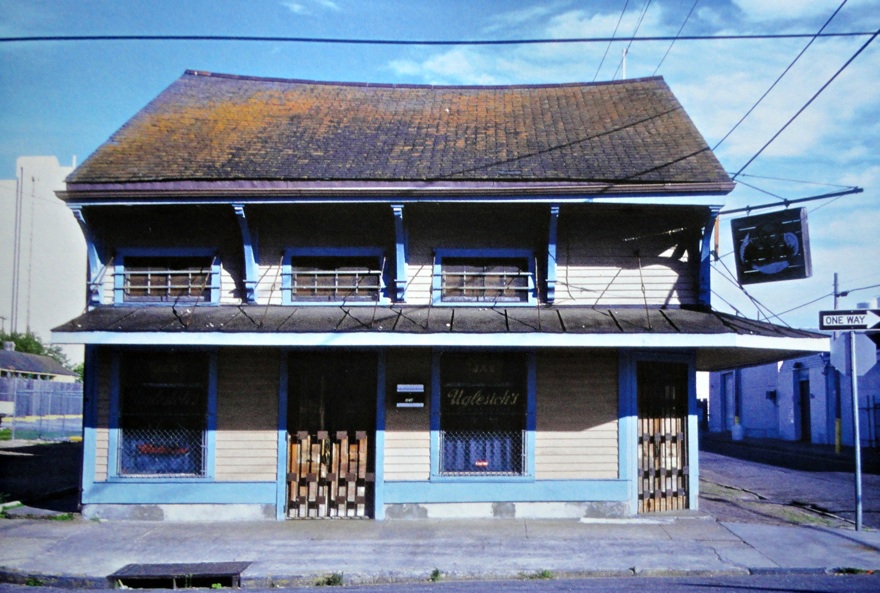
Uglesich’s, Lee Circle area (1924-2005)

A ramshackle and truly legendary (mostly seafood) place – no menu, just notices pinned all over the walls. Super cheap!

“The ventilation system was so ineffective that when your returned from lunch there, nobody had to ask where you’d dined. You smelled as if you’d fried fish all day … A host of unique characters … hung around the place all day long. The most famous of them was Ding Ding the Singing Bird, who delivered sandwiches on a bicycle to the area and sold peanuts at Tulane Stadium.”

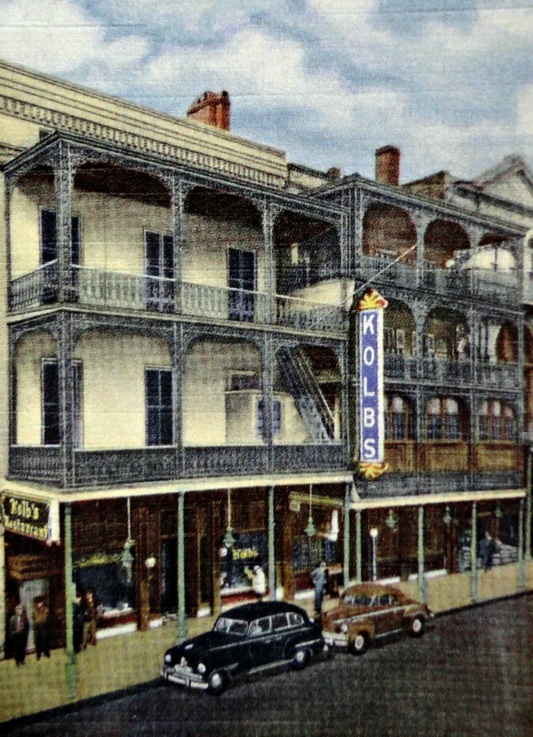
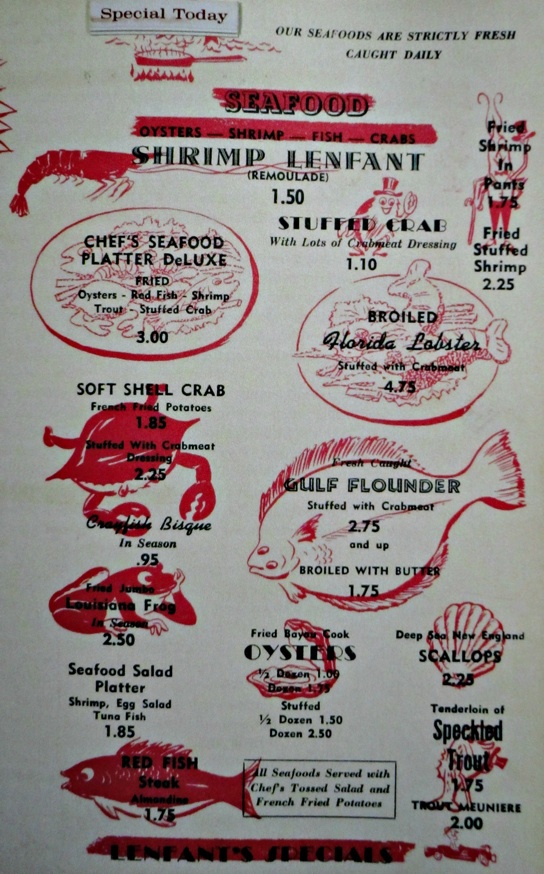
Kolb’s, St Charles Ave, CBD (1899-1995)

A very Germanic place with whacko Teutonic decor and lots of German dishes on the menu – although the only thing I can recall eating during my frequent visits are oysters and gumbo.

I loved it there – despite its central location near Canal St, it was always cool and dark-ish.

According to the book, the famous sign is still in place.

” …When I finally got to Kolb’s, in the mid-1970s, it was in decline … the German food was not all that good … by this time, most people who went to Kolb’s at not the German food but the creole cooking. During a couple of years during which my office was two blocks away, I ate there once or twice a month and remember eating turtle soup, barbecue shrimp, baked oysters with crabmeat and hollandaise, roast chicken, and bread pudding … All of this was actually pretty good.”

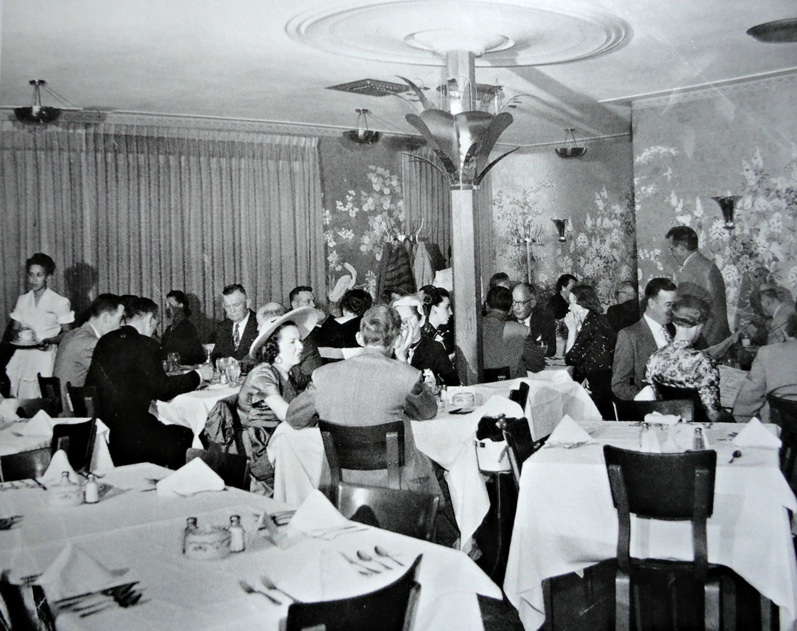
T.Pittari’s dining room in the 1950s.

(This post written while listening to Bunk Johnson.)

Fresh On Young gets a revamp

1 Comment

Fresh On Young, 34 Young St, Moonee Ponds. Phone 9375 3114

Fresh On Young – the subject of the second Consider The Sauce story – remains a reliable favourite for us.

It’s a bit out of the way, but when it fits in with our rambling, it’s a fine place for great prices and produce, fresh and otherwise, of many kinds.

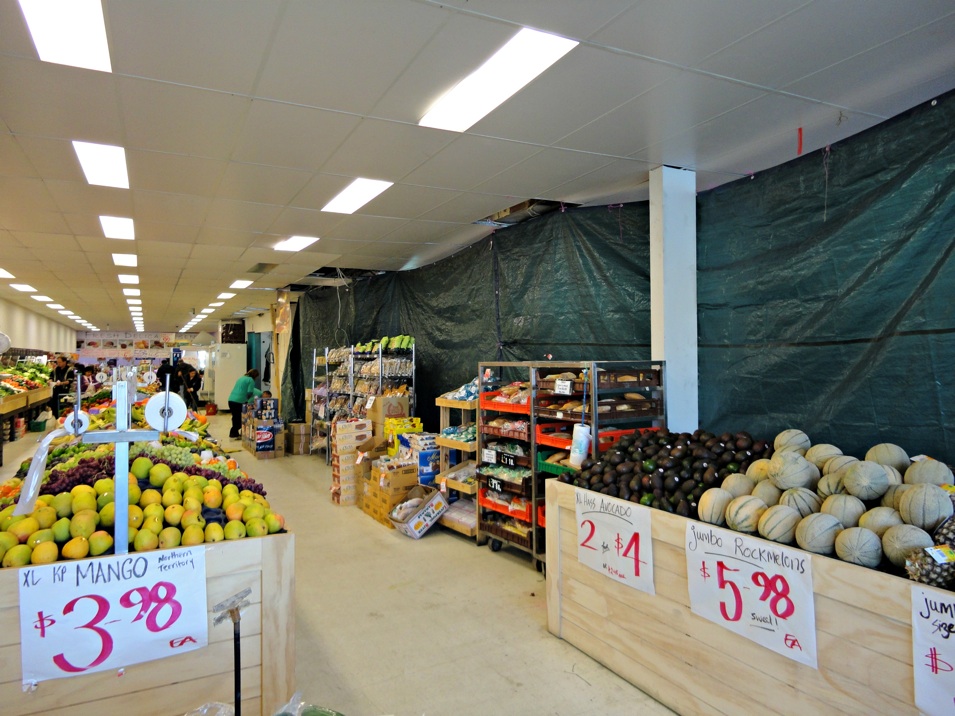
So we’re excited to note the place is undergoing a significant revamp that involves use of space, until now used for loading/storage purposes, that will in effect double the width of the premises.

When I talked to him, manager Lee was reluctant to give too much away before the unveiling in a couple of weeks’ time.

But the gist of it seemed to be an accent on an extended fresh meat and seafood section.

He cited the retail environment, including of the ongoing Coles/Woolworths battle, as being proof aplenty that standing still is tantamount to going backwards.

Flying solo

15 Comments

I can’t remember a time – since I split my parents’ joint as a teenager and even somewhat before then – that I haven’t been comfortable eating in public by myself.

Right from the first years of my life as independent adult, a lot of my solo dining was a matter of circumstances – shift work, shared housing in which cooking routines were haphazard or  non-existent and so on.

Not to mention an almost complete absence of cooking skills.

It was very early in the piece that I headed out into the world – specifically, at first, to the US with a head full of Jack Kerouac and the Grateful Dead, and a thumb in the wind.

Hitchhiking across the US meant solo dining wasn’t just fun but also a necessity and a neat way of engaging with people.

Then followed a couple of years in London, a few more in various parts of New Zealand and eventually – in the mid-’80s – Melbourne.

During none of this could I have been described as a foodie in any way.

In fact, I remember on the long trek home from London – via Greece and India – staying on Crete for four weeks and getting terminally bored with daily fare of chips and omelettes, because at that point I would have no truck with fancy-pants food like fetta cheese, olive oil or olives.

Somehow, a level of foodiness clicked into gear upon arrival in Melbourne and has been present and growing ever since, along with a complete ease at a table for one.

Again, much of that was to do with circumstances – more shift work and living on my own for the first time in my life.

As well, my first apartment was in Fitzroy and just a few seconds’ walk from the then embryonic Brunswick St strip. It grew as I lived there.

Fitzroy was followed by the then wilderness of Brunswick (how things have changed in that regard!), St Kilda and the CBD.

Through it all, one of the greatest pleasures was always a meal, a stool, a book or a newspaper.

And glorious solitude.

Meanwhile, on many journeys to New Orleans and South Louisiana, often I was faced with a simple choice – eat at that swish restaurant by myself or not at all.

Thus I slipped into the habit of occasionally visiting a fine-dining restaurant while over there in  a way I would never bother with in Melbourne.

From various accounts I’ve read, I know I’m not alone in finding travel a great liberator in that regard.

I think it can be argued that if there has ever been any stigma attached to solo eaters, it has as much to do with the inner self-confidence and brio of individual diners as with any tut-tutting by society at large.

Or that’s the case at least, I reckon, for the past three decades or so.

Nevertheless, I think there are a number of factors that have made it even more practicable, easy, convenient and deliciously enjoyable to sup on one’s own.

Here’s some of them – I’d love to know if there’s more I haven’t twigged to.

*Pho and associated food.

*Indian thalis.

*The sort of workaday attitude that goes with both of the above, where eating out is just part of daily routines for families and individuals alike.

*The Italian cafe vibe.

*Sushi bars in Japanese restaurants.

*The influx of Asian students to Melbourne and the western suburbs, and the attendant growth in food shops to feed them.

Solo dining has, naturally, become part of Consider The Sauce – my partner, Bennie, is not always at hand, nor are the various other pals I sometimes get on the fang with.

This means that some posts are more succinct than others – such as yesterday’s effort on Cafe Konjo.

I can live with that.

In fact, I can see a benefit – not all posts need to be detail-packed essays; there’s room, too, for sketches and impressions.

I’ve sometimes wondered if the ease of mind surrounding solo dining is more easily attained by men than women.

A number of female food bloggers I’ve talked with have told me they’ve never had any issues with it.

But they have all told me they still draw the line at flying solo in bar situations.

A couple have also suggested that food blogging is little more than a way of making solo dining even more legitimate.

It’s always said with a laugh, but there’s a twinkle of truth in that.